

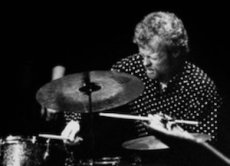
JIMMY MADISON GROUP
If you were to list all the groups Jimmy Madison has worked with since his arrival in New York, it would read like a Who’s Who of modern music. A musician at four years, and a professional at age twelve, he has been playing jazz all his life.
Listen to an interview with Jimmy Madison here (from 2011): http://www.jakefeinbergshow.com/2011/10/the-jimmy-madison-interview/
Showtimes: 4:00pm & 6:00pm
More Posts: adventure,album,club,drums,festival,genius,jazz,museum,music,preserving,restaurant,travel

KLAUS MUELLER BRAZILIAN QUARTET
A jazz pianist of diverse influences and abilities, Klaus Mueller, was born in Germany and raised in Japan, Chile, and Brazil. He began piano lessons in Japan at the age of six. After graduating from Stuttgart University of Music and Performing Arts in 1998, he was granted a full scholarship from the German Academic Exchange Service to further complete his studies at the New School in New York.
He has been an integral part of the New York Jazz and Brazilian music scene, having performed and recorded with artists including Portinho, Ron Carter, New York Voices, Harry Allen, Leny Andrade, Paquito D’ Rivera, Steve LaSpina, Emilio Santiago, Marcos Valle, Toninho Horta, and Filó Machado. Tours and workshops have led him throughout the United States, Europe, the United Kingdom, Russia, and the Caribbean.
Mueller is not only regarded as a fine keyboardist but also as an arranger, most notably for jazz piano legend Herbie Hancock, creating orchestral versions of songs from Hancock’s critically acclaimed “Gershwin’s World” album in collaboration with Robert Sadin in 2003. He also arranged music for the prestigious classical label Deutsche Grammophon, and worked as a musical director and accompanist for the opera singer and Tony Award-winner Paulo Szot.
On Mueller’s 2012 album release Far-Faraway, he performed with jazz bassist Ron Carter and Brazilian drummer Portinho. His latest album Village Samba, released in 2016, features mostly original compositions interpreted by some of today’s finest Brazilian and New York-based musicians.
Showtimes: 4:00pm & 6:00pm
More Posts: adventure,album,club,festival,genius,jazz,museum,music,piano,preserving,restaurant,travel
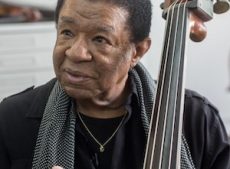
BUSTER WILLIAMS & SOMETHING MORE!
Charles Anthony “Buster” Williams is an American jazz bassist. Williams is known for his membership in pianist Herbie Hancock’s early 1970s group, working with guitarist Larry Coryell from the 1980s to present, working in the Thelonious Monk repertory band Sphere and as the accompanist of choice for many singers, including Nancy Wilson.
Showtimes: 7:00pm & 9:30pm
More Posts: adventure,album,bass,club,festival,genius,jazz,museum,music,preserving,restaurant,travel

MIKE LEDONNE ORGAN QUINTET
Mike LeDonne Organ Quintet featuring Vincent Herring, Eric Alexander, Dave Stryker & Joe Farnsworth!
Pianist Mike LeDonne started playing piano at the age of 5 and was raised in his parent’s music store. By the age of 10, his father, a jazz guitarist, began booking him on gigs.
He is now an internationally renowned pianist and organist with the unique experience of having played with a wide spectrum of jazz masters from Benny Goodman to Milt Jackson and Sonny Rollins. He has won praise not only from critics but from master musicians.
Mike is on over 100 CDs as a sideman and starting in 1988, recorded his first of 16 CDs as a leader. His award winning CDs include some of the greatest musicians around today including Tom Harrell, Gary Smulyan, Kenny Washington, Steve Nelson, Jim Rotondi, Joshua Redman, Peter Washington, Eric Alexander, Jeremy Pelt, Mickey Roker and Ron Carter.
Showtimes: 7:00pm & 9:30pm
More Posts: adventure,album,club,festival,genius,jazz,museum,music,organ,preserving,restaurant,travel
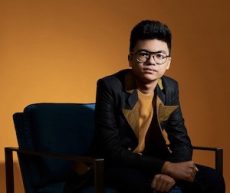
JOEY ALEXANDER TRIO
Josiah Alexander Sila, known professionally as Joey Alexander, is an Indonesian jazz pianist. He became the first Indonesian musician to chart on Billboard 200 when his album My Favorite Things debuted at number 174 and then peaked at 59.
Showtimes: 7:00pm & 9:30pm
More Posts: adventure,album,club,festival,genius,jazz,museum,music,piano,preserving,restaurant,travel