


MELISSA STYLIANOU
With her superb partners, the venerable guitarist Gene Bertoncini and the acclaimed bassist Ike Sturm, the Toronto-born vocalist Melissa Stylianou recorded Dream Dancing, a new five-star album of American standards that Downbeat hailed as “a collection of brilliant reinventions.
They play together like a band, not a singer with backing musicians.” The New Yorker called Melissa “a crafty stylist” who “knows that a subtle voice, skillfully employed, can be an effective tool for maximum expression.”
Showtimes: 4:00pm & 6:00pm
More Posts: adventure,album,club,festival,genius,jazz,museum,music,preserving,restaurant,travel,vocal
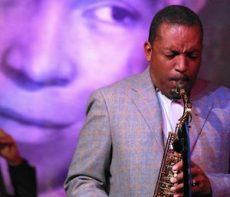
DONALD HARRISON QUARTET
“Donald Harrison is one of the most confident and convincing improvisers in jazz today. The boundary leaping New Orleans alto saxophonist’s distinctive broad toned sound is immediately recognizable as his own, regardless of the environment in which it is being heard, be it bebop, hardbop, New Orleans R & B or funk.” – Jazz Times
NEA Jazz Master Donald Harrison is more than a brilliant alto saxophonist, composer and bandleader. He’s a Renaissance man: The Big Chief of Congo Square, a New Orleans-born traditionalist and innovator, merging modern jazz with Second Line music and hip-hop. He’s a TV actor.
He nurtures young talent like his mentor Art Blakey. Harrison performed with countless legends (Miles Davis, Lena Horne, Dr. John) and recently revived the Charlie Parker with Strings repertoire in concert.
Showtimes: 7:00pm & 9:30pm
More Posts: adventure,album,club,festival,genius,jazz,museum,music,preserving,restaurant,saxophone,travel
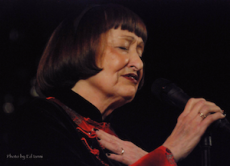
SHEILA JORDAN @ 94!
Sheila Jordan @ 94! featuring Sheila Jordan on vocals, Roni Ben-Hur on guitar & Harvie S on bass!
Charlie Parker called her “the lady with million dollar ears,” and over the years, Sheila Jordan has been one of the most consistently creative singers in jazz. At 94, she remains a superb improviser, a magnificent scat singer, and an emotional interpreter of ballads. Consistently creative for nearly eight decades, Charlie Parker called her “the lady with million dollar ears.”
A colleague of Parker’s in the ‘50’s who wrote lyrics to his compositions, Ms. Jordan’s remarkable career has produced memorable performances, exceptional recordings and numerous awards like NEA Jazz Master.
Showtimes: 4:00pm & 6:00pm
More Posts: adventure,album,club,festival,genius,jazz,museum,music,preserving,restaurant,travel,vocal

ELIANE ELIAS
A world-class pianist whose mastery of Jazz, Brazilian, Classical, Broadway and more has brought multiple awards, Eliane Elias celebrates the release of her new chart-topping album, “Quietude.” This all-Brazilian record follows her Grammy winning “Mirror Mirror.”
Jazz Weekly raves she is “not only one of the most adroit pianists in jazz, but with albums like this new one, has now entered the top tier of Brazilian vocalists.”
“Eliane Elias is of a generation of aggressive pianists who attack music like a lioness attacking its prey, at the same time expressing a tenderness within the core of her passion that at times has brought me to tears.”
– Herbie Hancock
December 9th & 10th Shows @ 7:00pm ~ SOLD OUT
More Posts: adventure,album,club,festival,genius,jazz,museum,music,piano,preserving,restaurant,travel,vocal

Daily Dose Of Jazz…
Sonny Phillips was born on December 7, 1936 in Mobile, Alabama. Phillips began playing jazz organ after hearing Jimmy Smith in his twenties. He studied under Ahmad Jamal, and played in the 1960s and 1970s with Lou Donaldson, Nicky Hill, Eddie Harris, Houston Person, and Gene Ammons.
His debut album Sure ‘Nuff was released on the Prestige Records label in 1969. He released several records as a leader in the Seventies before suffering a long illness in 1980. He also recorded twenty-three albums as a sideman with Harris, Person, Ammons, Rusty Bryant, Billy Butler, Willis Jackson, Etta Jones, Boogaloo Joe Jones and Bernard Purdie.
Electric organist and pianist Sonny Phillips went into semi-retirement after suffering a long illness. He moved to Los Angeles, California and has since performed and taught occasionally.

More Posts: bandleader,history,instrumental,jazz,music,organ,piano