

Requisites
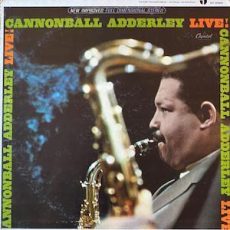
Cannonball Adderley Live! | By Eddie Carter
Alto saxophonist Cannonball Adderley steps into the spotlight of this morning’s discussion with his first live album after leaving Riverside. Cannonball Adderley Live! (Capitol Records T 2399/ST 2399) is a live date highlighting his sextet’s performances over three nights at Shelly’s Manne Hole in 1964! It hit the stores a year later and he’s joined on stage by brother Nat Adderley on cornet, Charles Lloyd on flute and tenor sax, Joe Zawinul on piano, Sam Jones on bass, and Louis Hayes on drums. Lloyd joined Cannonball’s group after Yusef Lateef left, and this is the only album I’m aware of that he recorded with the sextet. My copy used in this report is the original US Stereo release.
Cannonball introduces the set’s first tune, Little Boy With The Sad Eyes by Nat Adderley. Charles sets the introduction for the sextet’s collective theme on flute with a tender interlude by Joe. Nat paves the way for the others with a vivacious statement. Cannonball plants some firm roots on the second reading, next Charles adds an abundance of swinging ideas preceding leading the ensemble into a soft summation. Up next is Nat’s contemporary jazz classic, Work Song. Cannonball begins this tune with a concise introduction anchored by the group ahead of their feisty melody. The altoist is up first with a mesmerizing interpretation. Nat responds with a spirited solo leading to the ending theme and the leader’s remarks.
Sweet Georgia Bright, the first of two tunes by Charles Lloyd begins Side Two at a frenzied pace as the sextet rips into the torrid theme furiously. Charles has the first say and wails like the Road Runner traveling at breakneck speed. Nat moves with the fury of a violent whirlwind preceding the ensemble’s swift reprise and abrupt exit. The Song My Lady Sings is a very pretty ballad that could fit perfectly in a love story soundtrack. Cannonball and the rhythm section open the song tenderly. Nat and Charles add their haunting horns to complete the melody. Cannonball caresses each note of the first solo delicately. Nat enters next using the mute to build a warm, moving reading, next Joe delivers a luxuriously rich four-minute performance ahead of Cannonball’s postscript and gentle ending.
The Theme aka Unit 7 by Sam Jones allows Cannonball to address the audience and acknowledge his bandmates who end the set on an upbeat note. Cannonball Adderley Live! was produced by David Axelrod. It’s unknown who the recording engineer was, but the sound quality is quite good, placing the listener in the audience each night. A decade after this album was released, Cannonball suffered a stroke from a cerebral hemorrhage. He passed away at age forty-six on August 8, 1975. He also recorded for Blue Note, EmArcy, Fantasy, Mercury, and Riverside over his two-decade career and his legacy is an extensive discography including some albums as a leader and sideman that have stood the test of time. If you’re in the mood for some good live jazz, I invite you to check out Cannonball Adderley Live! It’s an underappreciated and overlooked gem deserving of a wider audience and a title I recommend for your library!
~ Cannonball Adderley – Source: Wikipedia.org ~ © 2022 by Edward Thomas Carter

More Posts: choice,classic,collectible,collector,history,instrumental,jazz,music,saxophone
Daily Dose Of Jazz…
Joe Bishop was born November 27, 1907 in Monticello, Arkansas and learned piano, trumpet, and tuba when he was young. He also played flugelhorn and mellophone. He attended Hendrix College and played professionally with the Louisiana Ramblers in 1927, including in Mexico.
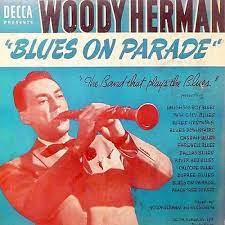
Bishop played with Mart Britt, Al Katz, and Austin Wylie before joining the Isham Jones band for five years. He was a founding member of Woody Herman’s band in the 1930s, but he contracted tuberculosis in 1940 and had to leave the group. He was rehired by Herman as a staff arranger later in the 1940s, and his arrangements and compositions were recorded frequently by Herman, appearing on some 50 of Herman’s albums.
As a performer, Joe played with Cow Cow Davenport and Jimmy Gordon’s Vip Vop Band, but retired from studio work due to his health in the 1950s. Joe quit music and opened a store in Saranac Lake, New York, and later retired to Texas. His compositions include Midnight Blue, Woodchopper’s Ball, and Blue Prelude with Gordon Jenkins.
Tubist, pianist and composer Joe Bishop, whose work has been covered by musicians as diverse as Ten Years After and Lawrence Welk, transitioned on May 12, 1976.
More Posts: composer,history,instrumental,jazz,music,piano,tuba
TONY HIGHTOWER
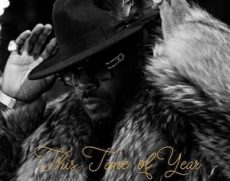
Singer/Songwriter Tony Hightower is taking up the mantle to be a bridge that ushers R&B audiences into Jazz…Real Jazz. With years of experience as a musical performer and actor with familiar roots that place him firmly within the music’s firmament, Atlanta-native Hightower is still just getting started on this benevolent turn in his journey. And he is bringing a lot of young people with him.
His sophomore project, LEGACY, finds Hightower exploring Jazz vocal stylings from a dazzling prism of angles. The 10-song album moves confidently and assuredly from original compositions such as the soulful scat-laced “All to the Good,” the seductive Brazilian bossa nova of “Rendezvous” and the tender carnal Jarreau-esque love beg “I Need You” to swingin’ covers of Earth, Wind & Fire’s classic Skip Scarborough-penned “Can’t Hide Love,” a mean shuffle boogie groove through Al Green’s “Love and Happiness” and a smoldering upright bass accompanied tiptoe through the 1929 Andy Razaf standard “Gee, Baby, Ain’t I Good To You” made further famous in 1944 by one of Hightower’s greatest and earliest Jazz vocal heroes, Nat “King” Cole. That one’ll make the women wiggle.
More Posts: adventure,album,club,festival,genius,jazz,museum,music,preserving,restaurant,travel,vocal
Daily Dose Of Jazz…
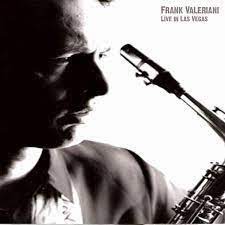
Frank J. Valeriani was born in Newark, New Jersey on November 26, 1966. He started studying saxophone at age of 15. When his family moved to Italy he put together his first mediterranean blues oriented band. While living in Italy he graduated magna cum laude from the music conservatory in Naples. After the conservatory years he started several bands, including jazz, fusion and latin jazz, and peformed at several festivals before moving north to Milano, Italy.
In Milano He studied songwriting, arranging and jazz at the alternative contemporary music school, Professional Music Center, graduating with excellent scores. During his Italian years he performed with Wess, Rocky Roberts, Cristiano Malgioglio, Peppino Gagliardi, Nello Daniele and others. He was music coordinator and conductor of the folk show Quanno Tramonta ‘o Sole that toured all over Italy for several years. He also toured with Maestro Gianni Mazza and performed on Italian tv networks.
Deciding to move back to the states he chose Las Vegas, Nevada for its musical activity. He performed with some of the best musicians in town, such as The Platters, The Drifters, jazz singers Nancy Kelly and Tony Bennett. Frank also performs with the Frank Valeriani Band all over the town.
He plays jazz, smooth jazz, and pop, doubles on percussion, rhythm guitar & keyboards and enjoys back up singing when required. As an educator he teaches saxophone and harmony in music schools. Saxophonist Frank Valeriani is also a composer and arranger and continues to perform and teach.
More Posts: arranger,bandleader,composer,history,instrumental,jazz,music,saxophone
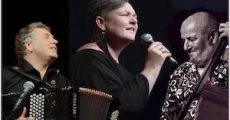
DEENE TRIO
The Deene Trio fronted by vocalist Delphine Nérot is accompanied by accordion and double bass.
Reservations: contact@laciotatculture.com
Info: 06 09 49 03 24 | www.facebook.com/laciotatculture
More Posts: adventure,album,club,festival,genius,jazz,museum,music,preserving,restaurant,travel,vocal