

Requisites
My Funny Valentine ~ Miles Davis In Concert | By Eddie Carter
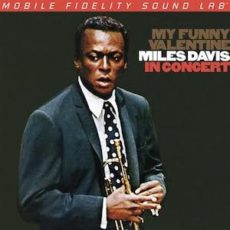
Miles Davis opens this morning’s discussion with a concert promoting a worthy cause. On February 12, 1964, his quintet of George Coleman on tenor sax, Herbie Hancock on piano, Ron Carter on bass, and Tony Williams on drums played a benefit performance for the registration of black voters at Lincoln Center’s Philharmonic Hall. The concert was sponsored by the NAACP Defense Fund, the Congress for Racial Equality, and the Student Nonviolent Coordinating Committee, resulting in two albums, ‘Four’ & More (1966) and My Funny Valentine (Columbia CL 2306/CS 9106), released in 1965. Their performance broke several records for a benefit concert with ticket prices reaching $25 and $50, resulting in Standing Room Only. It also emphasized Miles’ solidarity with these organizations and the people fighting racism in the south. My copy used in this report is the 2016 Mobile Fidelity Sound Lab Stereo audiophile reissue (MFSL 1-431).
My Funny Valentine by Richard Rodgers and Lorenz Hart opens Side One with a gentle introduction by Herbie. Davis states a delicate melody and paints an unforgettable haunting portrait on the lead solo. Miles later attributed his sound during their performance to reflecting his deeply personal reaction to President Kennedy’s death the previous November. George gives a nostalgic, reflective reading next. Herbie turns in an alluringly gentle statement. Ron and Tony provide an exquisite foundation into Miles’ profoundly moving ending. The quintet moves to mid-tempo for All of You by Cole Porter. Davis opens the melody and first solo with a deliciously inventive performance. Coleman sails into a blissfully, soulful groove. Hancock gets a momentary spotlight, and Miles concludes with a few final verses preceding a subtle finale receiving appreciative applause from the audience.
Side Two starts with Stella By Starlight by Victor Young and Ned Washington, one of the most beautiful standards in jazz. Herbie opens with a lovingly picturesque introduction. Miles, Ron, and the ensemble soar briefly on the melody, then the leader goes first, showing expressive beauty. George executes the next reading thoughtfully and Herbie follows with a touching performance. Miles ends with a tender display of romantic lyricism into a lovely climax. The lone up-tempo tune is Miles’ All Blues from Kind of Blue (1959). With a rapid snap of the leader’s fingers, Carter and Hancock start a scintillating introduction. Then comes Coleman, Williams, and Davis who starts the muted melody calmly then attacks ferociously on the opening statement with the mute off. Hancock builds the next reading into an energetic climax. Coleman takes the last solo for a brisk workout before the front line’s vigorous reprise and exit.
Miles and the trio open I Thought About You by Jimmy Van Heusen and Johnny Mercer with a graceful theme. The leader then moves to mid-tempo for a gorgeous opening statement. George responds with a stunning solo, then Herbie performs with heartfelt sincerity. Ron comes in next with a wealth of ideas, and Miles returns with warm sweet sounds on the closing chorus, ending one of his most outstanding performances. The sound quality of this MOFI reissue is superb with an extraordinary soundstage and incredible definition. If you’re a fan of jazz trumpet or only know of the fusion or contemporary albums by Miles Davis, I offer for your consideration, My Funny Valentine. It’s an hour of absolute perfection that belongs in every library and transports you back in time to enjoy a definitive performance with each listen!
~ ‘Four’ & More (Columbia CL 2453/CS 9253), Kind of Blue (Columbia CL 1355/CS 8163) – Source: Discogs.com
~ My Funny Valentine, All of You, Stella By Starlight, All Blues, I Thought About You – Source: JazzStandards.com © 2021 by Edward Thomas Carter

More Posts: choice,classic,collectible,collector,history,instrumental,jazz,music
Daily Dose Of Jazz…
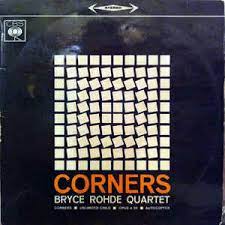
Bryce Benno Rohde was born on September 12, 1923 in Hobart, Tasmania, an island state of Australia. His early influences were Art Tatum and Nat King Cole but eventually leaned towards George Russell’s Lydian Concept.
He played jazz in Adelaide, Australia early in his career before a 1953 move to Canada. In 1954 he and two other expats plus an American formed the Australian Jazz Quartet/Quintet. The group recorded several albums and toured widely in the United States, but broke up in 1958 following a tour of Australia.
Rohde led his own quartets in Australia until 1964, then moved to California in 1965. After then he based himself out of San Francisco, leading his own ensembles at times. Among those Australian musicians with whom he worked extensively are Bruce Cale and Charlie Munro.
The pianist played New York City and Chicago, and recorded for Bethlehem Records. He also published a book combining original jazz compositions and his other passion, black and white photography. It shares the title of one of his seven recordings as a leader, Turn Right At New South Wales.
Over a career in jazz spanning more than 50 years he performed with Count Basie, Miles Davis, Billie Holiday, and John Coltrane among others. He eventually settled in San Francisco, California where he continued to perform and record until his death. Pianist, composer and bandleader Bryce Rohde passed away on January 26, 2016.

More Posts: bandleader,composer,history,instrumental,jazz,music,piano
Daily Dose Of Jazz…
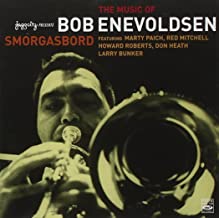
Robert Martin Enevoldsen was born on September 11, 1920 in Billings, Montana. He recorded sessions with Art Pepper and Shorty Rogers, and later extensively played with Shelly Manne.
Enevoldsen did most of the arranging for Steve Allen’s Westinghouse show in the early-1960s. During the 1970s, he performed with Gerry Mulligan. In the mid-1970s Bob taught arranging and directed the jazz band at Los Angeles Pierce College in Woodland Hills.
Tenor saxophonist and valve trombonist Bob Enevoldsen, who mainly played in the West Coast genre and was known for his work with Marty Paich, passed away on November 19, 2005 in Woodland Hills, Los Angeles, California.
More Posts: instrumental,jazz,music,saxophone,trombone
Daily Dose Of Jazz…
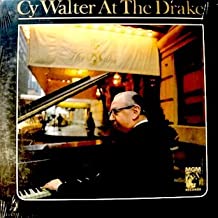
Cliff Leeman was born in Portland, Maine on September 10, 1913. At age 13 he played percussion with the Portland Symphony Orchestra and toured as a xylophonist on the vaudeville circuit late in the 1920s. He first made his name in the jazz world during the Thirties and Forties working in the swing bands of Artie Shaw, Glenn Miller, Tommy Dorsey, Charlie Barnet, Johnny Long, and Woody Herman.
After a stint in the Army in 1944, he worked with Don Byas, John Kirby, Raymond Scott, Jimmy Dorsey, and Ben Webster. He briefly left the music industry before joining the Casa Loma Orchestra in 1947, later moving on to the Charlie Barnet Orchestra and closing out the decade in Bob Chester’s big band ensemble.
He played on radio and television in the 1950s, in addition to playing live often with Eddie Condon and Bobby Hackett. His later associations include Pee Wee Erwin, Yank Lawson/Bob Haggart, Ralph Sutton, Billy Butterfield. During the 1960s he performed with Bob Crosby, Wild Bill Davison, Dukes of Dixieland, Peanuts Hucko and Joe Venuti. The Seventies saw Cliff with The Kings of Jazz, Bud Freeman, Don Ewell, the World’s Greatest Jazz Band, and Jimmy McPartland.
He recorded several albums for Fat Cat Jazz in the 1970s. Drummer Cliff Leeman, whose nickname is Mr. Time, passed away on April 26, 1986.
More Posts: drums,history,instrumental,jazz,music
The Quarantined Jazz Voyager
With rising cases of the Delta variant continuing to fill hospital beds to capacity with the unvaccinated causing other procedures to be postponed and medical staff walking out, I remain even more vigilant in protecting myself from those whose sole purpose is to put themselves and others in harm’s way. Remaining masked, socially distanced and secluded.
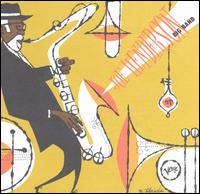
This week I’m pulling out the classic 1997 album Big Band by saxophonist Joe Henderson, the fourth of the five albums he recorded for Verve Records during the end of his career. The album was recorded at the Power Station ~ Berklee, New York City over a four year period between March 16, 1992 ~ June 26, 1996 and was released in 1997.
The sessions were produced, written and arranged by Joe Henderson, along with executive producer Richard Seidel, and producers Bob Belden (2,3,4,6,7,9), and Don Sickler (1,5,8). The production coordinator was Patricia Lie. The recording was mastered by Allan Tucker, mixed by Jim Anderson, photography by Jim Katz, and the iIllustration was created by Edwin Fotheringham.
Track List | 60:05 All tracks are composed by Joe Henderson, except where noted.- Without a Song (Vincent Youmans, Billy Rose, Edward Eliscu) ~ 5:24
- Isotope ~ 5:20
- Inner Urge ~ 9:01
- Black Narcissus ~ 6:53
- A Shade Of Jade ~ 8:22
- Step Lightly ~ 7:19
- Serenity ~ 5:52
- Chelsea Bridge (Billy Strayhorn) ~ 4:30
- Recordame (Recuerdame) ~ 7:25
- Joe Henderson ~ tenor saxophone, arranger (tracks 1, 2, 5, 8)
- Slide Hampton ~ conductor, arranger (tracks 3, 7))
- Dick Oatts ~ soprano saxophone, alto saxophone
- Pete Yellin, Steve Wilson, Bobby Porcelli, John O’Gallagher ~ alto saxophone
- Craig Handy, Rich Perry, Tim Ries, Charles Pillow ~ tenor saxophone
- Joe Temperley, Gary Smulyan ~ baritone saxophone
- Freddie Hubbard, Raymond Vega, Idrees Sulieman, Jimmy Owens, Jon Faddis, Lew Soloff, Marcus Belgrave, Nicholas Payton, Tony Kadleck, Michael Mossman, Virgil Jones, Earl Gardner, Byron Stripling ~ trumpet
- Conrad Herwig, Jimmy Knepper, Robin Eubanks, Keith O’Quinn, Larry Farrell, Kiane Zawadi ~ trombone
- David Taylor, Douglas Purviance ~ bass trombone
- Chick Corea, Helio Alves, Ronnie Mathews ~ piano
- Christian McBride ~ bass
- Joe Chambers, Al Foster, Lewis Nash, Paulinho Braga ~ drums
- Michael Mossman ~ arranger (track 9)
- Bob Belden ~ arranger (tracks: 4, 6)
More Posts: adventure,album,club,genius,jazz,museum,music,preserving,restaurant,saxophone,travel