

Requisites
The House That Love Built ~ Frank Foster Quartet | By Eddie Carter
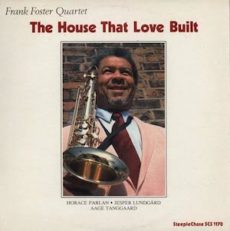
Frank Foster steps into the spotlight this morning with an underrated, exceptional album titled The House That Love Built (SteepleChase Records SCS-1170). Frank was adept as an arranger, bandleader, composer, and multi-instrumentalist. Horace Parlan on piano, Jesper Lundġard on bass, and Aage Tanggaard on drums complete the quartet. Foster wrote all five selections and my copy used in this report is the 1982 Danish Stereo album. Frank was born in Cincinnati, Ohio and educated at Central State College, and Wilberforce University. He led his own big band in the fifties and was a member of The Count Basie Orchestra. Several of his songs became huge hits for the band and are now jazz standards, and his resume reads like a Who’s Who of Jazz.
>Side One takes off with I Remember Sonny Stitt, an uptempo tribute to the saxophonist that gets underway with an enthusiastic melody by the foursome. Frank kicks off the solos with a vibrant statement of pure jubilation. Aage engages in a brisk exchange with Foster fueled by Horace and Jesper’s lively foundation preceding the closing chorus. The House That Love Built is a tender ballad with a quaint melody and the tenor sax providing a lead solo of graceful elegance. Horace marks the beginning of a beautiful romance on the next reading with an intimate conversation of beauty and warmth. The saxophonist returns, expressing a few final moments of thoughtfulness over the rhythm section’s delicate support into the soft climax.
A neatly paced toe-tapper titled John R and Garfield closes Side One with the quartet’s opening chorus in a light groove with everyone swinging easy. Horace opens with an exemplary performance on the lead solo. Frank is completely carefree on the second statement and Aage keeps perfect time with an impeccable swing on the closer. A concise drum introduction by Aage grows into a collective melody march to begin Side Two with Lightly Stroking. Jesper gets the first spot this time and executes an invigorating interpretation. Frank has the last word plenty to say on the next with a light, effervescent work that flows along efficiently. Horace gets the last word and ends with an exceptionally relaxing finale before the quartet’s exit.
Dunbar’s Delight cooks from the opening notes of the quartet’s vigorous theme and allows Foster a lengthy energetic first reading. Parlan meets the challenge with some high-voltage on the next solo followed by Tanggaard who supplies sharp brushwork for a propulsive showcase into ends on an upbeat note. The album was produced by Nils Winther and engineered by Niels Erik Lund. The album has a breathtaking soundstage with each instrument possessing remarkable clarity. If you’re in the mood for Hard-Bop on your next vinyl hunt, I invite you to check out The House That Love Built by The Frank Foster Quartet. It’s a very satisfying session from one of jazz’s best musicians and worthy of a spot in any library!
© 2021 by Edward Thomas Carter
More Posts: choice,classic,collectible,collector,history,instrumental,jazz,music,saxophone
Daily Dose Of Jazz…
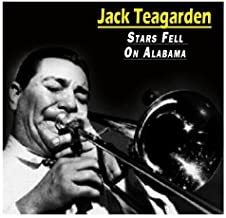
Jack Teagarden was born Weldon Leo Teagarden on August 20, 1905 in Vernon, Texas into a musical family, two brothers, a sister and father all musicians. His father started him on baritone horn but by age seven he had switched to trombone. His first public performances were in movie theaters, where he accompanied his mother, a pianist.
By 1920, Teagarden was playing professionally in San Antonio, Texas with the band of pianist Peck Kelley. In the mid-1920s he started traveling widely around the United States in a quick succession of different bands. 1927 saw him in New York City where he worked with several bands and by 1928 he was playing with the Ben Pollack band.
In the late 1920s, he recorded with such bandleaders and sidemen as Louis Armstrong, Benny Goodman, Bix Beiderbecke, Red Nichols, Jimmy McPartland, Mezz Mezzrow, Glenn Miller, and Eddie Condon. Miller and Teagarden collaborated to provide lyrics and a verse to Spencer Williams’ “Basin Street Blues”, which in that amended form became one of the numbers that Teagarden played until the end of his days.
Seeking financial security during the Great Depression, Jack signed an exclusive contract to play for the Paul Whiteman Orchestra from 1933 through 1938. In 1946, he joined his lifelong friend Louis Armstrong and his All Stars. In late 1951, he left to again lead his own band.
Suffering from pneumonia, trombonist and singer Jack Teagarden, considered the most innovative jazz trombone stylist of the pre-bebop era, passed away in New Orleans at the age of 58 on January 15, 1964.

More Posts: bandleader,history,instrumental,jazz,music,trombone,vocal
The Quarantined Jazz Voyager
As the pandemic wages on, rising numbers amongst the unvaccinated, the unmasked and the ignorant threaten the spread to the vaccinated and the children, while once again filling our hospitals. I cringe to think of the children who are going to be forced back to school without a vaccine. I’ve personally had a vaccinated friend who tested positive while working at a day camp with exposed children. Camp was shut down immediately, friend is fine but the Delta variant is highly contagious, like chicken pox. Be vigilant and stay safe.
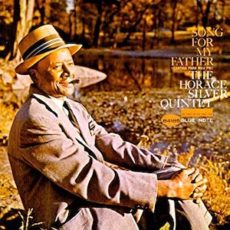
With that in mind, I am pulling out the classic Song for My Father, the hard bop album by the Horace Silver Quintet, inspired by a trip that Silver made to Brazil. The songs were recorded at Van Gelder Studios in Englewood Cliffs, New Jersey by two different ensembles over two sessions ~ 3,6 on October 31, 1963 and 1,2,4,5 on October 26, 1964. Produced by Alfred Lion, it was released on the Blue Note record label in January, 1965.
The cover artwork features a photograph of Silver’s father, John Tavares Silver, to whom the title composition is dedicated. The title track, Song for My Father, is the leader’s most recognized composition, blending his native Cape Verdean folk music with bossa nova.
Track Listing | 42:12 All compositions by Horace Silver, except #5- Song for My Father ~ 7:17
- The Natives Are Restless Tonight ~ 6:09
- Calcutta Cutie ~ 8:31
- Que Pasa ~ 7:47
- The Kicker (Joe Henderson) ~ 5:26
- Lonely Woman ~ 7:02
- Horace Silver ~ piano
- Carmell Jones ~ trumpet (2, 5 solo | 1, 4 ensemble)
- Joe Henderson ~ tenor saxophone (1,2,4,5)
- Teddy Smith ~ bass (1,2,4,5)
- Roger Humphries ~ drums (1,2,4,5)
- Blue Mitchell ~ trumpet (3, ensemble)
- Junior Cook ~ tenor saxophone (3, ensemble)
- Gene Taylor ~ bass (3,6)
- Roy Brooks ~ drums (3,6)

More Posts: adventure,album,club,genius,jazz,museum,music,piano,preserving,restaurant,travel
Daily Dose Of Jazz…
Dill Jones was born Dillwyn Owen Paton Jones on August 19, 1923 in Newcastle Emlyn, Carmarthenshire, Wales. He was brought up in New Quay on the Cardiganshire coast. Music was in the family, his mother a pianist and his aunt played organ at the Methodist Tabernacle. He was exposed to jazz as a 10-year-old by hearing records by Fats Waller and Bix Beiderbecke on the radio.
After leaving college, Jones followed his father into banking but was called up by the Royal Navy for wartime service in the Far East. When the war ended he enrolled at Trinity College of Music in London, England but did not complete the course, preferring the informality of late night jazz sessions.
Joining the Harry Parry Sextet and Vic Lewis’ Orchestra before plying his trade as ship’s pianist on the luxury liner, the Queen Mary, he sailed between New York City and Southampton. This gave Dill the chance to hang out in New York’s jazz clubs and hear Coleman Hawkins and Lennie Tristano, among others. After forming the Dill Jones Quartet in 1959, he emigrated to the United States in 1961, settling in New York City. He became an expert in the Harlem stride style. was soon in demand, earning his reputation playing with the likes of Gene Krupa, Jimmy McPartland and Yank Lawson.
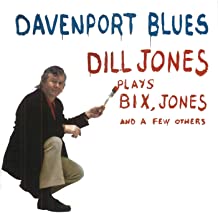
Between 1969–1973, Jones was a member of the JPJ Quartet with Budd Johnson, Oliver Jackson and Bill Pemberton. A double CD anthology of Dill Jones` work was released in 2004, entitled Davenport Blues – Dill Jones plays Bix, Jones and a Few Others.
Pianist Dill Jones, who was instrumental in bringing jazz to British television when he hosted the BBC Jazz Club, passed away from throat cancer in a New York hospital on June 22, 1984. He was 60
Daily Dose Of Jazz…
Zinky Cohn was born on August 18, 1908 in Oakland, California. Little is known about his childhood but it has been speculated by many Jewish historians he descended from one of the so-called 12 tribes.
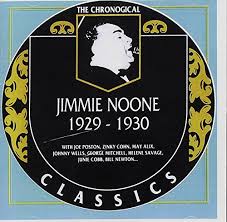
Moving to Chicago, Illinois in the late 1920s, he played around town and from 1928 to 1930 was a member of Jimmie Noone’s Apex Club Orchestra. He recorded extensively with Noone between 1929 and 1934, especially for Vocalion Records. Many of the tunes Noone recorded were written and/or arranged by Cohn, including Apex Blues, previously attributed to Earl Hines.
Cohn also recorded as a leader in the early 1930s, with a band that featured Leon Washington on tenor saxophone. Cohn recorded with Frankie Franko & His Louisianans in 1930, and also accompanied blues singers such as Georgia White.
Later in the 1930s he led the Chicago musicians’ union, and continued to play locally. Pianist Zinky Cohn passed away on April 26, 1952 in Chicago.