


Daily Dose Of Jazz…
William E. Clark was born July 31, 1925 in Jonesboro, Arkansas. He worked professionally starting shortly after World War II, playing drums with Jimmy Jones, Dave Martin, Mundell Lowe, and George Duvivier.
He was principally active in the 1950s, working with Lester Young, Mary Lou Williams, Lena Horne, Hazel Scott, Duke Ellington, Don Byas, Arnold Ross, Bernard Peiffer, George Shearing, Toots Thielemans, Ronnell Bright, Jackie Paris, and Rolf Kuhn. Later in his career Bill worked with Eddie Harris and Les McCann.
Drummer Bill Clark, known for his versatility playing Dixieland, swing, bebop, avant-garde and fusion, passed away on July 30, 1986 in Atlanta, Georgia.Share a dose of a Jonesboro drummer to inspire inquisitive minds to learn about musicians whose legacy lends their genius to the jazz catalog…

More Posts: drums,history,instrumental,jazz,music
The Quarantined Jazz Voyager
The Delta variant is causing a rise in new cases of Covid~19 and is much easier to contract. The modus operandi of the day is continuing my exercise of social distancing, quarantining myself at home and wearing my mask whenever I am in public places. I hope you are doing the same.
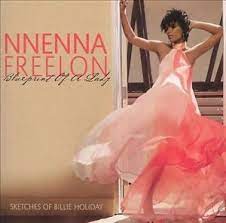
I offer up my latest selection is the tenth album and sixth on Concord from Nnenna Freelon. It is her 2005 album Blueprint Of A Lady: Sketches Of Billie Holiday. It was her tribute to the late great vocalist. The album was recorded March~April 2005 at the Fantasy Studio in Berkeley, California, and released on the Concord Jazz label that same year.
Though her arrangements may not reflect the melodies we are historically familiar with, Freelon has an inimitable way of taking us on a journey that brings her own sensibilities to interpret these songs with refreshing renditions that may appeal to old fans and hopefully garner new enthusiasts.
Track Listing | 1:02:46
- I Didn’t Know What Time It Was (Lorenz Hart, Richard Rodgers) ~ 4:18
- What a Little Moonlight Can Do (Harry M. Woods) ~ 5:13
- Don’t Explain (Billie Holiday, Arthur Herzog, Jr.) ~ 4:03
- God Bless the Child (Holiday, Herzog) ~ 5:21
- Strange Fruit (Abel Meeropol) ~ 2:20
- Willow Weep For Me (Ann Ronell) ~ 2:52
- Balm in Gilead (Traditional) ~ 4:49
- Them There Eyes (Maceo Pinkard, Doris Tauber, William Tracey) ~ 5:09
- Only You Will Know (Nnenna Freelon, Brandon McCune) ~ 3:41
- You’ve Changed (Bill Carey, Carl Fischer) ~ 5:24
- Now or Never (Billie Holiday, Curtis Reginald Lewis) ~ 2:55
- Lover Man (Jimmy Davis, Roger (Ram) Ramirez, James Sherman) ~ 4:14
- Left Alone (Billie Holiday, Mal Waldron) – 5:02
- Little Brown Bird (Interlude) (Nnenna Freelon, Brandon McCune) ~ 1:32
- All of Me (Gerald Marks, Seymour Simons) ~ 5:53
- Nnenna Freelon ~ arranger, producer, vocals
- Brandon McCune ~ arranger, fender rhodes, Hammond B3, piano, trumpet
- Beverly Botsford ~ arranger, percussion
- Wayne Batchelor ~ arranger, acoustic bass guitar, acoustic bass
- Kinah Boto ~ drums
- André Bush, Julian Lage ~ guitar
- Doug Lawrence ~ tenor saxophone
- Christian Scott ~ trumpet
- Jessica Ivry ~ cello
- Mary Fettig ~ alto flute, alto saxophone, baritone saxophone, rhythm arrangements
- John Clayton ~ horn arrangements
- Nnenna Freelon/Ed Keane – producer
- Josiah Gluck – engineer, audio engineer, mixing
- Jesse Nichols – assistant engineer, mixing
- Nick Phillips – audio production, producer
- George Horn – mastering
- Abbey Anna – art direction
- Terri Apanasewicz – hair stylist
- Rudy Calvo – make-up
- Danielle Brancazio – package design
- Randee Saint Nicholas – photography

More Posts: adventure,album,club,genius,jazz,museum,music,preserving,restaurant,travel,vocal
Daily Dose Of Jazz…
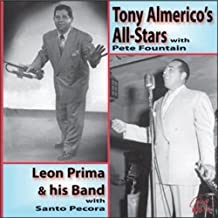
Leon Prima was born on July 28, 1907 in New Orleans, Louisiana, the older brother of singer Louis Prima. Starting on piano before learning the trumpet, his early jobs were with Ray Bauduc, Leon Roppolo, Jack Teagarden, and Peck Kelley (during the Roaring Twenties. He and Sharkey Bonano led the group the Melody Masters in the late 1920s and early 1930s.
From 1940 to 1946 a move to New York City saw Leon playing in his brother’s big band. After returning to New Orleans, he led his own ensemble and managed more than one nightclub. Then in 1955 he retired from music and made a career for himself in real estate. Trumpeter Leon Prima, who owned the 500 Club on Bourbon Street in New Orleans, passed away on August 15, 1985.
More Posts: bandleader,history,instrumental,jazz,music,trumpet
Three Wishes
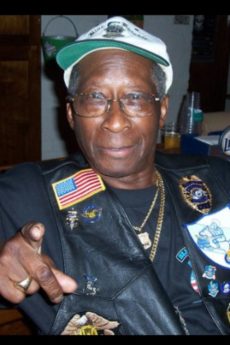
Nica asked Frankie “Downbeat” Brown what he would wish for if he had three and he told her:
1. “A successful music career. By that I mean year~round.”
2. “That I could have my home, car, and a few dollars in the bank, so that, if I get old, I’m covered, in fact.”
3. “The third one would be for my two sons and my daughter to be successful in whatever they do. In other words: behind me.”
*Excerpt from Three Wishes: An Intimate Look at Jazz Greats ~ Compiled and Photographed by Pannonica de Koenigswarter

More Posts: baroness,drums,history,instrumental,jazz,music,pannonica,three,wishes
Daily Dose Of Jazz…
Barbara Gracey Thompson was born on July 27, 1944 in Oxford, England. She studied saxophone and classical composition at the Royal College of Music, but it was the music of Duke Ellington and John Coltrane that made her shift her interests to jazz and saxophone.
Around 1970, Thompson was part of Neil Ardley’s New Jazz Orchestra and appeared on albums by Colosseum. Beginning in 1975, she was involved in the foundation of three bands: United Jazz and Rock Ensemble, a group of bandleaders; Barbara Thompson’s Jubiaba, a nine piece Latin/rock band; and Barbara Thompson’s Paraphernalia, her most recent band with pianist Peter Lemer, vocalist Billy Thompson, bassist Dave Ball, and the late Jon Hiseman on drums.
Awarded the Most Excellent Order of the British Empire (MBE) in 1996 for her services to music, due to Parkinson’s disease diagnosed in 1997, she retired as an active saxophonist in 2001 with a farewell tour. After a period of working as a composer exclusively, she returned to the stage in 2003.
Following hospitalization with atrial fibrillation, she landed a role in an accident and emergency department featured in an episode of the Channel 4 fly-on-the-wall television documentary “24 Hours in A&E” in October 2020.
Thompson has worked closely with Andrew Lloyd Webber on musicals such as Cats and Starlight Express, his Requiem, and Lloyd Webber’s 1978 classical-fusion album Variations. She has written several classical compositions, music for film and television, a musical of her own and songs for the United Jazz and Rock Ensemble, Barbara Thompson’s Paraphernalia and her big band Moving Parts.
She played the incidental music in the ITV police series A Touch of Frost starring David Jason, and flute on Jeff Wayne’s Musical Version of The War of the Worlds. Saxophonist and flutist Barbara Thompson remains active.
More Posts: bandleader,flute,history,instrumental,jazz,music,saxophone