

The Quarantined Jazz Voyager
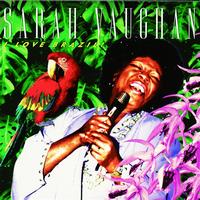
Masking and social distancing are still my mantra in maintaining my health and this pandemic has given me a great opportunity to sit and listen to albums I have’nt in a long time. So as I revisit my music collection this week I place on the turntable the 1977 studio album by Sarah Vaughan titled I Love Brazil! If you love Vaughan’s voice and the music of Brazil, you will want this in your collection.
The session was recorded on October 31 ~ November 7, 1977 and was her first album released on Pablo Records. This was Vaughan’s first but not last foray into Brazilian music, bossa nova and mpb. It was followed by Copacabana in 1979, and Brazilian Romance in 1987.
Track Listing | 54:43- If You Went Away | Preciso Aprender a Ser Só (Ray Gilbert, Marcos Valle, Paulo Sérgio Valle) ~ 4:25
- Triste (Antônio Carlos Jobim) ~ 2:58
- Roses and Roses | Das Rosas (Dorival Caymmi, Gilbert) ~ 3:23
- Empty Faces | Vera Cruz (Lani Hall, Milton Nascimento) ~ 6:26
- I Live to Love You | Morrer de Amor (Oscar Castro-Neves, Luverci Fiorini, Gilbert) ~ 3:54
- The Face I Love | Seu Encanto (Gilbert, Carlos Pingarilho, M. Valle) ~ 3:29
- Courage | Coragem (Nascimento, Cootie Williams) ~ 3:42
- The Day It Rained | Chuva (Pedro Camargo, Durval Ferreira, Gilbert) ~ 4:40
- A Little Tear | Razão de Viver (Deodato, Gilbert, P.S. Valle) ~ 4:07
- Like a Lover | Cantador (Alan and Marilyn Bergman, Dori Caymmi, Nelson Motta) ~ 4:45
- Bridges | Travessia (Nascimento, Fernando Brant, Gene Lees) ~ 4:12
- Someone to Light Up My Life | Se Todos Fossem Iguais a Vocë (Jobim, Vinicius de Moraes, Lees) ~ 3:26
- Sarah Vaughan ~ vocals
- Dorival Caymmi – vocals (3)
- Milton Nascimento – acoustic guitar, vocals (4,7,11)
- Dori Caymmi – acoustic guitar, vocals (10)
- Nelson Angelo – electric guitar (4,7,11)
- Hélio Delmiro – electric guitar (1-3,6,8-9,12)
- Danilo Caymmi – flute (4,7,11)
- Paulo Jobim – flute (4,7,11)
- Mauricio Einhorn – harmonica (8)
- Antônio Carlos Jobim – piano (2,12)
- José Roberto Bertrami – electric piano (1-3,6,8-9), organ (4,7,11)
- Edson Frederico – orchestration (1-3,5-6,8-9,12), piano (5)
- Sergio Barroso – acoustic bass (1-2,6,9,12)
- Claudio Bertrami – acoustic bass (3,8)
- Novelli – electric bass (4,7,11)
- Wilson das Neves – drums (1-3,6,8-9,12)
- Robertinho Silva – (4,7,11)
- Ariovaldo – percussion (1-4,6-7,9,11-12)
- Chico Batera – percussion (1-4,6-7,9,11-12)
- Luna – percussion (12)
- Marçal – percussion (12)
- Durval Ferreira – creative director
- Sheldon Marks – design, layout design
- Norman Granz – design, layout design, liner notes
- Mário Jorge Bruno – engineer
- Tamaki Beck – mastering
- Aloísio de Oliveira – producer

More Posts: adventure,album,club,genius,jazz,museum,music,preserving,restaurant,travel,vocal
Daily Dose Of Jazz..
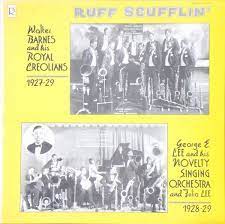
Walter Barnes was born on July 8, 1905 in Vicksburg, Mississippi but grew up in Chicago, Illinois. He studied under Franz Schoepp and attended the Chicago Musical College and the American Conservatory of Music.
Leading his own bands from the early 1920s, he also played with Detroit Shannon and his Royal Creolians. After Shannon’s retinue became dissatisfied with his leadership, Barnes took control of this group as well. He played mostly in Chicago, though the band did hold a residency at the Savoy Ballroom in New York City as well. His band recorded in 1928-29 for Brunswick Records.
He toured the American South in the 1930s to considerable success, touring there yearly and by 1938 the ensemble grew to sixteen members. Around this time, Barnes also worked as a columnist for the Chicago Defender newspaper, and used his position to advertise his own tours and promote other entertainers on the same touring trail to Black audiences. Barnes is thus credited as an early originator of what was known as the “Chitlin’ Circuit”; a network of entertainment venues where it was safe and acceptable for Black entertainers to perform.
Barnes was one of the victims of the Rhythm Club Fire in Natchez, Mississippi, on April 23, 1940. When the club caught fire, he had the group continue playing the song “Marie” in order to keep the crowd from stampeding out of the building. All of the band members except for drummer Walter Brown and bassist Arthur Edward were among the 201 victims of the fire.
Clarinetist, saxophonist and bandleader Walter Barnes, whose death was repeatedly immortalized in song, passed away on April 23, 1940.
More Posts: bandleader,clarinet,history,instrumental,jazz,music,saxophone
Three Wishes
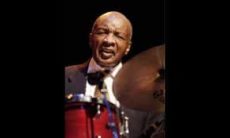
When Ed Thigpen was approached by Nica and asked what his three wishes would be if given he told her: 1. “That there would be love amongst all people in the world~complete, you understand.” 2. “That I always keep my family happy. You know, my wife. It would be nice to say “in sickness and in health.” 3. “I’d like to be a master, or a complete musician. Know music completely, inside out.”
*Excerpt from Three Wishes: An Intimate Look at Jazz Greats ~ Compiled and Photographed by Pannonica de Koenigswarter

More Posts: baroness,drums,history,instrumental,jazz,music,pannonica,three,wishes

Daily Dose Of Jazz…
Born on July 6, 1920 in Abany, New York, Dick Kenney was one of a circle of big-band trombonists influenced by Bill Harris. Anxious to get to the jazz center once his chops were together, cello had been his initial introduction to music, but it was as a trombonist that he got into the Toots Mondello band in the early ’40s.
It was a bandleader named Paul Villepigue who took the budding trombonist from Albany to New York City. From 1946 there ensued two years of education with Johnny Bothwell, then Kenney headed for the West Coast and a return to college studies prior to seriously hitting the big band circuit. His first outing was with Charlie Barnet, then moved to Les Brown in 1957, migrating to Brown’s New England stomping or rather fox-trotting.
The trombonist’s big band work is well documented having recorded as a featured artist on more than one hundred sides, many in the late ’60s. The list includes Stan Kenton’s visionary City of Glass as well as addresses from forgotten artists, a good example being the Bothwell collection entitled Street of Dreams. Tromonist Dick Kenney, who played in the jazz and pop genres as well as on soundtracks, retired from music.
More Posts: history,instrumental,jazz,music,trombone
Daily Dose Of Jazz…
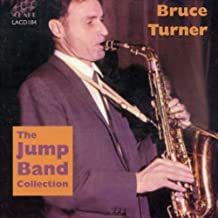
Bruce Turner was born on July 5, 1922 in Saltburn, North Yorkshire, England and educated at Dulwich College. He learned to play the clarinet as a schoolboy and began playing alto saxophone while serving in the Royal Air Force in 1943 during World War II. He played with Freddy Randall from 1948~53 and then worked on the Queen Mary in a dance band and in a quartet with Dill Jones and Peter Ind.
In 1950 he briefly studied under Lee Konitz in New York City. His first period with Humphrey Lyttelton ran from 1953 to 1957. After leaving Lyttelton he led his Jump Band from 1957~65, which was featured along with his arrangements in the 1961 film Living Jazz. In 1961, Turner recorded Jumpin’ at the NFT (National Film Theatre) and the album was issued later that year on Doug Dobell’s 77 Records label, coinciding with the film’s release.
In January 1963, the British music magazine New Musical Express reported that the biggest trad jazz event to be staged in Britain had taken place at Alexandra Palace. The event included George Melly, Diz Disley, Acker Bilk, Chris Barber, Kenny Ball, Ken Colyer, Monty Sunshine, Bob Wallis, Alex Welsh, Mick Mulligan and Turner.
Returning to Randall’s group from 1964 to 1966, he then played with Don Byas and Acker Bilk till 1970. He went on to work with Wally Fawkes, John Chilton, Stan Greig), Alex Welsh, and Dave Green. He led small ensembles in the 1990s until his death. His autobiography Hot Air, Cool Music, published by Quartet Books, appeared in 1984. He wrote a column on jazz for the Daily Worker. Saxophonist, clarinetist, and bandleader Bruce Turner passed away on November 28, 1993 in Newport Pagnell.
More Posts: clarinet,history,instrumental,jazz,music,saxophone