

Daily Dose Of Jazz…
Hasaan Ibn Ali, born William Henry Langford, Jr. on May 6, 1931 in Philadelphia, Pennsylvania. In 1946 at age 15, he toured with trumpeter Joe Morris’s rhythm and blues band and two years later he was playing locally with Clifford Brown, Miles Davis, J. J. Johnson, Max Roach, and others. Based in Philadelphia, he freelanced and acquired a reputation locally as an original composer and theorist. The pianist performed with Horace Arnold in New York City in 1959, and again in 1961–62, in a trio with Henry Grimes.
According to Roach, while visiting New York, Ibn Ali went from club to club to play, and sometimes at the drummer’s home in the middle of the night continued to play unaccompanied on the piano there. The drummer routinely recorded Ibn Ali’s playing in this way when the pianist visited.
An album, The Max Roach Trio Featuring the Legendary Hasaan, was recorded on December 4 and 7, 1964, with bassist Art Davis, and was released six months later. Seven of the tracks were written by Ibn Ali. After the release of thealbum,
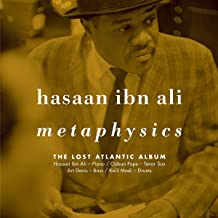
Ibn Ali mentored saxophonist Odean Pope, Ibn Ali had further studio sessions, with Pope, Art Davis and drummer Khalil Madi, on August 23 and September 7, 1965. Unfortunately for music posterity, the master tapes were destroyed in the fire at Atlantic’s warehouse at Long Branch, New Jersey in 1978. Pope believed that the recordings were not released by Atlantic because the label found out that the pianist had been imprisoned shortly after the sessions for drug offences. A copy of the recording was uncovered decades later; CD and LP versions were released as Metaphysics: The Lost Atlantic Album by Omnivore Recordings in 2021.
His parents died in a fire that destroyed their home North Gratz Street on October 24, 1980. Reckless with his health, pianist Hasaan Ibn Ali who was strongly influenced by Elmo Hope, passed away in 1980 at 48 or 49. He built a reputation in Philadelphia, where he influenced musicians including John Coltrane, but he remained little known elsewhere.

More Posts: bandleader,history,instrumental,jazz,music,piano
Daily Dose Of Jazz…
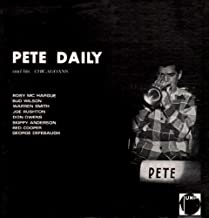
Pete Daily was born on May 5, 1911 in Portland, Indiana. He started his career in Chicago, Illinois in 1930 playing with various bands in and around the city. He was the leader of Pete Daily and his Chicagoans in the 1940s and 50s and recorded for Capitol Records as Dixie by Daily and Pete Daily’s Dixieland Band. They also recorded on the Jump and Decca labels in the 1950s.
In 1942, he moved to the West Coast and, after service in World War II, formed the Chicagoans. He played long engagements at several Hollywood night clubs in the 1950s such as Sardis, The Royal Room, and the Astors in Studio City. He continued to play during the 1970s until a stroke in 1979 forced him to retire.
During the filming of Pete Kelly’s Blues, actor Jack Webb, the cornet-playing star of the film, repeatedly went to the nightclub where Daily performed to study his mannerisms for his role in the film. The band which recorded the soundtrack appeared at Dixieland festivals supported by Pete Daily’s band.
His driving style on the cornet endeared him to generations of Dixieland Jazz enthusiasts. Cornetist and valve trombonist Pete Daily, who played swing and dixieland, passed away on August 23, 1981.
More Posts: bandleader,cornet,history,instrumental,jazz,music,valve trombone
Three Wishes
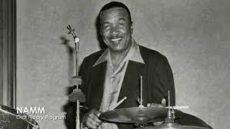
Gus Johnson was asked by Pannonica what his three wishes would be if given the opportunity he replied:
- “To be loved and liked by everyone.”
- “For everyone to live and let live. Be happy together: no prejudice or anything like that.”
- “To always have my health and strength. And, not be a millionaire, but just to have enough, you know, to live comfortably.”
*Excerpt from Three Wishes: An Intimate Look at Jazz Greats ~ Compiled and Photographed by Pannonica de Koenigswarter

More Posts: baroness,drums,history,instrumental,jazz,music,pannonica,three,wishes
Daily Dose Of Jazz…
Charles Owens, was born Charles M. Brown on May 4, 1939 in Phoenix, Arizona and began playing music while attending the University of San Diego. Following a stint in the United States Armed Forces, he studied at Berklee College of Music.
Working in the bands of Buddy Rich and Mongo Santamaria as an alto saxophonist in the late 1960s. In the 1970s played mostly tenor and soprano saxophone. He played in that decade with Bobby Bryant, Paul Humphrey, Diana Ross, John Mayall, Frank Zappa, Lorez Alexandria, Henry Franklin, Patrice Rushen, Gerald Wilson, and James Newton among others.
He worked with Newton again in the mid-1980s, and also played during the same decade with John Carter, Horace Tapscott, and Mercer Ellington. Later he worked with Carmen Bradford, Jeannie Cheatham and Jimmy Cheatham, and Buddy Childers.
Saxophonist and flautist Charles Owens continues to pursue excellence with his music.
More Posts: bandleader,flute,history,instrumental,jazz,musc,saxophone
Daily Dose Of Jazz…
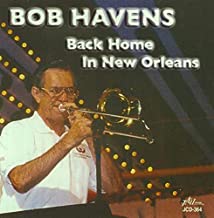
Robert Havens was born May 3, 1930 to a musical family in Quincy, Illinois and began studying violin and trombone at age seven and played both instruments throughout his school years. Landing his first professional job with a local dance band at age 12, by 16 his talent as a trombonist was recognized earning him a scholarship from the Interlochen Music Camp in Michigan and he held the first trombone chair in the school’s 250 piece concert band. He later held the first trombone chair in the Quincy Symphony while also playing in many popular dance groups in Illinois.
Leaving Quincy in 1955 after serving in the Illinois National Guard as a bandsman during the Korean War, Bob toured with the Ralph Flanagan Orchestra. In 1956, he joined George Girard’s Dixieland Band at the Famous Door in New Orleans, Louisiana where he met his idol, Jack Teagarden.
In 1957, Bob joined Al Hirt at Dan’s Pier 600 on Bourbon Street when Hirt formed his very first band. The front line consisted of Hirt, Havens and Pete Fountain. During his time in New Orleans, he recorded albums for Good Times Jazz and Vic labels with the Girard band, and on Verve and Audio Fidelity with Hirt. He also recorded about a dozen albums for the Southland label with many other New Orleans musicians.
Bob stayed with this group until 1960 when he was persuaded to move to the West Coast and join the Lawrence Welk Orchestra as a featured soloist on their weekly TV series. His tenure with this show lasted for 23 years until the show ended in 1982.
Following Welk, he continued as a freelance professional, working often with the Bob Crosby Bob Cats and the Benny Goodman Orchestra, then led by clarinetist Peanuts Hucko. From 1985 to 1995, Havens played with the Great Pacific Jazz Band along with Bob Ringwald (lead vocals/piano), Don Nelson (saxophone), and Zeke Zarchy (trumpet).
In 2005, he performed with the North Carolina Pops Orchestra at Campbell University with fellow Welk star Ava Barber in a benefit concert raising money for victims of Hurricane Katrina. Trombonist Bob Havens returned home to Quincy, and continued to record and appear at jazz festivals and concerts throughout the world.
More Posts: bandleader,history,instrumental,jazz,music,trombone