


Daily Dose Of Jazz…
Woody Witt was born on March 16, 1969 and raised in Omaha, Nebraska. He started on the clarinet in fourth grade, switching his focus to saxophone the following year. Becoming a professional musician at the age of 16, he studied at the University of Houston, earning a Master’s degree in Jazz Studies from the University of North Texas, and a Doctor of Musical Arts from the University of Houston’s Moores School of Music.
The tenorist has recorded over thirty compact discs as a sideman and recorded twelve sessions as a leader. He has collaborated with Randy Brecker, Tim Hagans, Jim Rotondi, James Moody, David Liebman, Tim Armacost,Conrad Herwig, Joe LoCascio, Larry Ham, Mark Levine, Louis Hayes, Adam Nussbaum, Billy Hart, Nancy King and Gabrielle Stravelli. He has worked with the Houston Symphony, and has been featured on major third-stream works that blend together jazz and classical music.
He won the 2010 Chamber Music America French American Cultural Exchange grant and the 2014 International Jazz Saxophone Competition in Taiwan. Since 1999 Woody has been the artistic director of Houston’s jazz club, Cezanne, and now owns the club.
As an educator Witt has taught at Houston Community College since 2000, is an Affiliate Artist at the University of Houston, and has conducted countless master classes and workshops throughout the United States, Europe, Brazil and Asia.
Tenor saxophonist, composer and educator Woody Witt continues to expand his musical creativity.

More Posts: bandleader,history,instrumental,jazz,music,saxophone
Daily Dose Of Jazz…
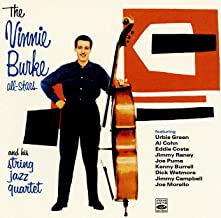
Vinnie Burke, born Vincenzo Bucci on March 15, 1921 in Newark, New Jersey, played violin and guitar early in life, but he lost the use of his little finger in a munitions factory accident and switched to double bass.
In the second half of the 1940s he played with Joe Mooney, Tony Scott, and Cy Coleman. He would go on to play with the Sauter-Finegan Orchestra, Tal Farlow, Marian McPartland, Don Elliott, Vic Dickenson, Gil Mellé, Bucky Pizzarelli, John Mehegan, Chris Connor, Eddie Costa, and Bobby Hackett.
From 1956 into the 1980s he led his own band and led small combos. Bassist Vinnie Burke, who recorded four albums as a leader, passed away on February 1, 2001.
More Posts: bandleader,bass,history,instrumental,jazz,music
Requisites
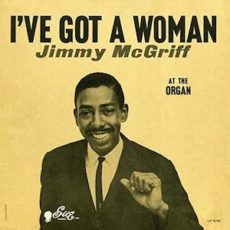
I’ve Got A Woman ~ Jimmy McGriff | By Eddie Carter
This morning’s subject of discussion to begin March is a 1962 Soul-Jazz album by organist Jimmy McGriff who steps into the spotlight with his debut, I’ve Got A Woman (Sue Records LP 1012/LPST 1012). He would make quite an impression on the jazz world in the early sixties. McGriff was twenty-six when he recorded it, and the title tune became his first of ten hits over the next three years. Accompanying him is his working trio at the time, Morris Dow on guitar and Jackie Mills on drums. The LP used in this report is a friend’s copy of the 1962 Mono deep groove release.
Side One kicks off with a rapid reworking of I’ve Got A Woman by Ray Charles. Jimmy takes flight on the song’s only solo with a vigorously spirited performance that sizzles to the rhythm section’s supplement into an enthusiastic fadeout.
On The Street Where You Live by Fredrick Loewe and Alan Jay Lerner offers a subtle change of pace from the previous cooker. It was written in 1956 and featured in the Broadway musical, My Fair Lady that year, and also in the 1964 film version. McGriff steers clear of the pitfall of imitation on the melody and song’s only statement with a quaint and very charming reading preceding the climax. Satin Doll by Duke Ellington, Johnny Mercer, and Billy Strayhorn was written in 1953. It’s one of Ellington’s most popular and recorded songs and is considered one of his best compositions in The Great American Songbook. Jimmy leads the threesome on the melody, then continues on a brief pretty solo. Morris delivers a short meaningful interlude with Jackie provides significant support into the ensemble’s climax.
Thelonious Monk is represented by the most famous of all his tunes, ‘Round Midnight was written in 1944 with Bernie Hanighen and Cootie Williams. It debuted on the album, Genius of Modern Music, Volume 1 (1952), and Miles Davis also recorded it under the title, Round About Midnight (1957). McGriff starts the song with a passionately majestic opening statement, then continues in that vein on a lead solo that’s the personification of elegance. Dow follows with a tender reading as affectionate as a loving embrace or kiss. McGriff returns for a final intimate thought culminating with a delightfully delicate finale. Jimmy’s original, All About My Girl expresses the highly elated and joyful feeling one has about that special woman in their life. The organist opens with an exhilarating statement, and Morris gives with a scintillating reading before the upbeat reprise and coda.
Side Two starts with a medium tempo blues by McGriff, M.G. Blues possessing a sassy attitude that the leader states proficiently in the opening chorus and song’s only solo. It’s a fun tune that’s full of high spirits and enhanced by the rhythm section’s groovy groundwork. Jimmy’s That’s The Way I Feel establishes a sanctified rhythm on the melody that would be perfectly at home in that setting. The trio begins the tune with an earthy, down-home flavor, then Jimmy swings hard on a short reading into the close. After Hours by Avery Parrish, Robert Bruce, and Buddy Feyne is the perfect blues for late-night listening. McGriff honors the 1946 jazz standard by reaching into the heart of the melody with a lengthy warm, affectionate performance that’s sure to bring tears to your eyes as the threesome disappears into nothingness.
Flying Home by Benny Goodman, Lionel Hampton, and Sid Robin was composed in 1939 during a cross-country flight while Hampton was a member of Goodman’s orchestra. Jimmy gives this ageless favorite a vigorously fast workout on the introduction, main theme, and opening statement. Jackie makes a brief comment in his only reading before Jimmy catapults the closing chorus into a rousing finale. McGriff gives a nod to his friend Jimmy Smith with a rocking performance of The Sermon that Smith recorded with an all-star group four-years earlier and released in 1959. McGriff gets good and funky on the lead solo at a swifter speed than the original. Dow fuels the next reading with an energized performance that cooks into McGriff’s return to express a bit more joy before the ending theme trails off into a slow fade.
On the strength of three hits, I’ve Got A Woman, All About My Girl, and M.G. Blues, Jimmy recorded six more albums for Sue Records that ultimately produced seven more hits for the label, making a convincing argument for his reputation as a Soul-Jazz organist. The date was engineered by Irving Greenbaum, and produced by label co-owners, Henry “Juggy” Murray, Jr. and Bobby Robinson. The sound quality is not up to the engineering level by Roy DuNann, Jack Higgins, and Rudy Van Gelder. However, it’s good enough to crank up the volume because the music radiates an infectious enthusiasm and is fun to listen to. If your musical appetite is craving some soul-food for your ears, I offer for your consideration, I’ve Got A Woman by Jimmy McGriff. It’s an appetizing dish of finger-popping, toe-tapping jazz organ that’s worth seeking out on your next vinyl hunt!
~ Genius of Modern Music, Volume 1 (Blue Note BLP 5002), Round About Midnight (Columbia CL 949/CS 8649), The Sermon (Blue Note BLP 4011/BST 84011) – Source: Discogs.com ~ After Hours, Flying Home, ‘Round Midnight, Satin Doll – Source: JazzStandards.com ~ On The Street Where You Live – Source: Wikipedia.org © 2021 by Edward Thomas Carter

More Posts: choice,classic,collectible,collector,history,instrumental,jazz,music,organ
Daily Dose Of Jazz…
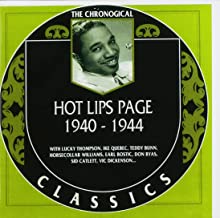
Ernest “Bass” Hill was born on March 14, 1900, Pittsburgh, Pennsylvania. He played from 1924 with Claude Hopkins, and remained with him on a tour of Europe with Josephine Baker the following year. He collaborated with Hopkins numerous times over the next few years and again in the 1940s. In 1928 he played with Leroy Smith & His Orchestra and Bill Brown & His Brownies, and the following year worked in the Eugene Kennedy Orchestra.
The 1930s saw Bass playing with Willie Bryant, Bobby Martin’s Cotton Club Serenaders, Benny Carter, Chick Webb, and Rex Stewart. He was in Europe late in the decade when World War II broke out and he fled to Switzerland. There he played with Mac Strittmacher before returning to the United States in 1940.
In that year, he recorded with violinist Eddie South and trumpeter Hot Lips Page. Following this, he played with Maurice Hubbard, Hopkins again, Zutty Singleton, Louis Armstrong, Cliff Jackson, Herbie Cowens, and Minto Kato throughout the decade. In 1949 he returned to Europe, where he played in Switzerland and Italy with Bill Coleman and then in Germany with Big Boy Goudie until 1952.
Upon his return to the States he worked in New York City with Happy Caldwell, Henry Morrison, and Wesley Fagan. Double bassist Ernest “Bass” Hill, who worked in the musicians’ union in the last decade of his life, passed away on September 16, 1964 in New York City.
More Posts: bass,history,instrumental,jazz,music
Daily Dose Of Jazz…
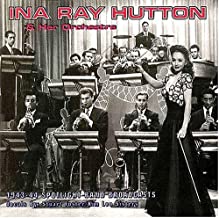
Ina Ray Hutton was born Odessa Cowan on March 13, 1916 in Chicago, Illinois into a family whose mother was a pianist. She began dancing and singing on stage professionally at the age of eight. By 15, she starred in the Gus Edwards revue Future Stars Troupe at the Palace Theater, and Lew Leslie’s Clowns in Clover. On Broadway she performed in George White’s revues Melody, Never Had an Education and Scandals, before joining the Ziegfeld Follies.
1934 saw her being approached by Irving Mills and vaudeville agent Alex Hyde to lead an all-girl orchestra, the Melodears. As part of the group’s formation, Mills asked Odessa to change her name. The group included trumpeter Frances Klein, Canadian pianist Ruth Lowe Sandler, saxophonist Jane Cullum, guitarist Marian Gange, trumpeter Mardell “Owen” Winstead, and trombonist Alyse Wells.
The Melodears appeared in short films and in the movie Big Broadcast of 1936. They recorded six songs, sung by Hutton, before disbanding in 1939. Soon after, she started the Ina Ray Hutton Orchestra (with men only) that included George Paxton and Hal Schaefer. The band appeared in the film Ever Since Venus in 1944, recorded for Elite and Okeh, and performed on the radio. After this band broke up, she started another male band a couple years later. During the 1950s, Hutton again led a female big band that played on television and starred on The Ina Ray Hutton Show.
Although she and some members of her family are known to have been white, historians have theorized that she and her family were of mixed white and African-American ancestry. In 1920, Hutton herself was listed in the US Census as “mulatto” and in 1930 as “negro”. Hutton was also mentioned under her original name in the black Chicago newspaper The Chicago Defender several times in articles describing the early years of her career. A photograph of her as a 7-year-old dancer appeared in a 1924 issue of the paper.
Retiring from music in 1968, Ina Ray Hutton, who led one of the first all-female big bands, passed away on February 19, 1984 from complications due to diabetes at the age of 67 in Ventura, California.
More Posts: bandleader,history,instrumental,jazz,music,vocal