

The Quarantined Jazz Voyager
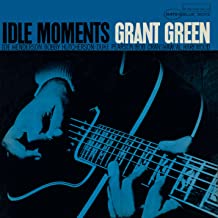
Idle Moments by guitarist Grant Green is this week’s jazz album that the quarantined jazz voyager has chosen to spotlight. It was recorded on November 4 and 15, 1963 at Van Gelder Studios in Englewood Cliffs, New Jersey, however, it wasn’t released until February 1965 on the Blue Note Records label.
The album was produced by Alfred Lion and is best known for the title piece, a slow composition in C minor which lasts for nearly 15 minutes. Pearson, who wrote the song, explains in his liner notes to the album that the tune was meant to be much shorter. Due to the musicians repeating the main melody twice, however, there was some confusion as to whether or not one chorus would consist of 16 or 32 measures.
Track Listing | 42:45
- Idle Moments (Pearson) ~ 14:56
- Jean De Fleur (Green) ~ 6:49
- Django (John Lewis) ~ 8:44
- Nomad (Pearson) ~ 12:16
Personnel
- Grant Green – guitar
- Joe Henderson – tenor saxophone
- Duke Pearson – piano
- Bobby Hutcherson – vibraphone
- Bob Cranshaw – double bass
- Al Harewood – drums

More Posts: adventure,club,genius,guitar,jazz,museum,music,preserving,restaurant,travel,voyager
Daily Dose Of Jazz…
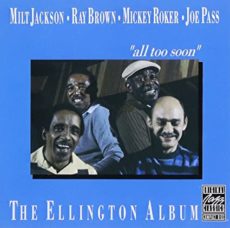
Mickey Roker was born Granville William Roker on September 3, 1932 in Miami, Florida into extreme poverty. After his mother died when he was ten, he was taken by his grandmother to live in Philadelphia, Pennsylvania with his uncle Walter. He gave the young boy his first drum kit, communicated his love of jazz, and introduced him to the Philadelphia jazz scene, where drummer Philly Joe Jones became his idol.
In the early 1950s, he started gaining recognition as a sensitive yet hard-driving big-band drummer. Favored by Dizzy Gillespie, he was soon in demand for his supportive skills in both big-band and small-group settings. While in Philadelphia he played with Jimmy Oliver, Jimmy Heath, Jimmy Divine, King James, and Sam Reed before moving to New York in 1959. Once there his first gigs were with Gigi Gryce, Ray Bryant, Joe Williams, Junior Mance, Nancy Wilson, and the Duke Pearson big band. In 1992, he replaced Connie Kay in the Modern Jazz Quartet.
He recorded with Dizzy Gillespie, Sonny Rollins, Duke Pearson, Tommy Flanagan, Ella Fitzgerald, Zoot Sims, Horace Silver, Junior Mance, Sarah Vaughan, Milt Jackson, Herbie Hancock, Phil Woods, Oscar Peterson, Ray Brown, Bucky Pizzarelli, Stanley Turrentine, Lee Morgan, Roy Ayers, Toshiko Akiyoshi, Hank Jones, Bobby Hutcherson, Joe Locke, and numerousother jazz musicians.
Drummer Mickey Roker Roker, who remained active on the Philadelphia music scene well into the 21st century, passed away on May 22, 2017 at the age of 84.

More Posts: drums,history,instrumental,jazz,music
Daily Dose Of Jazz…
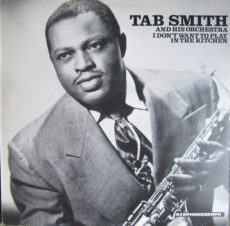
Frank Galbreath was born on September 2, 1913 in Robeson County, North Carolina. He got his start with local groups such as the Domino Five of Washington and Kelly’s Jazz Hounds of Fayetteville. He then found work with groups in other regions such as the Florida Blossoms minstrel show and the Kingston Nighthawks, a territory band. He was with Smiling Billy Steward’s Floridians when they played the 1933 World’s Fair in Chicago, Illinois.
The mid~1930s saw Galbreath moving to Chicago, and playing with Fletcher Henderson, Jelly Roll Morton, Edgar Hayes, and Willie Bryant. Around 1937 he joined Lonnie Slappey’s Swingers in Philadelphia, Pennsylvania but was called back to New York by Lucky Millinder, with whom he played for some time. Following this he joined the Louis Armstrong Orchestra until its dissolution in 1943, then he went on to play with Charlie Barnet for a few weeks before serving in the Army. After his discharge, he worked in the second half of the decade with Luis Russell, Tab Smith, Billy Eckstine, and Sy Oliver, then returned to play with Millinder from 1948 to 1952.
From 1952 he played in USO tours, first with Snub Mosley and then with various other ensembles over the course of the next decade. Frank led his own band during the decade, then played in the bands of Arthur Prysock and Benny Goodman. During the Sixties, he played with Ray Charles, Fats Domino, and Sammy Davis, Jr.
In 1963 he moved to Atlantic City, New Jersey and played locally until his failing health forced his retirement in 1969. Trumpeter Frank Galbreath passed away in November 1971.
More Posts: history,instrumental,jazz,music,trumpet
Three Wishes
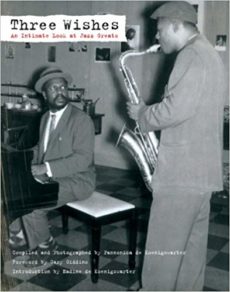
Upon request by Pannonica as to his three wishes Danny Quebec~West responded by telling her:
-
-
“That the United States government… I wish that the capitalistic system be like the socialistic system in subsidizing the starving musicians, for art’s sake.”
-
“My second wish ~ speaking of a field not concerning music ~ I wish that the stigma on jazz musicians concerning drugs… that the world have socialization of medicine, and therefore that we canget all we want.”
- “I hope when they do decide to let me be heardagain after such a long layoff, I hope that I can reach from their toes to their heads, and explode every minute cell in their brain ~ meaning the public, being that I feel that I have been treated very unjustly music~wise..”
-
*Excerpt from Three Wishes: An Intimate Look at Jazz Greats ~ Compiled and Photographed by Pannonica de Koenigswarter

More Posts: baroness,history,instrumental,jazz,music,pannonica,saxophone,three,wishes
Daily Dose Of Jazz…
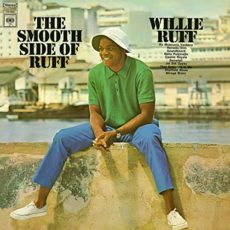
Willie Ruff was born on September 1, 1931 in Sheffield, Alabama and learned to play both the French horn and the double bass. He attended the Yale School of Music graduating with a Bachelor and Master of Music degrees by 1954.
He met pianist Dwike Mitchell in 1947 when they were teenage servicemen stationed at the former Lockbourne Air Force Base in Ohio. They began a professional relationship when Mitchell recruited him to play bass with his unit band for an Air Force radio program. They later played in Lionel Hampton’s band but left in 1955 to form their own group, then together as the Mitchell-Ruff Duo that lasted over fifty years. They also played as the second act to artists such as Louis Armstrong, Count Basie, Duke Ellington, and Dizzy Gillespie.
From 1955 to 2011, the duo regularly performed and lectured in the United States, Asia, Africa, and Europe. In 1950 the Mitchell-Ruff Duo was the first jazz band to play in the Soviet Union and in China in 1981. Ruff was chosen by John Hammond to be the bass player for the recording sessions of Songs of Leonard Cohen, was one of the founders of the W. C. Handy Music Festival in Florence, Alabama in 1982.
As an educator, Willie was a faculty member at the Yale School of Music, teaching music history, ethnomusicology, and arranging. He is founding Director of the Duke Ellington Fellowship Program at Yale, held a visiting appointment at Duke University, where he oversaw the jazz program and directed the Duke Jazz Ensemble, and also has been on faculty at UCLA and Dartmouth.
French hornist, double bassist, music scholar, and educator Willie Ruff, was awarded the Sanford Medal, the Connecticut Governor’s Arts Award, and was an inductee of the Alabama Jazz Hall of Fame, primarily a Yale professor from 1971 to 2017, and continues to reside in Alabama.
More Posts: bass,educator,french horn,history,instrumental,jazz,music