

The Quarantined Jazz Voyager
The Quarantined Jazz Voyager is continuing to practice social distancing and as my personal quarantine continues, I’m selecting one of my favorite albums, Speak Like A Child by Herbie Hancock.
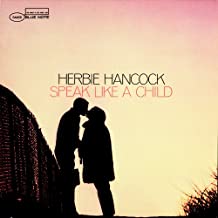
This is the sixth album by pianist Herbie Hancock, recorded and released by Blue Note Records in 1968. This session features Hancock’s arrangements for an unusual front line of alto flute, bass trombone and flugelhorn.
The pianist wanted to represent here a childlike, but not childish, philosophy. He felt this music didn’t reflect the social turmoil of the late 1960s in America, that is riots and a problematic economy but a picture of a more upbeat, brighter future, He wanted to go back and rediscover certain childhood qualities that are lost to adulthood. There is a purity, a spontaneity that children have and it is then they are at their best. Hence this album aims to translate as think and feel in terms of hope, and the possibilities of making our future less impure.
The cover photograph was taken by David Bythewood, an acquaintance of Hancock. The photo depicts Hancock in silhouette kissing his wife-to-be, Gigi Meixner.
Track Listing | 37:05
All compositions by Herbie Hancock, except First Trip, composed by Ron Carter.
Side A
- Riot ~ 4:40
- Speak Like a Child ~ 7:50
- First Trip ~ 6:01
- Toys ~ 5:52
- Goodbye to Childhood ~ 7:06
- The Sorcerer ~ 5:36
- Herbie Hancock — piano
- Ron Carter — bass
- Mickey Roker — drums
- Jerry Dodgion — alto flute (not on #3)
- Thad Jones — flugelhorn (not on #3)
- Peter Phillips — bass trombone (not on #3)

More Posts: adventure,club,genius,jazz,museum,music,piano,preserving,restaurant,travel,voyager
Daily Dose Of Jazz…
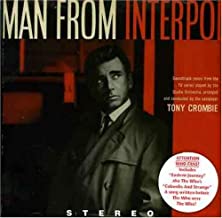
Tony Crombie was born Anthony John Kronenberg on August 27, 1925 in Bishopsgate, London, England. He was a self-taught musician who began playing the drums at the age of fourteen. He was one of a group of young men from the East End of London who ultimately formed the co-operative Club Eleven, bringing modern jazz to Britain.
In 1947 traveling to New York City with his friend Ronnie Scott, he witnessed the playing of Charlie Parker and Dizzy Gillespie, then took it back to the UK along with Scott, Johnny Dankworth, and Dennis Rose. 1948 saw Crombie touring Britain and Europe with Duke Ellington, who only brought Ray Nance and Kay Davis with him. Picking up a rhythm section in London, Ellington chose him on the recommendation of Lena Horne, with whom he had worked when she appeared at the Palladium.
Tony would go on to depart from jazz and set up a rock and roll band in 1956 he called The Rockets. Modelled after Bill Haley’s Comets and Freddie Bell & the Bellboys, he released several singles for Decca and Columbia record labels. By 1958 the Rockets had become a jazz group with Scott and Tubby Hayes. During the following year Crombie started Jazz Inc. with pianist Stan Tracey.
In 1960, he composed the score for the film The Tell-Tale Heart and established residency at a hotel in Monte Carlo. In May 1960 he toured the UK with Conway Twitty, Freddy Cannon, Johnny Preston, and Wee Willie Harris.
During the next thirty years he performed with Ben Webster, Coleman Hawkins, Illinois Jacquet, Joe Pass, Mark Murphy and Eddie “Lockjaw” Davis. In the mid-1990s, after breaking his arm in a fall, he stopped playing the drums but continued composing until his death in 1999. Drummer, pianist, vibraphonist bandleader, and composer Tony Crombie, who was an energizing influence on the British jazz scene for over six decades, passed away on October 18, 1999 in Hampsead, London at the age of 74.

More Posts: bandleader,composer,drums,history,instrumental,jazz,music
Three Wishes
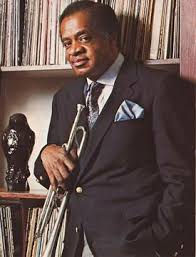
The Baroness asked Donald Byrd what his three wishes would be and he replied:
-
-
“Health.”
-
“Education.”
- “Long life.”
-
*Excerpt from Three Wishes: An Intimate Look at Jazz Greats ~ Compiled and Photographed by Pannonica de Koenigswarter
More Posts: baroness,history,instrumental,jazz,music,pannonica,three,trumpet,wishes
Daily Dose Of Jazz…
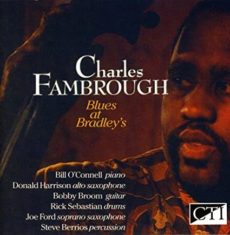
Charles Fambrough was born on August 25, 1950 in Philadelphia, Pennsylvania. He originally studied classical piano but switched to bass when he was 13. In 1968, he began playing with local pit bands for musicals and after some freelancing in 1970, he joined Grover Washington, Jr.’s band, staying with him until 1974.
Moving on he worked with Airto from 1975 to 1977), followed by McCoy Tyner for two years in 1978 and then on to be a part of the Jazz Messengers under Art Blakey from 1980 to 1982. Leaving the Messengers Charles freelanced as a sideman and led three CTI recordings with Wynton and Branford Marsalis, Roy Hargrove, Kenny Kirkland, Jerry Gonzalez, Steve Turre, Donald Harrison, Kenny Garrett, Abdullah Ibrahim, Grover Washington, Jr., Jeff “Tain” Watts, Stephen Scott, Billy Drummond, Bobby Broom, and Steve Berrios.
As a sideman, he worked and recorded sixteen albums with Kei Akagi, Craig Handy, Eric Mintel, and Roland Kirk among others. Reportedly been suffering from a number of serious ailments including end-stage renal disease and congestive heart failure, and benefit concerts had been held over the preceding several years in the Philadelphia area to help the bassist and his family defray the costs of his mounting medical bills.
Bassist, composer, and bandleader Charles Fambrough passed away at the age of 60 of a heart attack at his home in Allentown, Pennsylvania on January 1, 2011.
More Posts: bandleader,bass,composer,history,instrumental,jazz,music
Daily Dose Of Jazz…
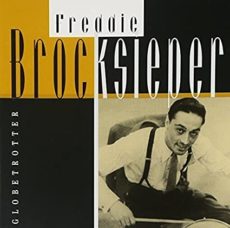
Fritz “Freddie” Brocksieper was born in Istanbul, Turkey on August 24, 1912, the son of a Greek-speaking Jewish woman and a German engineer, who was able to get through National-Socialism as an essential swing musician. His playing style on the drums was influenced above all by Gene Krupa and by 1930, he was playing professionally in Germany working in Nuremberg and Berlin throughout the decade. During World War II he played with the Golden Seven, Benny De Weille, Willy Berking, and the radio orchestra of Lutz Templin.
He recorded with his own ensembles, both large and small, in the later 1940s, and performed for American GIs in Stuttgart, Munich, and Berlin. An essential swing musician, Freddie was considered a leading figure of early European big-band jazz. With his bands, he made it to the front page of Stars and Stripes. Beginning in 1957 Bavarian radio regularly broadcast live concerts from his studio in Munich.
He continued performing in the 1960s and 1970s and was awarded a Deutscher Schallplattenpreis in 1980. From 1964 he played mainly in trios, and often with American soloists in Europe. Drummer Freddie Brocksieper passed away on January 17, 1990.
More Posts: bandleader,drums,history,instrumental,jazz,music