

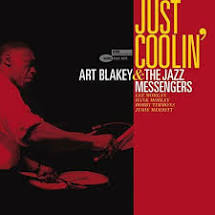
The Quarantined Jazz Voyager
The Quarantined Jazz Voyager is pulling down from the stacks of his library a recently acquired, never-before-released studio album by Art Blakey & The Jazz Messengers titled Just Coolin’. Recorded on March 8, 1959 in Rudy Van Gelder’s living room studio in Hackensack, New Jersey, the session featured a short-lived line-up of The Jazz Messengers.
The album features two previously unissued compositions including Timmons’ tune Quick Trick. The session for Just Coolin’ finds The Jazz Messengers’ saxophone chair in transition. The interim saw the return of Mobley, who was a charter member of The Jazz Messengers when the band first formed in 1954 and appeared on their debut recording The Jazz Messengers At The Café Bohemia in 1955. Mobley also filled an important role as the band’s resident composer. Now, 61 years later jazz fans all over the world will have the chance to listen for themselves.
Track List Side 1 1. Hipsippy Blues (Hank Mobley) 2. Close Your Eyes (Bernice Petkere) 3. Jimerick (unknown) Side 2 1. Quick Trick (Bobby Timmons) 2. M&M (Hank Mobley) 3. Just Coolin’ (Hank Mobley)
Personnel
Lee Morgan: trumpet, Hank Mobley: tenor saxophone, Bobby Timmons: piano, Jymie Merritt: bass, Art Blakey: drums
More Posts: adventure,club,drums,genius,jazz,museum,music,preserving,restaurant,travel,voyager
Daily Dose Of Jazz…
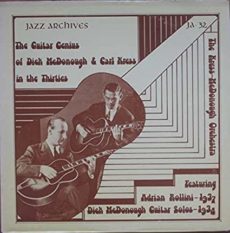
Richard Tobin McDonough was born on July 30, 1904 in New York City and began playing banjo and mandolin in high school. While matriculating through Georgetown University, he performed professionally at weekend dances and two years later started a band. Attending Columbia Law School he played with bands in New York City.
McDonough played with Red Nichols in 1927 as a banjoist, and soon after played with Paul Whiteman. He began studying the guitar and eventually was in demand for session work, recording with The Dorsey Brothers, Red Nichols, and Miff Mole. In the 1930s, he performed in a duo with jazz guitarist Carl Kress and cut several sessions with an orchestra under his own name, in addition to backing numerous other recording artists.
His session work with Mildred Bailey, Smith Ballew, The Boswell Sisters, Rube Bloom, Chick Bullock, The Charleston Chasers, Cliff Edwards, Gene Gifford, Benny Goodman, Adelaide Hall, Annette Hanshaw, Billie Holiday, Baby Rose Marie, Glenn Miller, Irving Mills, Red McKenzie, Johnny Mercer, Red Norvo, Fred Rich, Adrian Rollini, Pee Wee Russell, Ben Selvin, Artie Shaw, Frank Signorelli, Jack Teagarden, Claude Thornhill, Frankie Trumbauer, Joe Venuti, Don Voorhees, and Ethel Waters. He played in the Jam Session at Victor with Fats Waller, Bunny Berigan, and George Wettling.
Struggling with alcohol abuse during his adult life and guitarist Dick McDonough passed away of pneumonia on May 25, 1938 in New York City.

More Posts: bandleader,guitar,history,instrumental,jazz,music,tenor banjo

Daily Dose Of Jazz…
Patricia Dean was born in Tampa, Florida on July 29th and went through her banging on pots and pans stage listening to drummer/singer Karen Carpenter’s records until she got a drum set and began studying privately and really playing, at the age of 11. Growing up she was literally and figuratively surrounded by music while growing up, her father a recorded clarinetist and alto saxophonist and musicians were always around. She played her first professional job with her father and brother when she was fourteen.
One of the few artists in the history of jazz who play drums and sing, Dean does both at an exceptional level. As a drummer, she’s an inspiring and supremely tasteful time-keeper, accompanist, and soloist and as a vocalist, she swings with sensitivity and is a heartfelt ballad singer and evocative interpreter of Brazilian melodies.
Patricia cites Sarah Vaughan, Shirley Horn, Nancy Wilson, and Julie London as among her singing influences. Careful listeners may hear some overtones of Dinah Washington who, of course, greatly influenced Nancy Wilson and Betty Roche. Her drumming influences in addition to Carpenter are Ed Thigpen, Jack DeJohnette, Tony Williams, and Sonny Payne.
Through the years, she has worked with a number of jazz legends, including Nat Adderley, Ira Sullivan, Whitey Mitchell, Bobby Militello, and the late John LaPorta. Drummer Patricia Dean continues to perform and record.
More Posts: bandleader,drums,history,instrumental,jazz,music
Three Wishes
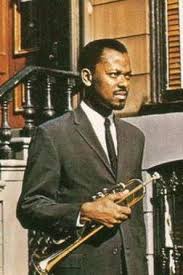
Richard Williams was queried by Nica of his three wishes and his answers were this:
-
-
“More gigs.”
-
“More understanding from the public. I don’t want anything else right now. ”
-
*Excerpt from Three Wishes: An Intimate Look at Jazz Greats ~ Compiled and Photographed by Pannonica de Koenigswarter

More Posts: baroness,history,instrumental,jazz,music,pannonica,three,trumpet,wishes
Daily Dose Of Jazz…
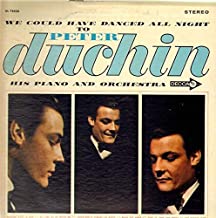
Peter Oelrichs Duchin was born in New York City on July 28, 1937, the son of pianist and bandleader Eddy Duchin and Newport, Rhode Island, and New York City socialite Marjorie Oelrichs, who died unexpectedly when he was just five days old. After the death of both of his parents, he was raised by close family friends, statesman W. Averell Harriman and his wife, Marie Norton Harriman.
Educated at Eaglebrook School, he studied piano with Carrie Barbour Swift and The Hotchkiss School prep schools in New England. He spent time in Paris, France, studied at the Sorbonne, then returned home and graduated from Yale University.
Duchin formed his first professional band, played the St. Regis Hotel in New York City in 1962 thanks in part to his family name and the networking it had made possible. His music was heard on the radio in the late 1960s and early ’70s from albums and singles released on the Decca, Bell, and Capitol labels.
From 1985 to 1989, Peter had a professional partnership with Jimmy Maxwell, leader of the traditional society jazz band in New Orleans, Louisiana. By 2009, his band had played at an estimated 6,000 performances. Duchin has served on a variety of arts boards not limited to Carnegie Hall, Spoleto Festival and the National Jazz Service Organization, the World Policy Institute, and The Center for Arts Education.
In 1996 he published his memoir, Ghost of a Chance. Pianist and bandleader Peter Duchin continues to perform and record at 82.
More Posts: bandleader,history,instrumental,jazz,piano