


Daily Dose Of Jazz…
Huey “Sonny” Simmons was born on August 4, 1933 in Sicily Island, Louisiana and grew up in Oakland, California, where he began playing the English horn. At age 16 he took up the alto saxophone, which became his primary instrument, playing primarily in an avant-garde style, often delving into free jazz.
His then-wife, Barbara Donald, played trumpet on several of his early records, Staying on the Watch and Music from the Spheres; Arhoolie Manhattan Egos, and Contemporary titles Rumasuma and the double album Burning Spirits.
Partnering with Prince Lasha on several recordings, two of which, The Cry! and Firebirds were also released by Contemporary.
Personal problems derailed both his music career and home life, leading to divorce and homelessness. He busked on the streets of San Francisco for many years, until he resurrected his career in the early 1990s and began playing in night clubs again.
His resurgence in the mid-1990s was marked by two albums, Ancient Ritual and American Jungle, for Quincy Jones’ Qwest Records. Along with appearances in European jazz festivals, Sonny has since remained a regular performer at European festivals.
Since 2000 he has been co-leader of The Cosmosamatics with reed player Michael Marcus and is among the few musicians to play the English Horn in a jazz context. Alto saxophone Sonny Simmons died on April 6, 2021 in New York.

More Posts: bandleader,english horn,history,instrumental,jazz,music,saxophone
Daily Dose Of Jazz…
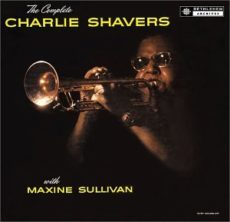
Charles James Shavers was born on August 3, 1920 in New York City and took up piano and banjo before switching to trumpet. In the mid-Thirties he performed with Tiny Bradshaw and Lucky Millinder. In 1935 he joined the trumpet section with Dizzy Gillespie and Carl “Bama” Warwick in Frankie Fairfax’s Campus Club Orchestra.
1936 saw him as a member of John Kirby’s Sextet as trumpet soloist and arranger. Only 16 at the time he gave his birth date as 1917 to avoid child labor laws, Charlie’s arrangements and solos helped make the band one of the most commercially successful and imitated of its day. In 1937, he performed with Midge Williams and her Jazz Jesters. By 1944 he began playing sessions in Raymond Scott’s CBS staff orchestra.
Leaving John Kirby’s band In 1945 he joined Tommy Dorsey’s Orchestra, with whom he toured and recorded, off and on, until Dorsey’s passing in 1956. In 1949, he sang and played the hit The Hucklebuck with Dorsey. He was a member of Dorsey’s Orchestra on numerous Stage Show telecasts for CBS, including early Elvis Presley appearances. During this time he continued to play at CBS while also appearing with the Metronome All-Stars and making a number of recordings as trumpet soloist with Billie Holiday.
From 1953 to 1954 he worked with Benny Goodman and toured Europe with Norman Granz’s popular Jazz at the Philharmonic series, where he was a crowd favorite. He formed his own band with Terry Gibbs and Louie Bellson.
Swing era trumpeter Charlie Shavers passed away from throat cancer in New York City on July 8, 1971 at the age of 50. While on his deathbed his close friend Louis Armstrong passed away, and his last request was that his trumpet mouthpiece be buried with Armstrong.
More Posts: bandleader,composer,history,instrumental,jazz,music,trumpet
Requisites
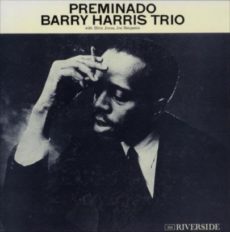
I begin this morning’s discussion with a 1961 album by The Barry Harris Trio titled Preminado (Riverside RLP 354/RLP 9354). I’ve been a fan of the pianist since hearing Barry Harris at The Jazz Workshop (1960), Listen To Barry Harris (1961), Live In Tokyo (1976), The Sidewinder (1964), and Two Trumpets (1957). My copy used in this report is the 1974 Riverside Original Recording Series Japanese Stereo reissue (Milestone SMJ-6047). Harris is joined on this date by Joe Benjamin on bass and Elvin Jones on drums.
My Heart Stood Still by Richard Rodgers and Lorenz Hart first appeared in the 1927 Broadway musical, A Connecticut Yankee. It opens the album with the trio showing tender emotions on the sentimentally nostalgic theme. Barry steps up first for a straightforward performance of poise and glamour that’s laid out beautifully. Joe strolls into the next interpretation at a relaxed tempo, then Elvin exchanges a few carefree thoughts on the song’s final reading with Barry.
The title tune is a Harris original with a march-like introduction by the pianist before the ensemble kicks up the tempo into a vibrantly spirited theme. Barry starts the soloing with a nimble statement that’s worth the price of admission. Elvin shows why he was a master timekeeper and a significant part of The John Coltrane Quartet next with infectious enthusiasm. I Should Care by Alex Stordahl, Paul Weston, and Sammy Cahn was composed in 1944 and featured in the 1945 musical, Thrill of a Romance.
Barry weaves the warmth and feeling of the lyrics into an alluring performance that’s a moment of perfect bliss. Side One ends with There’s No One But You by Austen Croom-Johnson and Redd Evans. This 1946 song was rumored to be written for the film-noir drama, Gilda, but did not appear in the film. The trio moves in a medium groove for the melody’s amorous atmosphere. Harris and Benjamin are the featured soloists dispensing affectionate love and desire on two readings.
The pianist’s One Down is an easy flowing blues that begins with an airy introduction and opening chorus. Barry turns in a charming performance on the lead solo, and Joe adds a brief comment that’s cheerfully carefree. It’s The Talk of The Town is a 1933 pop standard by Jerry Livingston, Allen J. Neiburg, and Marty Symes. The lyrics recount the breakup of a couple before their wedding and the ensuing gossip spread throughout the town in the aftermath. On the song’s only solo, Barry examines the subtlest nuances of this ballad with a quiet lament and tender lyricism that’s poignantly beautiful. Play, Carol, Play is named after Barry’s young daughter and brings the trio back to an uptempo beat. This tune opens with an effervescent introduction and melody, then Barry moves briskly on the first reading. Jones blends beautifully with Harris and Benjamin on the closing statement sharing an exuberant exchange ahead of the reprise and climax.
The finale is a popular jazz standard from The Cole Porter Songbook, What Is This Thing Called Love? It premiered in the 1929 London and Broadway musicals, Wake Up and Dream, and was also featured in the 1946 Porter biographical film, Night and Day. The trio starts the enthusiastic opening chorus briskly. Harris takes off first on this musical speedway with unbounded drive and vitality. Benjamin’s bass comes out breathing fire next, then Jones brings the solos to a rapid resolution in a brief exchange with the pianist.
Preminado was originally recorded by Ray Fowler with the mastering done by Jack Matthews. The sound quality by Victor Musical Industries is a demonstration class with a breathtaking soundstage. Every so often the jazz public is treated to a musician who’s in some way, very special. Pianist Barry Harris is just such a musician as he illustrates on this date. If you’re a fan of piano jazz, I invite you to check out Preminado by The Barry Harris Trio. It’s an album of music that’s skillfully crafted, superb musicianship that’s exemplary in every sense and one you shouldn’t miss on your next vinyl hunt!
~ Barry Harris at The Jazz Workshop (Riverside RLP 326/RLP 1177); Listen To Barry Harris (Riverside RLP 392/RLP 9392); Live In Tokyo (Xanadu 130); The Sidewinder (Blue Note BLP 4157/BST 84157); Two Trumpets (Prestige PRLP 7062) – Source: Discogs.com ~ I Should Care, It’s The Talk of The Town, My Heart Stood Still, There’s No One But You, What Is This Thing Called Love? – Source: Wikipedia.org © 2020 by Edward Thomas Carter

More Posts: bandleader,composer,history,instrumental,jazz,music,piano
Daily Dose Of Jazz…
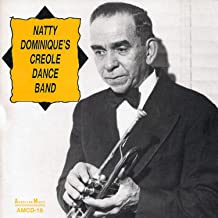
Anatie “Natty” Dominique was born on August 2, 1896 in New Orleans, Louisiana of Afro-Italian descent. Claiming to be a direct descendant of Dominique You, the half-brother of the pirate Jean Lafitte, he studied with Manuel Perez.
Moving to Chicago, Illinois in 1913, over the course of more than three decades there, Dominique played with a number of New Orleans jazzmen, including Louis Armstrong, Jimmie Noone, and especially Johnny Dodds, who employed him from 1928 until his death in 1940.
Shortly afterward, Natty was forced to retire due to a heart condition, keeping him out of the music business for almost a decade. Returning to part-time work with a small combo in the 1950s, he played up till his death.
Trumpeter Natty Dominique, who recorded for American Music Records, Challenge Records, and Black Swan Records, passed away on August 30, 1982 in Chicago.
More Posts: bandleader,history,instrumental,jazz,music,trumpet
Daily Dose Of Jazz…
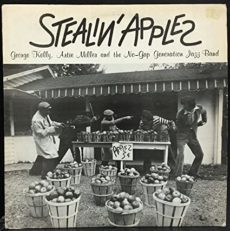
George Kelly was born on July 31, 1915 in Miami, Florida. In the 1930s Panama Francis was a sideman in Kelly’s band. During the Forties, he played in Al Cooper’s band.
Kelly played in Francis’s Savoy Sultans band in the 1970s, and had played of the same name in the 1940s. Leading his own bands he was also a sideman who worked with Tiny Grimes, Rex Stewart, and Cozy Cole.
Tenor saxophonist, vocalist, bandleader, and arranger George Kelly, who recorded seven albums as a leader, passed away at the age of 82 on May 24, 1998.

More Posts: arranger,bandleader,history,instrumental,jazz,music,saxophone,vocal