

Daily Dose Of Jazz…
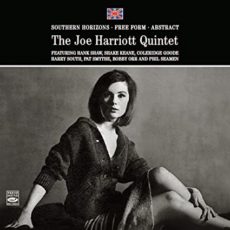
Hank Shaw was born Henry Shalofsky on June 23, 1926 in London, England and played with Teddy Foster’s band during World War II at the age of 15. In the latter half of the decade, he played in London with Oscar Rabin, Frank Weir, and Tommy Sampson, then switched permanently to playing bebop music in 1946 after hearing Dizzy Gillespie.
A visit to the United States in 1947 with close friend and fellow pioneer bebopper alto saxophonist Freddy Syer, preceded their move to Canada after he was unable to secure a work permit. There they played with Oscar Peterson and Maynard Ferguson before returning to England in 1948. He was one of the early Club Eleven players, along with Ronnie Scott, John Dankworth, Lennie Bush, and others. He also played with many of these musicians on the recordings of Alan Dean’s Beboppers.
After Club Eleven shuttered, Shaw played with Vic Lewis and toured Europe with Cab Kaye, then joined Jack Parnell’s ensemble in 1953 and Ronnie Scott’s nonet in 1954. He went on to play regularly both live and as a session musician for many British jazz musicians over the course of the next twenty or so years, working with Joe Harriott, Tony Crombie, Don Rendell, Tony Kinsey, Stan Tracey, Bill Le Sage, and others.
In the Sixties, he led a quartet at the 100 Club and played in the Bebop Preservation Society and the John Burch Quartet for over two decades each. Retiring from music due to ill health in the late 1990s, trumpeter Hank Shaw passed away on October 26, 2006 in Kent, four months past his 80th birthday.

More Posts: history,instrumental,jazz,music,trumpet
Daily Dose Of Jazz…
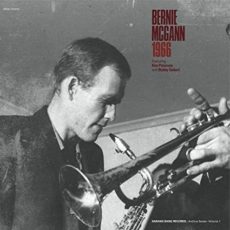
Bernard Francis “Bernie” McGann was born June 22, 1937 in Granville, New South Wales, Australia. He began his career in the late 1950s and remained active as a performer, composer, and recording artist until near the end of his life.
Bernie first came to prominence as part of a loose alliance of modern jazz musicians who performed at the El Rocco Jazz Cellar in Kings Cross, Sydney in the late 1950s and early 1960s. He had an enduring collaboration with drummer John Pochee.
During the 1960s and early 1970s, McGann also performed with rock and pop groups as a session musician. Around 1970 he was a member of the Sydney rock-soul band Southern Comfort.
He led the Bernie McGann Trio and Bernie McGann Quartet through his career. The most well-known lineup of the trio was McGann on alto saxophone, John Pochee on drums, Lloyd Swanton on bass, with the addition of Warwick Alder on trumpet in the quartet.
Alto saxophonist Bernie McGann passed away on September 17, 2013 following complications from heart surgery. He was 76.
More Posts: bandleader,history,instrumental,jazz,music,saxophone
Requisites
Crazy! Baby ~ Jimmy Smith | By Eddie Carter
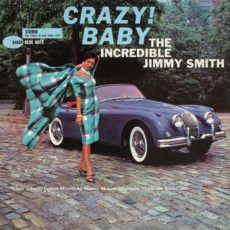
The Incredible Jimmy Smith steps into the spotlight for this morning’s discussion with his first release of the sixties and fifteenth of his career. Crazy! Baby (Blue Note BLP 4030) is a 1960 trio album featuring the organist’s bandmates, Quentin Warren on guitar, and Donald Bailey on drums. My copy used in this report is the 1966 Liberty Records Stereo reissue (BST 84030).
When Johnny Comes Marching Home, the album opener has been around since 1863 and the Civil War. I first heard the 45-rpm single of this song in 1962 and was blown away by the group’s musicianship. Quentin is up first after the ensemble’s introduction and marching theme for an opening statement that goes down smoothly and easily like chilled Chardonnay. Jimmy follows with one of his meatiest solos, nearly five-minutes of electrifying jazz preceding the out-chorus march and trio vanishing. Makin’ Whoopee by Gus Kahn and Walter Donaldson premiered in the 1928 Broadway musical, Whoopee! The trio eases into the wonderfully nostalgic theme and Smith executes a marvelous mellow interpretation with a stunning bass line using his left foot.
A Night In Tunisia by Dizzy Gillespie and Frank Paparelli was first sung as a vocal by Sarah Vaughan under the title Interlude on the 1950 album, Hot Jazz. This 1942 Bebop classic is one of Gillespie’s most recorded tunes and the trio establishes the opening chorus made famous by Dizzy. Jimmy kicks off the lead solo with a riveting performance. Quentin closes with a funky statement matched by Donald’s rocking timekeeping propelling the trio into a thrilling coda.
Sonnymoon For Two is by tenor saxophonist Sonny Rollins and the composer introduced it on the 1957 album, A Night at The Village Vanguard. The group opens with a bluesy melody, then Warren dances and grooves on two short, but strong verses. Jimmy comes in next for some extensive wailing on the finale before the reprise and fadeout. Mack The Knife by Kurt Weill and Bertolt Brecht made its debut in the 1928 German play, The Threepenny Opera. This jazz and pop evergreen is a showcase for Smith who does a superlative job illustrating the title character in a thoroughly satisfying performance.
Up next is the thoughtfully pensive ballad by Bob Haggart and Johnny Burke, What’s New? Smith starts with a delicately wistful melody, segueing into a melancholic one-sided interpretation reflecting on the love that’s now just a memory before ending his conversation in grand fashion. The album closes with Smith’s dedication to Blue Note co-founder Alfred Lion, Alfredo. The trio flows vibrantly on the melody into Quentin soloing first with a leisurely, carefree swing that’ll get fingers snapping and toes tapping. Jimmy raises the temperature on a vivaciously brisk closing presentation taking no prisoners into the ending.
Rudy Van Gelder’s recording has a pleasant soundstage across the treble, midrange and bass spectrum resulting in sweet sounds emerging from your speakers that make this LP an easy choice to recommend for your library. If you’re a fan of jazz organ or are just discovering the music of Jimmy Smith, I submit for your consideration, Crazy! Baby. It’s a tasty combination of Hard-Bop and Soul-Jazz that once heard, you’ll want to replay repeatedly!
~ A Night at The Village Vanguard (Blue Note BLP 1581/BST 81581); Hot Jazz (Remington RLP-1024) – Source: Discogs.com ~ A Night In Tunisia, Mack The Knife, Makin’ Whoopee, What’s New? – Source: JazzStandards.com ~ When Johnny Comes Marching Home – Source: Wikipedia.org ~ When Johnny Comes Marching Home https://www.youtube.com/watch?v=7YpKGKF7_XY ~ A Night In Tunisia – https://www.youtube.com/watch?v=S3c-564EE0o © 2020 by Edward Thomas Carter Synopsis
Crazy! Baby is an album by jazz organist Jimmy Smith with performances that were recorded on January 4, 1960 and released by Blue Note. This was the first album Smith recorded at Rudy Van Gelder’s studio in Englewood Cliffs, New Jersey.
Tracks | 37:08
- When Johnny Comes Marching Home (Traditional) – 7:58
- Makin’ Whoopee (Walter Donaldson, Gus Kahn) – 4:57
- A Night in Tunisia (Dizzy Gillespie) – 5:40
- Sonnymoon for Two (Sonny Rollins) – 7:15
- Mack the Knife (Bertolt Brecht, Kurt Weill) – 4:58
- What’s New? (Bob Haggart, Johnny Burke) – 3:50
- Alfredo (Jimmy Smith) – 4:30
- Jimmy Smith – organ
- Quentin Warren – guitar
- Donald Bailey – drums
- Alfred Lion – producer
- Rudy Van Gelder – engineer
- Reid Miles – design
- Bob Ganley – photography
- Leonard Feather – liner notes

More Posts: choice,classic,collectible,collector,history,instrumental,jazz,music,organ
Daily Dose Of Jazz…
Sarah DeLeo was born in Waterbury, Connecticut on June 21st and grew up listening to a wide range of music, from Motown to Elvis, and from Linda Ronstadt to Donna Summer. She began singing at age nine and was singing standards before she even started high school. Studying the great singers such as Judy Garland, Barbra Streisand, Ella Fitzgerald, and Aretha Franklin had a great influence on her developing her own style. Her further study of the jazz idiom included listening to Miles Davis, John Coltrane, Dexter Gordon, and Sarah Vaughan.
Attending Barnard College as an American Studies major, she always maintained her love for the music and continued performing whenever possible. Not a product of the conservatory system, Sarah received her jazz schooling the old-fashioned way in the New York City clubs. After college, she began singing in jam sessions and in piano bars throughout Manhattan where she became a regular.
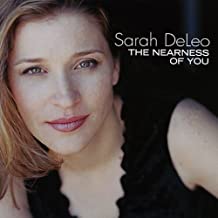
Invaluable guidance came from singer/songwriter Lina Koutrakos where she developed her skills as a lyric interpreter. She has also studied with jazz musicians Jay Clayton, Dena DeRose, Giacomo Gates, and Kirk Nurock. Sarah’s repertoire consists of jazz and pop standards from the 1920s through the 1960s. 2005 saw her recording and releasing her debut CD, The Nearness of You, to critical acclaim and an introduction to both national and international audiences. Deleo’s sophomore release came in 2009 with I’m In Heaven Tonight, that combined old and new songs including a swinging version of the indie rock duo The White Stripes In The Cold, Cold Night. Taking the best from the masters and combining it with her own signature style vocalist Sarah DeLeo continues to deliver the lyric performing, recording, and touring.
More Posts: bandleader,history,instrumental,jazz,music,vocal
Daily Dose Of Jazz…
Ray Mckinney was born Raymond Patterson McKinney on June 20, 1931 in Detroit, Michigan. He was the fourth of ten children artistically gifted, and most of the children took music lessons from their mother. Starting on the Ocarina, he soon graduated to the piano, then the cello which he took to the instrument immediately. His father and English teacher encouraged him to write poetry and he became quite proficient.
During his high school years that Ray was first exposed to jazz, hearing Ella Fitzgerald with Chick Webb in 1939, also Erskine Hawkins and Jay McShann when he had Charlie Parker with him. Music in the neighborhood, there were bands made up of youngsters who played homemade instruments, such as, pails, brushes, spoons and it was where Ray learned that he only needed himself to make music.
The band director at Northwestern High School forced him to switch from cello to bass. Academically gifted, he was determined to be heard above the Northwestern band, he developed his technique. His passion for music consumed his time and he quit school in 1947 at age sixteen. He was spending time with like-minded students and other aspiring musicians from his west-side neighborhood, Maurice Wash, Claire Rockamore, Barry Harris, and Frank Foster. It was where he developed stamina, playing twelve, eighteen hours at a time. McKinney and Harris worked local jobs backing a vocal group in which Harris’ wife Christine was a member. This group recorded at least twenty titles for the New Song label in 1950.
Ray became a force to be reckoned with on the competitive Detroit scene and he worked with several Detroit piano stars. Though he liked bassists Alvin Jackson, Clarence Sherrill and Major “Mule” Holley, his major influences were Ray Brown, Oscar Pettiford, Tommy Potter and Dillon “Curly” Russell. He befriended Paul Chambers and his cousin Doug Watkins, because their playing impressed him, especially Paul’s bowing.
In 1956 he moved to New York City with harpist Dorothy Ashby’s group, however, the gig didn’t last long when Ray was fired after punching Ashby’s husband in the face during an argument. He would go on to work with Guy Warren, Barry Harris, Ben Webster, Edmund Hall, Max Roach, Walter Benton, Booker Little, Julian Priester, Coleman Hawkins, Mal Waldron, Eric Dolphy, Red Garland, Yusef Lateef, Andy Bey and spent a year with comic Nipsey Russell’s back-up band.
For a short time he experimented with heroin but by 1973 McKinney was clean and living in Oberlin, Ohio and with a new love interest before settling in San Diego, California in 1974. With not much jazz happening he took up a series of day jobs for the next four years while continuing to create poetry.
His precarious health and his lack of insurance caused his friends concern and made his last years were unsteady. He received a special Lifetime Achievement award during Baker’s Keyboard Lounge 70th anniversary celebration in 2004. It was one of his final public appearances. Bassist Ray McKinney passed away on August 3, 2004, aged 73 in San Diego.
More Posts: bandleader,bass,history,instrumental,jazz,music