


The Jazz Voyager
From NOLA to the Big Apple, the Jazz Voyager is cruising at 30,000 for another jaunt into Manhattan’s theater district. Gotta love New York’s public transportation as taking the bus from LaGuardia into Harlem, getting off at 125th and Lenox and catching the #3 Express downtown to 42nd Street is a breeze. Walking a couple of blocks north up Broadway to Birdland will put me there in time for the 7:00pm show.
Tonight I have the opportunity to hear a pianist who I’ve only seen when he first hit the jazz scene and then about a decade ago. He’s a Steinway Artist and his name is Christian Sands and he has matured with time. I find it so gratifying to hear musicians who age in their playing but maintain the fire in their expressiveness.
The Band:
Christian Sands – bandleader, pianist
Ryan Sands – Drummer
Gilad Hekelsman – Guitar
Scott Colley – Bass
Cover: $40.61 ~ $50.91 | Including Fees
Birdland is located at 315 W 44th Street, #5402, New York City, NY 10036. For more information contact the venue at birdlandjazz.com.

More Posts: adventure,club,genius,jazz,museum,music,piano,preserving,travel

Daily Dose Of Jazz…
Bruce Adams was born on July 3, 1951 in Glasgow, Scotland and was brought up in a musical family. His father Bob was a guitarist whose career extended back to the British dance bands of the 1930s and his mother was a dancer. His first real musical interest was the music of Django Reinhardt and Stephane Grappelli at the age of seven. His first instrument was the guitar but switched to trumpet on his eleventh birthday. Within five months he played his first gig on trumpet.
By twelve, Bruce was working three to four nights a week in the Glasgow area playing in small dance band residencies and performing in a cabaret act with his father. When he was fourteen he was sponsored on Hughie Green’s Opportunity Knocks by British trumpet legend Nat Gonella. The following year he left school and went on the road with his father playing theatres. They continued until 1973 when his father’s health led to disbanding the act.
From 1973 onwards Adams immersed himself in the Glasgow jazz scene by forming a jazz quintet with alto saxophonist Bill Fanning. Together they formed a big band. During this period he also played the Mecca Ballrooms, with Benny Daniels in the Plaza and Bill Patrick in Tiffany’s.
In the mid-eighties, Bruce worked with Harry Sweets Edison, Warren Vache, and Spanky Davis. Buddy Tate, Al Cohn, Benny Waters, Danny Moss, Bruce Turner, John Barnes, Bob Wilbur. Dan Barrett, Roy Williams, George Chisholm, Bill Allred. Dave McKenna, Ray Bryant, Dick Hyman, Art Hodes, Johnny Parker, and Stan Greig.Milt Hinton, Ronnie Rae, Len Skeat, and Dave Green. Jake Hanna and Gus Johnson.
Adams played with Pete Long’s Echoes of Ellington, the BBC Big Band, and freelanced with Lennie Niehaus, Gerald Wilson, Patti Austin, and the Cuban Fire Concert with Horatio el Negra Hernandez and Giovanni Hidalgo.
He is a multiple British Jazz Awards Winner, with among his more than twenty nominations has received awards for Best Trumpet, Oustanding Soloist, and Trumpet Soloist. Trumpeter Bruce Adams continues to ply his trade encompassing jazz styles ranging from Louis Armstrong to the modern-day.

More Posts: bandleader,history,instrumental,jazz,music,trumpet
Daily Dose Of Jazz…
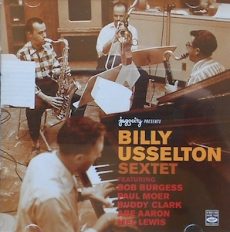
William “Billy” Usselton was born on July 2, 1926 in New Castle, Pennsylvania. He began playing professionally in high school with Bubbles Becker. Although his parents wanted him to attend college in Pennsylvania, he wanted to play for a living.
Usselton went on to play with Sonny Dunham in the 1940s before joining Ray Anthony in 1948–1949 and again in 1951–1952. Between those two gigs he joined Tommy Dorsey’s band and recommended Mel Lewis after Buddy Rich was fired. After his second stint with Anthony, he played with Bill Harris in Florida.
1954 saw Usselton joining Les Brown’s band, and played with him for decades. He played on nearly all of Brown’s records released on Coral Records and Capitol Records, and toured with him worldwide as part of Bob Hope’s United Service Organizations Tours.
His only album as a leader was the 1957 release His First Album, issued on Kapp Records. He married, moved to Chicago, Illinois where he was a jazz clinician for the Conn Corporation.
Reedist Billy Usselton, who played saxophone, clarinet and oboe, moved to Phoenix, Arizona and died on September 5, 1994 in Phoenix.
More Posts: bandleader,clarinet,history,instrumental,jazz,music,oboe,saxophone
Daily Dose Of Jazz…
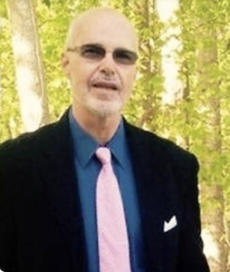
John Cusick was born on July 1, 1949 in Washington, D.C. He studied percussion with former drummer of the Charlie Byrd Trio, Bill Reichenbach. He has gone on to perform with other jazz greats that call Washington home, such as legendary pianist John Malachi and Keter Betts.
He has entertained DC area jazz audiences for more than 30 years, and has performed at the John F. Kennedy Center for the Performing Arts.
Drummer John Cusick leads the area’s finest jazz performers, in trios, quartets, quintets and larger ensembles for night club, concert and private engagements.
More Posts: bandleader,drums,history,instrumental,jazz,music
Daily Dose Of Jazz…
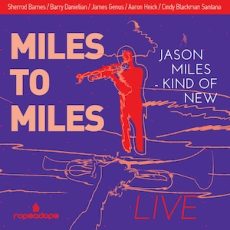
Jason Miles was born June 30, 1951 in Brooklyn, New York. He went to Indiana State University and when jazz fusion was becoming popular in the 1970s he was in New York creating innovative techniques in synthesizer programming and electronic music.
In 1979 he recorded his debut album Cozmopolitan with Michael Brecker and Marcus Miller, although it was never released. During the 1980s he was a session musician who worked with Miles Davis, Aretha Franklin, Whitney Houston, Michael Jackson, Chaka Khan, Diana Ross, David Sanborn, and Luther Vandross.
The 1990s had him playing keyboards and writing music for the animated film The Snow Queen and People: A Musical Celebration of Diversity on the Disney Channel. He and his wife Kathy Byalick composed Visionary Path, a New Age album with narration by Diana Krall, Roberta Flack, and F. Murray Abraham.
In 2000 Miles released The Music of Weather Report, the first of several tribute albums. During the next year he won a Grammy Award for producing A Love Affair: The Music of Ivan Lins with appearances by Sting and Brenda Russell. His next solo album To Grover, with Love, was a tribute to Grover Washington Jr. that was nominated for Record of the Year by the National Smooth Jazz Awards. He also recorded tributes to Miles Davis and Marvin Gaye.
Keyboardist, composer and record producer Jason Miles, who has a discography of nineteen albums, continues to compose and perform.

More Posts: bandleader,composer,history,instrumental,jazz,keyboards,music,record producer