

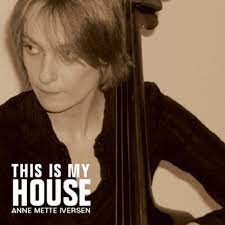
Daily Dose Of Jazz…
Anne Mette Iversen was born March 15, 1972 in Aarhus, Denmark. She studied classical piano at the Royal Academy of Music in her hometown and bass at the Rhythmic Conservatory of Music in Copenhagen, Denmark and The New School University in New York City.
Living in New York City from 1998 to 2012 Iversen co-founded the Brooklyn Jazz Underground in 2006 and is co-owner of the related record label Brooklyn Jazz Underground Records, which was formed in 2008. She works as a sideperson in various settings and as a freelance composer.
Currently based in Berlin, Germany. Iversen was Composer in Residence for Sweden’s Norrbotten Big Band in 2016. Anne’s composing is recognized for her ability to integrate classical music with jazz ensembles. She is influenced by major classical composers as well as jazz and Brazilian artists and composers.
Bassist Anne Mette Iversen has recorded ten albums between 1998 and 2020 and continues to perform, record and compose.
More Posts: bandleader,bass,composer,history,instrumental,jazz,music
The Jazz Voyager
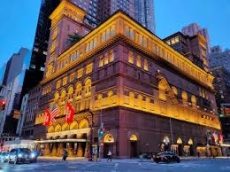
Fortunately for this Jazz Voyager the next stop on the global road trip is an hour and a half up the interstate to the Big Apple. The destination is Carnegie Hall where I’ll be sitting in the Weill Recital Hall. So many times have I strolled past this iconic venue on 57th Street to partake in lunch or dinner at the Russian Tea Room with friends. I have also on many occasions been in the audience for many concerts and tonight will be no exception to the fabulous performances offered.
Tonight this Jazz Voyager will be in attendance for the award-winning composer and pianist Lisa Hilton. She brings with her trumpeter Igmar Thomas, bassist Luques Curtis, and drummer Rudy Royston to round out her quartet. The music is slated to be uplifting and new from the group’s latest release, Coincidental Moment.
The hall is located at 881 7th Avenue, New York City 10019. For those who want more info go to https://notoriousjazz.com/event/lisa-hilton.
More Posts: adventure,club,genius,jazz,music,piano,preserving,travel
Daily Dose Of Jazz…
Steve Davis was born March 14, 1929 in Philadelphia, Pennsylvania. The youngest of 10 children, he became interested in music as a young teenager and was inspired by his older brother who also played the bass. He was part of a group of young Philadelphia jazz musicians that included saxophonists Benny Golson and John Coltrane. At age 16 he began playing with local big bands and dropped out of high school a year later to pursue a music career.
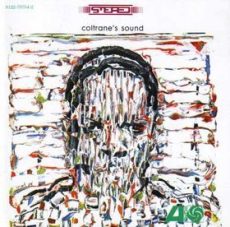
During the 1940s and 1950s he worked frequently playing with Philly Joe Jones and Jimmy Oliver among others. In 1960, he was briefly a part of the John Coltrane Quartet, before being replaced temporarily by Reggie Workman and permanently by Jimmy Garrison. He was the double bassist on the recordings of My Favorite Things, Coltrane Plays The Blues and Coltrane’s Sound.
He also recorded as a sideman with Chuck and Gap Mangione on Hey Baby! In 1961 and with quartet fellow and brother-in-law McCoy Tyner on the 1963 album Nights of Ballads & Blues. Davis went on to play on several of James Moody’s groups. He worked throughout the 1960s as a freelancer in New York and as a side man appearing on albums by Kenny Dorham and others.
Moving to Rochester, New York in 1970 Steve played bass with the Gap Mangione Trio, Spider Martin Group and other local bands. He was a mentor to younger jazz musicians in Rochester and enjoyed passing on his knowledge. 1980 saw him beginning to suffer from emphysema and returned to Philadelphia.
Bassist Steve Davis, who was also known by his Muslim name Luquman Abdul Syeed, died on August 21, 1987 at the age of 58.
More Posts: bass,history,instrumental,jazz,music
Daily Dose Of Jazz…
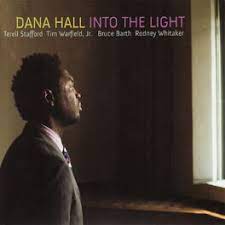
Dana Hall was born on March 13, 1969 in Brooklyn, New York where he spent the first few years of his life, then relocated with his family to his mother’s hometown of Philadelphia, Pennsylvania. There he was exposed to jazz and soul music at an early age through the family’s record collection. The family interest in creative music, and their open door policy toward Philly jazz musicians of the era sparked his curiosity, passion and ultimately career in music.
At the age of 12, Dana’s family moved from Philadelphia to Voorhees Township, New Jersey and began studying drums under renowned drum instructor Vincent “Jim” Hurley at Voorhees Middle School. Following study was with award-winning educator and bassoonist Dennis MacMullin at Eastern Regional High School where he also began playing the oboe and throughout college.
He attended Iowa State University with a double major in aerospace engineering and percussion. At ISU, Hall cultivated his interest in music, studying marimba, vibes, timpani, hand percussion, and drum set. After completing his education in aerospace engineering at Iowa State University, he received his Bachelor of Music degree from William Paterson College and a master’s degree in Composition and Arranging from DePaul University. He is presently a distinguished Special Trustees Fellow pursuing his Doctorate in Ethnomusicology at the University of Chicago.
As a jazz drummer, he is primarily influenced by the work of Art Blakey, Elvin Jones, Philly Joe Jones, Max Roach, and Roy Haynes, Jeff ‘Tain’ Watts, Ralph Peterson, Jr., and Kenny Washington, among many others. The list of artists that Hall has performed, toured, and/or recorded with is too long to mention here but it reflects the diverse, varied approaches of his music-making in the fields of jazz and popular music.
He’s both a member of the Terell Stafford Quintet and the Music Director of the Chicago Jazz Ensemble. He has been a member of the Carnegie Hall Jazz Band, and the Des Moines and the Cedar Rapids Symphonies.
As an educator he has been on the faculty of several colleges and universities including DePaul, Jazz at Lincoln Center Band Director’s Academy, Essentially Ellington faculties. Thelonious Monk Institute of Jazzand the Jazz Institute of Chicago’s Artists Residency Program.
Drummer, percussionist, composer, bandleader, and ethnomusicologist Dana Hall has released one album as a leader and continues to teach, perform, and record.
More Posts: composer,drums,educator,ethnomusicologist,history,instrumental,jazz,music,percussion
Daily Dose Of Jazz…
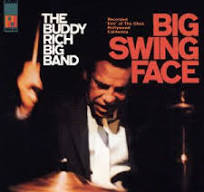
Quin Davis was born Quinn Hall Davis on March 12, 1944 in Artesia, California. He toured and recorded with Buddy Rich in 19966 to 1967 and again from 1969 to 1970.
Leaving Rich in 1970, Quin was the solo alto saxophonist with Stan Kenton for three years followed by another three year residency with Harry James until 1976.
Little is known or written about alto saxophonist and flutist Quin Davis after this point in his life.
More Posts: history,instrumental,jazz,music,saxophone