

Daily Dose Of Jazz…
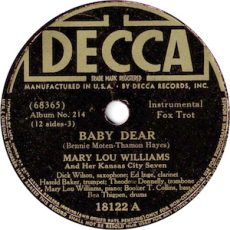
Booker Collins was born on June 21, 1914 in Roswell, New Mexico. Emerging from the New Mexico Military Institute to play in Bat Brown’s Band, a territory band. By the mid-’30s he was keeping very good company playing with pianist Mary Lou Williams and Her Kansas City Seven, cutting sides with her when he was only 16. In 1934, his break came when he got into the band of Andy Kirk and His Clouds Of Joy, staying for the next decade and playing alongside Williams in the rhythm section. Kirk’s hiring replaced the tuba with the double bass.
Booker’s final job of note was with Chicago, Illinois guitarist and drummer Floyd Smith as part of his trio, a stint that lasted from 1946 until the early ’50s, when this great bass man finally laid his big instrument down in terms of full-time playing. He made a few appearances at festival occasions in the ensuing decades but was in Chicago’s recording studios in the late ’50s cutting sides for independent labels.
Returning to performing he joined a combo called the Shades of Rhythm to backup blues singer Mad Man Jones on the demanding Come Here. Collins’ involvement with this group of shifting personnel began in 1952 when he was part of a version that took the risk of cutting sides for the Chance label.
He also performed and recorded with Bert Johnson and the group Six Men And A Girl. Little is known about the death of double bassist Booker Collins who also played the valve trombonist and tuba. It appears he faded into obscurity.

More Posts: bass,history,instrumental,jazz,music,trombone,tuba

GREG SATTERTHWAITE QUINTET
Graduating from some of the nations most prestigious jazz programs, Satterthwaite earned his Doctor of Musical Arts degree from the University of North Texas in Jazz Piano Performance, a Master of Arts in Commercial Music from Florida Atlantic University and a Bachelor of Music from the University of Miami. Satterthwaite is an Assistant Professor of Jazz Piano and African American Studies at the University of Georgia. He has studied with Stephen Scott, Ron Miller, Pat Coil, Dave Meder, Quincy Davis, Brad Leali, and Lynn Seaton. His educational experiences have impacted his teaching philosophy as he brings forth the knowledge, observations, and backgrounds of the educators, artists and creative makers that he has interacted with and learned from over the years. As a scholarly contribution to the field, Satterthwaite presented “Beyond Fourths and Pentatonics: A Critical Analysis of Selected Recordings of McCoy Tyner “1962 to 1963” at the national 2021 Jazz Education Network Conference.
Satterthwaite arranged and composed all songs on his debut album “Who I Am,” which can be heard on major music streaming platforms, and is releasing his sophomore album Savannah Blue.
More Posts: adventure,album,club,festival,genius,jazz,museum,music,piano,preserving,restaurant,travel
THE TERENCE HARPER PROJECT FEATURING AUDREY SHAKIR
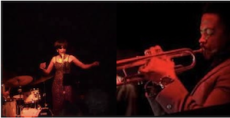
Terence Harper is one of the youngest members of the Harper Family Dynasty and is currently touring around the world. He has played and recorded with the great Curtis Lundy, Steve Turre, Jimmy Heath, Musiq Soulchild, Solange, Keith David, Bobby Watson and Chinese Movie Star and Mandopop artist Andy Lau just to name a few. He has also appeared on numerous television shows and movies including, The Orignals as well as the remake of the movie The Color Purple, directed by Blitz Bazawule and produced by Quincy Jones, Scott Sanders, Steven Spielberg and Oprah Winfrey.
Audrey Shakir is a jazz-pop vocalist extraordinaire and dubbed Atlanta’s First Lady of Jazz. She has entertained throughout the United States and internationally. Her scatting talents have been compared to the great Ella Fitzgerald, and she brings a remarkable jazz influence to all the material she performs.
Showtimes: 7:30pm & 9:30pm
More Posts: adventure,album,club,festival,genius,jazz,museum,music,preserving,restaurant,travel,trumpet,vocal
Three Wishes
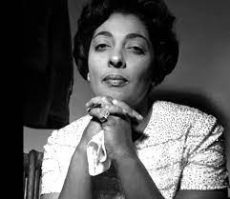
Girl talk always ensued when Pannonica and Carmen McRae were together and when she wanted to know what her friend would say asked her what her three wishes would be and she told her:
- “I wish that we had more people that appreciated good American music.”
- “I wish my father were alive – it’s in the wrong order! That should come first.”
- “And the other one… I hope that I’ll know when I’ve had it.”
*Excerpt from Three Wishes: An Intimate Look at Jazz Greats ~ Compiled and Photographed by Pannonica de Koenigswarter

More Posts: baroness,history,instrumental,jazz,music,pannonica,three,vocal,wishes

Daily Dose Of Jazz…
Dennis Matthew Budimir was born on June 20, 1938 in Los Angeles, California. He learned to play piano and guitar in his youth and first played professionally when he was fourteen years old. In mid Fifties Los Angeles he played in a quartet with La Monte Young, Billy Higgins, and Don Cherry and by the late 1950s he was working in the bands of Ken Hanna, Keith Williams, Harry James, and Chico Hamilton.
From 1960–1961 he worked with Bud Shank and accompanied Peggy Lee prior to entering military service. After his discharge in 1963 he toured Japan with Bobby Troup and returned to the Los Angeles area, where he came off the road and became a studio musician for the next several decades. He recorded in this capacity with Lalo Schifrin, Marty Paich, Don Ellis, Gil Melle, Ella Fitzgerald, Milt Jackson, Stan Getz, Julie London, Jimmy Smith, Ray Brown, Johnny Mandel and the Capp-Pierce Juggernaut.
This opportunity also led him to record with Joni Mitchell, The Carpenters, Brian Wilson, Barbra Streisand, Ravi Shankar, Frank Zappa, Linda Ronstadt, Dusty Springfield, Dave Grusin, Quincy Jones, David Axelrod, Tom Waits, Harry Nilsson, George Harrison, Ringo Starr, Johnny Mathis, Cher, and Doris Day. He recorded more than 900 movie soundtracks from the early 1960s until the 2000s.
Guitarist Dennis Budimir, considered to be a member of The Wrecking Crew, transitioned on January 10, 2023 at the age of 84.
More Posts: guitar,history,instrumental,jazz,music