

Daily Dose Of Jazz…
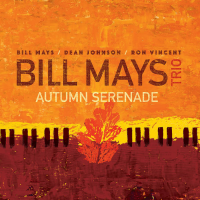
Ron Vincent was born on October 18, 1951 in Warwick, Rhode Island. When he came of age he moved to Boston, Massachusetts in 1969 and attended Berklee College of Music, graduating in 1973. After touring the U.S. with different jazz groups, and spending three years in Kansas City, he settled in New York City in 1982.
Becoming a veteran of the New York City jazz scene he worked often as a sideman. Ron has recorded for GRP, Concord and Palmetto record labels, the latter where he has been producer and co-producer for a number of projects.
A member of the Gerry Mulligan Quartet and Mr. Mulligan’s Re-Birth of the Cool Tentet from 1989 to1996, recorded four CD’s with Mulligan and has also recorded with Phil Woods, Lee Konitz, Randy Brecker, Bob Brookmeyer, Bill Charlap, John Lewis, and Slide Hampton. Ron has appeared with Art Farmer, Karrin Allyson, Jimmy Heath, Rob McConnell, Rufus Reid and Dr. Billy Taylor.
As a leader, his own trio and quartet are active in the New York City area and his quartet has toured the U.S. and Europe. His educator hat has him representing Sabian Cymbals, and presenting workshops at over 80 colleges and universities. Vincent has been on the faculty of the Jamie Aebersold Jazz Camps and the Stanford Jazz Camp. In 1996 Ron received a National Endowment for the Arts grant for jazz performance.
Drummer Ron Vincent teaches percussion at Manhattanville College, leads two educational performing groups that appear at schools in the tri-state area and is involved in a Literacy Through The Arts program in NYC’s public schools.

More Posts: bandleader,drums,educator,history,instrumental,jazz,music
Daily Dose Of Jazz…
Herschel McWilliams was born and raised in Kansas City, Kansas on October 17, 1978. Growing up the son of musicians, a drummer father and pianist and vocalist mother, he was introduced to many musical influences at an early age.
He started learning piano at eight years old and alto saxophone at 10 years old. He joined the band in school and though he learned to play drums from his dad, saxophone became his instrument when he was in the fourth grade. In the 7th grade he stumbled upon Weather Report and Harry Connick Big Band albums. Having great teachers and musicians around him was an important influence on him throughout elementary and high school.
He started gigging the summer after he graduated high school with a community big band. They were working musicians and it was his first call he ever got before heading off to college. After college he has become a beacon of light for jazz in his hometown.
Saxophonist Herschel McWilliams serves on the Board of Directors for Kansas City Jazz Ambassadors, runs his own jazz website, and plays regular gigs in the jazz district of Kansas City as well as other venues in the area.
More Posts: bandleader,history,instrumental,jazz,music,saxophone
SEAN JONES w/ FROST JAZZ ORCHESTRA & SEEK THE SOURCE
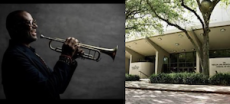
Singing and performing as a child with the church choir in his hometown of Warren, Ohio, Sean switched from the drums to the trumpet at the age of 10.
Sean is a musical chameleon and is comfortable in any musical setting no matter what the role or the genre. He is equally adept in being a member of an ensemble as he is at being a bandleader. Sean turned a 6-month stint with the Jazz at Lincoln Center Orchestra into an offer from Wynton Marsalis for a permanent position as lead trumpeter, a post he held from 2004 until 2010. In 2015 Jones was tapped to become a member of the SFJAZZ Collective. During this time, Sean has managed to keep a core group of talented musicians together under his leadership forming the foundation for his groups that have produced and released eight recordings on the Mack Avenue Records, the latest is his 2017 release Sean Jones: Live from the Jazz Bistro.
Sean has been prominently featured with a number of artists, recording and/or performing with many major figures in jazz, including Illinois Jacquet, Jimmy Heath, Frank Foster, Nancy Wilson, Dianne Reeves, Gerald Wilson and Marcus Miller. Sean was selected by Miller, Herbie Hancock and Wayne Shorter for their Tribute to Miles tour in 2011.
The Band:
John Daversa, director
Marcus Strickland, director
Sean Jones, trumpet
Ticket: $40.00 | $35.00 | $15.00
More Posts: adventure,bandleader,genius,jazz,music,preserving,trumpet
The Jazz Voyager
Feel the soul of New Orleans come alive as Grammy winner Adonis Rose and the New Orleans Jazz Orchestra present Sacred Spaces, a powerful ballet that blends music and dance in a celebration of resilience, community, and hope. Created in collaboration with the renowned Cleo Parker Robinson Dance Company, the piece was inspired by the burning of three historic Black churches in Louisiana.
With gospel, funeral dirges, and second lines woven throughout, this unforgettable performance transforms tragedy into a stirring tribute to healing and strength and features vocalist Andromeda Turre.
Performance Lineup: Adonis Rose, drums / Artistic Director Andromeda Turre, vocals David Navarro, trumpet Miles Berry, tenor saxophone itch Butler, trombone Brandon McCune, piano
Tickets: $25.00 ~ $50.00

More Posts: adventure,club,drums,ensembles,genius,jazz,music,preserving,travel,vocal
Daily Dose Of Jazz…
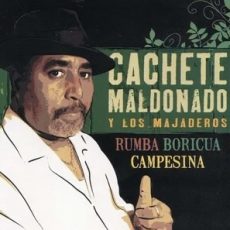
Angel ‘Cachete’ Maldonado was born in Santurce, Puerto Rico on Oct. 16, 1951 to a father who was a respected orchestra bassist. He began his musical studies with formal piano lessons, but had an early inclination to percussion and went under the tutelage of drummer Julio ‘Maco’ Rivera. His curiosity of Afro-Cuban music led him to the batá drums, and their religious and spiritual connotations, then to conga and bongo.
While on the island, he joined the popular band of Johnny El Bravo, then relocated to New York in the early 1970s. Once there he played with Carlos “Patato’ Valdés and Julito Collazo. This led him to become the featured bongo player with La Conspiración, then teamed up with pianist Larry Harlow. He remained for extensive tours of North and South America, and established his standing as a top tier percussionist. He performed with Eddie Palmieri, Louie Ramirez, Conjunto Libre, and Tipica 73, and recorded with Machito and Dizzy Gillespie.
Maldonado went on to play with Gato Barbieri, Weather Report, Freddie Hubbard, Jorge Dalto, Airto Moreira among others. In 1980 he started his seminal group Batacumbele, blending the Cuban songo beat with bomba and plena. Batacumbele had a compact but highly regarded recording output of five albums including a compilation disc. The release of the self-titled record was an instant hit and solidified his standing as a percussionist and bandleader.
Suffering a debilitating stroke in 2005, Cachete curtailed his performances which led to further complications. However, he regained much of his vibrancy and in 2010 Cachete Maldonado y Los Majaderos released Rumba Boricua Campesina to much acclaim on the island and in New York.
Percussionist Cachete Maldonado continues to lead his band at the local gigs and advance Afro-Caribbean music.
More Posts: bandleader,history,instrumental,jazz,music,percussion