

Daily Dose Of Jazz…
John James Chilton was born on July 16, 1932 in London, England to working-class parents and was evacuated to Northamptonshire, where he began playing the cornet at the age of 12. Switching to trumpet at 17, after doing two years in the RAF, in 1952 he formed his own jazz band.
He worked in Bruce Turner’s Jump Band from 1958 to 1963 which also had a film of their exploits called Living Jazz in 1961. He went on to play in Alex Welsh’s Big Band. During the 1960s he played piano on some pop recordings, worked in Mike Daniels’ Big Band. He formed his own Swing Kings band which backed touring American jazz musicians including Buck Clayton, Ben Webster, Bill Coleman and Charlie Shavers. He also recorded The Song of a Road, one of the radio ballads by folk singers Ewan MacColl and Peggy Seeger in the 1950s for the BBC.
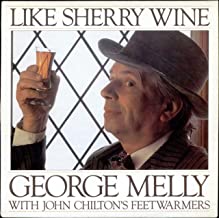
He would go on to work with cartoonist Wally Fawkes, form John Chilton’s Feetwarmers, and began accompanying jazz singer George Melly. Together they made records and toured the world for nearly 30 years. In 1983 and 1984 they had their own BBC television series called Good Time George, and appeared on countless other TV shows.
A songwriter and composer, one of his songs, “Give Her A Little Drop More”, was used in the film St Elmo’s Fire. John is one of the few European writers to win a Grammy Award for his album notes on Bunny Berigan and was nominated again in 2000. He won the British Jazz Award for Writer of the Year, his Who’s Who of Jazz was described as one of the essential jazz books, and he wrote award winning books on Coleman Hawkins, Louis Jordan Sidney Bechet and Louis Armstrong. Trumpeter John Chilton continued to play trumpet with the clarinetist Wally Fawkes in London until he passed away on February 25, 2016 in London.

More Posts: author,bandleader,history,instrumental,jazz,music,trumpet
The Quarantined Jazz Voyager
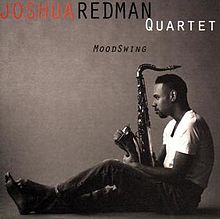
Masking and social distancing are still my mantra in maintaining my health and this time has given me a steady flow of opportunities to sit and listen to albums I have in my collection. So this I am revisiting music that was recorded over a quarter of a century ago. This week I turn to tenor and soprano saxophonist Joshua Redman and his 1994 studio album by his quartet titled Moodswing. All compositions on this album are original and released on the Warner Bros. The album was re-released on vinyl in 2009.
Track Listing | 69:39- Sweet Sorrow
- Chill
- Rejoice
- Faith
- Alone in the Morning
- Mischief
- Dialogue
- The Oneness of Two (In Three)
- Past in the Present
- Obsession
- Headin’ Home
- Joshua Redman ~ tenor, soprano saxophone
- Brad Mehldau ~ piano
- Christian McBride ~ bass
- Brian Blade ~ drums

Recorded on March 8~10, 1994 at the Power Station in New York City. The production team was led by producer Matt Pierson, Jennifer Zeitlin ~ production coordinator, James Farber was the recording/mixing engineer, Greg Calbi and Scott Hull ~ mastering engineers, and Rory Romano, Tony Black ~ engineer assistants. The art direction and design was by Jeri Heiden and Tom Recchion, Jim Merrill did the photography of the band and Marc Hom took the photographs of Joshua. Mary Ann Topper was responsible for management and booking.
Track Listing | 69:39- Sweet Sorrow
- Chill
- Rejoice
- Faith
- Alone in the Morning
- Mischief
- Dialogue
- The Oneness of Two (In Three)
- Past in the Present
- Obsession
- Headin’ Home
- Joshua Redman ~ tenor, soprano saxophone
- Brad Mehldau ~ piano
- Christian McBride ~ bass
- Brian Blade ~ drums
More Posts: adventure,album,club,genius,jazz,museum,music,preserving,restaurant,saxophone,travel

Daily Dose Of Jazz…
Rodrigo Amado was born in Lisbon, Portugal on July 15, 1964 and began studying the sax at the age of 17, briefly at the Hot Club Music School of Lisbon and with mentors Carlos Martins, Pedro Madaleno, and Jorge Reis.
With diverse musical interests, he explored improvisation in other genres, including his work with his various ensembles like the Lisbon Improvisation Players and the Motion Trio with Miguel Mira and Gabriel Ferrandini. He is an in~demand studio player on numerous recorded projects.
He started his own label Clean Feed in 2001, with brothers Pedro and Carlos Costa, before leaving the imprint in 2005 to start a second label, European Echoes. Also an accomplished professional photographer, Amado continues to be a bright light on the Portuguese and international improvisational jazz scene.
Saxophonist Rodrigo Amado continues to specialize in free-form, composition-in-the-moment jazz, and his various projects and trios have given him an international following.
More Posts: bandleader,composer,history,instrumental,music,saxophone
Daily Dose Of Jazz…
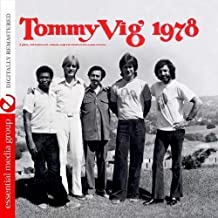
Tommy Vig was born on July 14, 1938 in Budapest, Hungary. Internationally recognized as a child prodigy by the age of 6, he played drums with his father, clarinetist Gyorgy Vig and performed concerts on Budapest State Radio, at the City Theatre, the Academy of Music, and the National Circus. By age 8, he made the album The World Champion Kid Drummer with Austrian jazz players in Vienna, Austria including Hans Koller, Ernst Landl, and the Hot Club of Vienna for Elite Special. The following year his drumming won him the 1947 MGM-Jazz Competition in Budapest and as a result made several recordings with the Chappy’s Mopex Big Band for His Master’s Voice.
Completing his studies at the Bartók Conservatory in 1955 and the Ferenc Erkel Music High School in 1956, due to the crushing of the Hungarian Revolution of 1956, he fled to Vienna, where he played concerts with Fatty George and Joe Zawinul. A move to the United States saw him on scholarship at Juilliard School of Music. Since then he has been writing and conducting concerts.
In 1970 Vig relocated to Los Angeles, California where he worked in the studios of Warner Bros., Fox, Universal, CBS, Columbia, ABC, Disney, Goldwyn, MGM, and Paramount. He played on 1500 studio sessions in Hollywood, two Academy Awards, and produced, directed, and conducted the official 1984 Olympic Jazz Festival for the Los Angeles Olympic Organizing Committee. He wrote the music for 30 films and television shows, and added percussion on the recording of Quincy Jones’s soundtrack to Roots.
Vig has worked with Red Rodney, Don Ellis, Cat Anderson, Terry Gibbs, Art Pepper, Milcho Leviev, Joe Pass, the Miles Davis-Gil Evans Big Band. Frank Sinatra, Sammy Davis Jr., Tony Curtis, Woody Allen, Judy Garland, Tony Bennett and Rod Stewart.
Since 2006, vibraharpist, drummer, percussionist, xylophonist and marimba player Tommy Vig, who has won several awards, has been performing concerts with his wife, appearing on radio and television, and recording albums.
More Posts: bandleader,drums,educator,history,instrumental,jazz,marimba,music,percussion,vibraharp,xylophone

Three Wishes
The Baroness asked Oscar Peterson what his three wishes would be and he said:
1. “I wish I could play the piano the way I want to.”
2. “I wish everyone was born with innate understanding of all art forms.”
3. “Love throughout the world, individual to individual.”
*Excerpt from Three Wishes: An Intimate Look at Jazz Greats ~ Compiled and Photographed by Pannonica de Koenigswarter

More Posts: baroness,history,instrumental,jazz,music,pannonica,piano,three,wishes