

The Jazz Voyager
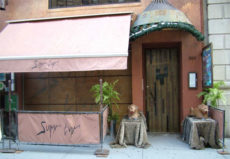
Back to the Big Apple goes the Jazz Voyager to visit the Sugar Bar located at 254 W 72nd Street, New York City 10023. Established in 1996 by the late Nick Ashford and co-owned by his wife Valerie Simpson, these two icons brought a variety of music to the upper Westside, and Valerie has continued the vision he had, jazz being just one genre.
This sojourn to Manhattan is an opportunity to enjoy a bit of the intimate and elegant ambiance the couple set while taking in the 08/01 Open Mic featuring Guest Host and the Sugar Bar All-Star Band.
The cuisine is American fare with several choices of surf and turf to delight any palette. Be prepared to pay a $10.00 cover, reserve a table and enjoy the atmosphere and the music that runs from 9:00 pm to 1:00 am. To find out who’s playing the style of music you enjoy, and to be sure you get a seat, reservations can be made at 212-579-0222.

More Posts: adventure,club,genius,jazz,museum,music,preserving,restaurant,travel

Daily Dose Of Jazz…
Chuck Wayne was born Charles Jagelka on February 27, 1923 in New York City to a Czechoslovakian family. As a boy, he learned banjo, mandolin, and balalaika. By the early 1940s he was playing in jazz bands on 52nd Street and after two years in the Army, he returned to New York City, joined Joe Marsala’s band, and settled in Staten Island until a 1991 move to New Jersey. He changed his musical style after hearing Charlie Parker, recording with Dizzy Gillespie in 1945. Frustrated with the difficulty of getting the sound he wanted, he considered switching to saxophone.
Wayne was a member of Woody Herman’s First Herd, the first guitarist in the George Shearing quintet, worked with Coleman Hawkins, Red Norvo, Bud Powell, Jack Teagarden, George Shearing, Lester Young, and Barbara Carroll. During the 1950s, he played with Tony Bennett, Gil Evans, Brew Moore, Zoot Sims, and George Wallington. In the Sixties, CBS hired him as a staff guitarist and for the next two decades, he played on Broadway, accompanied vocalists, and performed in guitar duos with Joe Puma and Tal Farlow.
He wrote Sonny in honor of Sonny Berman. Years later, Miles Davis took the song, renamed it Solar, and claimed he wrote it. His Butterfingers and Prospecting have been incorrectly attributed to Zoot Sims. Chuck was known for a bebop style influenced by saxophone players of his time and he developed a technique not widely adopted, and also developed a comprehensive approach to guitar chords and arpeggios.
Over the course of his career, he recorded eight albums as a leader beginning with his 1953 album The Chuck Wayne Quintet on the Progressive label. He worked as a sideman with Gil Evans, Anthony Perkins, Dick Katz, Duke Jordan, and Frank Wess, among others. Guitarist Chuck Wayne, one of the first jazz guitarists to learn bebop, passed away on July 29, 1997.
More Posts: bandleader,guitar,history,instrumental,jazz,music
Daily Dose Of Jazz…
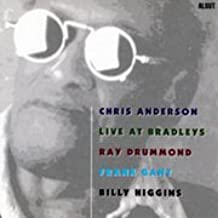
Chris Anderson was born on February 26, 1926 in Chicago, Illinois and was a self-taught pianist. He began playing in Chicago clubs in the mid-1940s and played with Von Freeman and Charlie Parker, among others. Hired as Dinah Washington’s accompanist in New York City, his tenure with Washington was a brief six weeks as she changed accompanists frequently. After his firing, he decided to stay in the city.
In 1960 he recorded what might be his best-regarded album My Romance on the VeeJay label with bassist Bill Lee and drummer Art Taylor. He was a great influence on his student Herbie Hancock.
Despite the respect of his peers, Anderson had difficulty finding work or popular acclaim due in large to his disabilities. He was blind and his bones were unusually fragile, causing numerous fractures, which at times compromised his ability to perform at the times or places requested, although he continued to record until he was well into his 70s. A DownBeat profile indicated he had osteogenesis, probably meaning osteogenesis imperfecta.
He would record his first album as a leader in 1960 and ultimately record a total of ten. As a sideman, he worked with Charlie Haden, Clifford Jordan, Sun Ra, and Frank Strozier. Pianist Chris Anderson passed away on February 4, 2008 in Manhattan, New York City.
More Posts: bandleader,history,instrumental,jazz,music,piano
Three Wishes
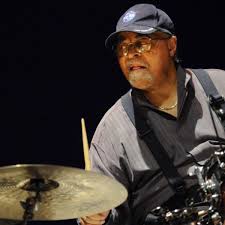
When the Baroness inquire what Jimmy Cobb’s three wishes would be he responded by answering:
- “That the musicians would get as much money as they’re supposed to get when they work.”
- “Good health for me, or some shit like that, forever. I wish to be an old man and play through all of it.”
- “Straighten the world out..”
*Excerpt from Three Wishes: An Intimate Look at Jazz Greats ~ Compiled and Photographed by Pannonica de Koenigswarter

More Posts: baroness,drums,history,instrumental,jazz,music,pannonica,three,wishes
Daily Dose Of Jazz…
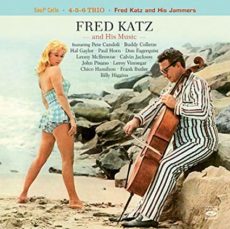
Frederick Katz was born on February 25, 1919 in the Williamsburg section of Brooklyn, New York City and was classically trained. He studied under Pablo Casals and performed with several symphony orchestras. He was a child prodigy on both the cello and piano and performed in public as a teenager and was drawn to the music of Manhattan nightclubs and to folk music. During World War II he conducted concerts and wrote musical revues for the U.S. Seventh Army. He was a member of the National Symphony Orchestra.
Katz was a member of drummer Chico Hamilton’s quintet, one of the most important West Coast jazz groups of the 1950s. His arco cello defined the chamber jazz focus of Chico Hamilton’s Quintet and the group quickly gained popularity. The Chico Hamilton Quintet, including Katz, appeared in the film noir The Sweet Smell of Success in 1957, starring Burt Lancaster and Tony Curtis, where Katz was described in passing as the Quintet’s primary composer. Katz and Hamilton wrote a score for the film which was ultimately rejected in favor of one by Elmer Bernstein.
As a leader Fred recorded several albums, wrote and conducted the arrangements for singer Carmen McRae’s 1958 album Carmen For Cool Ones, and recorded with Dorothy Ashby, Pete Rugolo, Ken Nordine and Paul Horn. He scored nineteen films and television shows including A Bucket of Blood, The Wasp Woman, Creature from the Haunted Sea and The Little Shop of Horrors. Later in his career, Katz became a professor of ethnic music in the Anthropology Department at California State University, Fullerton and California State University, Northridge, where he taught world music, anthropology and religion for over 30 years. One of his students was John Densmore, drummer of The Doors.
Cellist and composer Fred Katz, who was one of the earliest jazz musicians to establish the cello as a viable improvising solo instrument, passed away on September 7, 2013, in Santa Monica, California.