


Daily Dose Of Jazz…
Frederick L. Robinson was born in Memphis, Tennessee on February 20, 1901, and learned to play the trombone as a teenager. He studied music in Ohio before moving to Chicago, Illinois where he played in Carroll Dickerson’s orchestra. As a member of Louis Armstrong’s Hot Five, he played on recordings and continued working with both Dickerson and Armstrong until late 1929.
He went on to take a position in Edgar Hayes’s band and in the 1930s he worked extensively as a sideman, with Marion Hardy, Don Redman, Benny Carter, Charlie Turner, Fletcher Henderson, and Fats Waller. From 1939 to 1940 he was in Andy Kirk’s band, and in the later 1940s he worked with George James, Cab Calloway, and Sy Oliver. Early in the 1950s he was performing with Noble Sissle, but sometime after 1954 he became less active as a performer. Trombonist Fred Robinson passed away on April 11, 1984, in New York City.
More Posts: history,instrumental,jazz,music,trombone

Daily Dose Of Jazz…
Fred Van Hove was born on February 19, 1937 in Antwerp, Belgium. He studied musical theory, harmony, and piano, beginning his association with saxophonist Peter Brötzmann in 1966, playing on his early quartet and sextet recordings including 1968’s Machine Gun album. He then was a part of a trio with Brötzmann and drummer Han Bennink.
A pioneer of European free jazz he is a pianist, accordionist, church organist, and carillonist, an improviser and a composer. He has performed in a variety of duos and as a solo artist, notably with saxophonists Steve Lacy and Lol Coxhill and with trombonists Albert Mangelsdorff and Vinko Globokar.
He has composed for film and theatre and taught local musicians in Berlin, Germany, as well as holding workshops in Germany, France, England, Belgium, and the Netherlands. Fred has held studios at the University of Lille III, has collaborated with a number of his fellow Belgian musicians and in 1996 was given the title of Cultural Ambassador of Flanders by the Belgian government. Pianist, improviser, and composer Fred Van Hove, who also played the accordion, organ, and carillon, passed away on January 13, 2022.
More Posts: carillon,composer,history,improviser,instrumental,jazz,music,organ,piano accordion
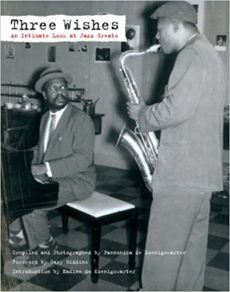
Three Wishes
The question of three wishes arose when Pannonica asked Sonny Nevius of his:
- “To have my wife and baby to be, like, happy. Very happy. As happy as could be.”
- “For my music career to be just like moving up ~ up tot he top, man! As far as I could go. But to be the same Sonny, man, all the time.”
- “Just to be able to live relaxed, like, contented, you know, with my family, in my own home and forget about the world. That’d be my three wishes..”
*Excerpt from Three Wishes: An Intimate Look at Jazz Greats ~ Compiled and Photographed by Pannonica de Koenigswarter

More Posts: baroness,history,instrumental,jazz,music,pannonica,three,vocal,wishes
Daily Dose Of Jazz…
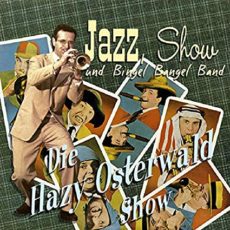
Hazy Osterwald was born Rolf Osterwald on February 18, 1922 in Bern, Switzerland. He began his career as a pianist, arranged for Fred Böhler in the late 1930s and joined him as a trumpeter in 1941. Around this time he also worked with Edmond Cohanier, Philippe Brun, Bob Huber, Eddie Brunner and Teddy Stauffer.
Hazy led his own ensemble starting in 1944, recording through the 1970s, with sidemen including Ernst Höllerhagen and Werner Dies. In the late 1940s he recorded with Gil Cuppini and played at the Paris Jazz Fair with Sidney Bechet and Charlie Parker. Trumpeter, vibraphonist, vocalist and bandleader Hazy Osterwald passed away on February 26, 2012 in Lucerne Switzerland.
More Posts: bandleader,history,instrumental,jazz,music,trumpet,vibraphone,vocal

Daily Dose Of Jazz…
Harry Dial was born on February 17, 1907 in Birmingham, Alabama who became one of the classic drummers of the early jazz world. His specialty was keeping time behind artists known for their fun and pep. In fact, a glance at Dial’s discography is something like a partial scan of the most entertaining albums of all time, because such a list would surely include sides by two guys named Louis, Armstrong and Jordan, as well as Fats Waller and Ella Fitzgerald.
Harry was a solid, energetic drummer who pushed the beat forward without cluttering the airspace. His use of the sock cymbal and his fat, marching band snare drum sound are often imitated. He was also one of the rare breeds of singing drummers, the vocal side of his talents usually only exposed when he was in charge of the band. He was allowed to make comments on records with Fats Waller, the best example of which is the introduction to the upbeat Don’t Let It Bother You.
Dial’s career as a bandleader included a series of sides for Vocalion beginning in 1930. The group, whose recordings included the deadly “Poison,” was known as Harry Dial’s Blusicians, and included players such as banjoist Eursten Woodfork, trumpeter Shirley Clay, and the fine alto saxophonist Lester Boone. Some of this material has been reissued on the compilation Chicago 1929-1930: That’s My Stuff.
He was already recording with Armstrong around this time and began cutting tracks with Waller as a member of Fats Waller’s Rhythm before the middle of that decade. It might have taken him an additional ten years to master the art of playing the maracas since he seemed to find a way to include the delicate shakers on just about every funny style of music he played with Jordan beginning in the mid-’40s when he joined the Tympany Five.
In the late ’40s, he took another crack at recording under his own name, producing “Prince’s Boogie” for Decca with one of the earliest versions of the catchy “Diddy Wah Diddy” on the flipside. Dial liked to write as well, beginning with a song entitled “Don’t Play Me Cheap,” recorded by the famous Armstrong. His songs were also recorded by the merely infamous, a category that would not exist if it didn’t include a singer named Bea Booze, who cut Dial’s “Catchin’ as Catch Can” for Decca in 1942.
Many years later, the drummer published his All This Jazz About Jazz: The Autobiography of Harry Dial. The dapper, suave musician would have felt it important that he is most certainly not the Harry Dial who made it into the Guinness Book of World Records by claiming to have gone 78 years without bathing. Drummer Harry Dial passed away on January 25, 1987 in New York City.
More Posts: author,bandleader,drums,history,instrumental,jazz,music