

Daily Dose Of Jazz…
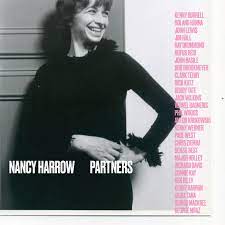
Nancy Harrow was born October 3, 1930 in New York City, New York and studied classical piano beginning at age seven, then decided to pursue careers in dancing and singing.
In 1961 Nancy released her debut album Wild Women Don’t Have The Blues for Candid Records. It featured Kenny Burrell, Buck Clayton, Dickie Wells, and Milt Hinton. Her sophpomore album for Atlantic Records two years later titled You Never Know featured John Lewis, Dick Katz, Phil Woods, Jim Hall, Richard Davis, and Connie Kay. She then left music to raise a family.
Since her return in 1975 she has worked with Katz and Woods, Clark Terry, Roland Hanna, and Bob Brookmeyer. She recorded albums based on The Lost Lady by Willa Cather, The Marble Faun by Nathaniel Hawthorne and Winter Dreams, based on the life of F. Scott Fitzgerald.
Two of Harrow’s songs have been adapted, one to a puppet show and one to The Cat Who Went to Heaven, based on a story by Elizabeth Coatsworth. The latter had short New York City runs at the Mercer Street Theater, the Asia Society, the Harlem School of the Arts, the Kennedy Center and the Brooklyn Academy of Music.
Singer and songwriter Nancy Harrow, who has recorded eighteen albums as a leader on a collaboration with John Lewis, continues to perform and record.

More Posts: composer,history,instrumental,jazz,music,piano,producer,vocal
Daily Dose Of Jazz…
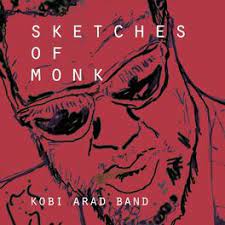
Kobi Yakob Arad was born on October 2, 1981 and raised in Haifa, Israel. He earned his bachelor’s degree at Tel Aviv University and became the first musician to earn a doctorate in contemporary improvisation and third stream from the New England Conservatory of Music.
While living in Israel, Kobi participated as a keyboardist in a trio with Asaf Sirkis and Gabriel Mayer in the 1990s. He collaborated with Stevie Wonder and his manager Stephanie Andrews at the Berklee Performance Center in 2005.
Between 2009 and 2015 Arad released Sparks of Understanding, The Experience Project, Webern Re-Visioned, and Superflow which is a collaboration with Roy Ayers, featuring bassist Jonathan Levy.
He went on to record a tribute album Ellington Upside Down with the Kobi Arad Band. The album’s mashup of “Take The ‘A’ Train” and “It Ain’t Mean a Thing” was nominated for Best Jazz Instrumental at the 17th Independent Music Awards in 2019. His album Segments went on to win Best Jazz Instrumental in the album category at the same event.
In 2021 he won the Independent Music Artist award in Best Jazz for his performance of Thelonious Monk’s Bemsha Swing at the Hollywood Music in Media Awards. Pianist, vocalist, composer, and music producer Kobi Arad, who has collaborated with Stevie Wonder, Cindy and Carlos Santana, and Jack DeJohnette, continues to perform and record.

More Posts: composer,history,instrumental,jazz,music,piano,producer,vocal
The Jazz Voyager
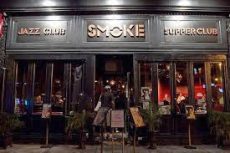
The Jazz Voyager is leaving Ohio for the Big Apple and the upper West Side where jazz hits nightly at Smoke Jazz & Supper Club. Located at the junction of 106th and Broadway also known as Duke Ellington Boulevard, it is one of New York City’s premier live music venues renowned for programming legendary performers, modern masters, and rising stars.
This week they present George Cables, one of the essential pianists with impeccable sound, sensitive accompaniment, and original playing. A trusted collaborator over the past 50 years for artists like Joe Henderson, Freddie Hubbard, Dexter Gordon, and Art Pepper, Cables has also released numerous recordings as a leader.
The venue is situated at 2751 Broadway, New York City 10025. Get more info by visiting the Jazz Calendar at https://notoriousjazz.com/event/george-cables-quartet-2
More Posts: adventure,club,genius,jazz,music,piano,preserving,travel
Daily Dose Of Jazz…
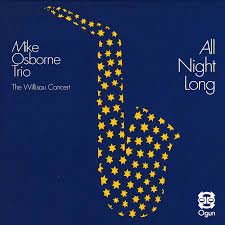
Michael Evans Osborne was born in Hereford, England on September 28, 1941 and attended Wycliffe College in Gloucestershire and the Guildhall School of Music.
From 1962 to 1972, Osborne was a bandmate in the Mike Westbrook band. During this period he also worked with Michael Gibbs, Mike Cooper, Stan Tracey, Kenny Wheeler, Humphrey Lyttelton, Alan Skidmore, John Surman, Harry Miller, Alan Jackson, John Mumford and Lionel Grigson.
During 1974–75, Osborne was part of the saxophone trio S.O.S. with John Surman and Alan Skidmore. They recorded an album, BBC radio and television sessions, and toured extensively in Europe.
Health issues hastened the end of his career in 1982, and returning to Hereford, alto saxophonist, pianist, and clarinetist Mike Osborne, who was a member of Brotherhood of Breath, transitioned while living under care at the time on September 19, 2007, aged 65.
More Posts: clarinet,history,instrumental,jazz,music,piano,saxophone
Daily Dose Of Jazz…
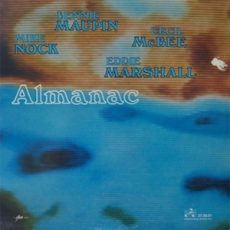
Michael Anthony Nock was born September 27, 1940 in Christchurch, New Zealand. He began studying piano at 11 and attended Nelson College for one term in 1955. By the age of 18, he was performing in Australia and in Sydney he played in The Three Out trio with Freddy Logan and Chris Karan. They toured England in 1961 before he left to attend Berklee College of Music.
Nock was a member of Yusef Lateef’s group from 1963 to 1965. Three years later he became involved with fusion, leading the Fourth Way band for two years. For a decade beginning in 1975 he was a studio musician in New York City, then returned to Australia.
His 1987 album Open Door with drummer Frank Gibson, Jr. was named that year’s Best Jazz Album in the New Zealand Music Awards. The 2003 New Year Honours saw Mike appointed an Officer of the New Zealand Order of Merit, for services to jazz.
Currently residing in New South Wales, pianist, composer and arranger Mike Nock, who taught at the Sydney Conservatorium of Music until 2018, continues to perform with his trio, big band, and various one-off ensembles.
More Posts: arranger,bandleader,composer,educator,history,instrumental,jazz,music,piano