

Requisites
Presenting Michael Weiss ~ Michael Weiss Quintet | By Eddie Carter
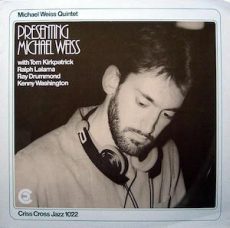
It’s always a pleasure when I discover a new pianist, and this morning’s subject is a recent addition to my library by a young man named Michael Weiss. Presenting Michael Weiss (Criss Cross Jazz 1022) is his first album as a leader and was released in 1986. Michael was born in Dallas, Texas, and began studying music at Indiana University, where he earned his degree. Michael later moved to New York, where he played with Jon Hendricks and as a sideman in some of the best jazz groups. He’s joined here by Tom Kirkpatrick on trumpet, Ralph Lalama on tenor sax, Ray Drummond on bass and Kenny Washington on drums. My copy is the original Netherlands Stereo album.
My Melancholy Baby by Ernie Burnett and George A. Norton starts with the quintet’s mid-tempo theme. Tom leads off with a relaxing interpretation. Ralph gets to the song’s heart in the next reading. Michael responds with a comforting solo. Ray makes a concise comment, and the front line engages in a conversation ahead of the finale. Washington introduces the pianist’s Après Vous, segueing into the ensemble’s brisk melody. Lalama takes the song’s first energetic flight, followed by Kirkpatrick’s dazzling tone in the second solo. Weiss heads to new heights next, and Washington delivers the finale in an exchange with both horns until the conclusion.
Enigma is a beautiful ballad by J.J. Johnson that Michael brings to life with a passionately tender introduction, which blossoms into the song’s gorgeous opening chorus. The pianist has the spotlight to himself in the song’s only solo and delivers an exceptionally gentle reading preceding the ensemble’s delicate climax. Side Two starts with the tempo moving back upward for Tom Kirkpatrick’s blues, B.G.O. After the quintet’s leisurely paced theme, Kirkpatrick establishes a happy groove on the opening solo. Lalama returns the compliment on the next reading, and then Weiss takes a delightful turn. Washington shares the finale with the front line, leading to the reprise and finish.
Riverbed by Joe Zawinul is a very pretty song and the album’s only trio performance. Michael takes the lead on the melody and opening statement. Ray comes in next for a few flowing lines, and Kenny keeps perfect time in the closer before the trio takes the song out. Gallop’s Gallop is one of Thelonious Monk’s little-known tunes, and the quintet pays homage to him with a quirky melody reminiscent of Monk himself. Weiss steps up first for a delightful performance, and then Kirkpatrick has a bit of fun on the following solo. Lalama serves up a delicious reading next. Drummond takes a short walk with the bass, and Washington provides the final treat into the closing chorus.
Gerry Teekens produced Presenting Michael Weiss, and Rudy Van Gelder was the recording engineer. The album’s sound quality is excellent, with an outstanding soundstage that’s stunning from start to finish and gives the listener the best seat in the house as the musicians are playing. Michael Weiss recorded five releases as a leader and appeared on just a few more as a sideman. However, if you’re in the mood for post-bop and are a jazz piano fan, I invite you to check out Presenting Michael Weiss on your next record-shopping trip. It’s a wonderful album of great playing and tight musicianship that’s sure to whet any jazz fan’s appetite to hear more!
~ My Melancholy Baby – Source: JazzStandards.com © 2023 by Edward Thomas Carter

More Posts: choice,classic,collectible,collector,history,instrumental,jazz,music,piano
Daily Dose Of Jazz…
Raymond Matthews Brown Jr. was born August 13, 1949 in New York City, New York to Ella Fitzgerald’s half-sister Frances. Ella and her then husband, Ray Brown, adopted the baby and raised him as their own. During his childhood Nat King Cole, Louis Armstrong, Frank Sinatra and many others were regular visitors during his childhood.
After moving to California when he was 10, Ray discovered a passion for the drums and for singing. He attended Beverly Hills High School where he sang with school groups which toured local festivals and hospitals. His father arranged for him to study with jazz percussionists Bill Douglass and Chuck Flores. Despite his jazz roots he admits that his interest in performing rock music was an act of rebellion.
Moving to Seattle in 1971 he studied with drummer Bill Coleman Sr. and during this time he began writing songs in addition to playing drums and piano. By the late 1980s Brown was touring the Pacific Northwest, Canada, Alaska, Japan, Korea and Guam performing for the U.S. Department of Defense.
Ray recorded his debut album Slow Down for Love in 2001 on SRI Jazz, reaching the top 50 of the Gavin Report. He released his sophomore album, Committed From The Heart, two years later and he wrote and arranged all the songs on both albums. He also debuted on the Las Vegas Strip at the Riviera hotel and casino.
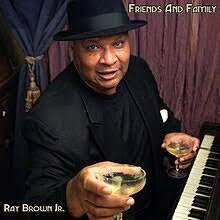
In 2007 he released the album Stand by Me, the following year a duets album Friends and Family, that included Jane Monheit, Melba Moore, James Moody, Maria Muldaur, Dr. John, Dionne Warwick, Freda Payne, Sophie B. Hawkins, Paul Williams, Dr. Lonnie Smith, Dave Somerville, Kim Hoyer, and Sally Kellerman.
He lent instrumental performances on some of the album tracks with artists David “Fathead” Newman and Terry Gibbs. He attended ceremonies honoring his mother, appearing in a BBC documentary about his mother, and the U.S. postage stamp.
Jazz and blues singer Ray Brown Jr., whose mother’s 1964 single Ringo Beat was inspired by his interest in rock music, continues to perform, tour, and record.
Daily Dose Of Jazz…
Linda Presgrave was born in St. Louis, Missouri on October 12, 1951. During her hometown years she performed as a leader with her group, After Six Jazz, at the finest jazz venues in St. Louis. At the same time she worked with the Sessions Big Band, the Modern Vintage Jazz Quartet and the Kim Portnoy Jazz Orchestra. As a former professional French Horn player, she performed regularly at the Muny, Fox and Riverport theaters in orchestral settings behind top entertainers, world class ballet ensembles and national theatrical productions.
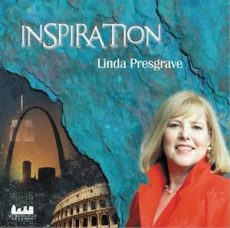
Relocating to New York City in 1998 she left a very active music career in her native city for the vibrant jazz scene of a new city. Since moving Linda has released four compact discs on the Metropolitan Records label. She continues on a mission to bring attention to compositions by inspirational jazz artists who happen to be women.
Linda has performed on prestigious jazz festival stages in America and a few in Europe. When not performing with her own group she sits in the piano chair of Carol Sudhalter’s Astoria Big Band and also with a new group, Ladies Day, led by MJ Territo that features music and lyrics by women.
Linda Pianist, composer and arranger Linda Presgrave continues to perform, record and tour.
More Posts: bandleader,history,instrumental,jazz,music,piano
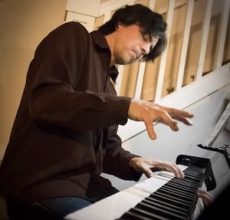
RANDY PORTER TRIO
Two Show ~ 6:00pm & 8:00pm
More Posts: adventure,club,festival,genius,jazz,music,piano,preserving,travel

Daily Dose Of Jazz…
George Horace Webb was born on October 8, 1917 in London, United Kingdom to a former music hall artiste. He grew up with a love of early jazz recordings, principally those made by the New Orleans musicians. A keen jazz enthusiast, he was a self-taught amateur pianist.
Working as a machine gun fitter in the Vickers-Armstrong factory at Crayford, he organized lunchtime entertainment at the factory, assembling scratch bands from among the workers. With his band, George Webb’s Dixielanders, he played regularly and famously at The Red Barn public house at Barnehurst, Kent, beginning in the early 1940s. They made several recordings and BBC radio broadcasts but by 1948 they had disbanded.
Webb was then part of Humphrey Lyttelton’s band from 1948 to 1951. After a short-term reformation of the Dixielanders in 1952, he concentrated on running a jazz club. In the mid-Sixties he was a musician agent and manager. Early in the following decade, he returned to more frequent playing and toured Europe as a soloist. Another version of the Dixielanders operated for a year and then ran a pub for 12 years.
A move back to Kent had him guest performing in various bands into the 2000s with Humphrey Lyttelton, Wally Fawkes and Eddie Harvey. In his playing he tried to re-create the style of such bands as King Oliver’s.
Pianist George Webb, who is considered by many as the father of the traditional jazz movement in Britain, transitioned on March 10, 2010.
More Posts: bandleader,history,instrumental,jazz,music,piano