

Daily Dose Of Jazz…
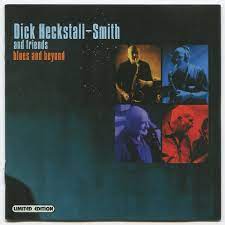
Richard Malden Heckstall-Smith was born on September 26, 1934 in the Royal Free Hospital, in Ludlow, Shropshire, England. Raised in Knighton, Radnorshire, he learned to play piano, clarinet and alto saxophone as a child. He attended a York boarding school but refused a second term there, instead enrolling in Gordonstoun, where his father had accepted a job as headmaster of the local grammar school.
Completing his education at Dartington Hall School, before co-leading the university jazz band at Sidney Sussex College, Cambridge, from 1953, by the age of 15 Dick had taken up the soprano sax while at Dartington. He was captivated by the sound of Sidney Bechet, then Lester Young and tenor saxophonist bebop jazzman Wardell Gray proved to be major influences for him.
An active member of the London jazz scene from the late 1950s, Heckstall-Smith did a six-month stint in 1957 with the Sandy Brown band. He joined Alexis Korner’s Blues Incorporated, a groundbreaking blues group in 1962, recording the album R&B from the Marquee.
The following year, he was a founding member of that band’s breakaway unit, The Graham Bond Organisation. Then in 1967, he joined guitarist-vocalist John Mayall’s blues rock band, Bluesbreakers. He went on to jazz rock with Colosseum until ‘71, then recorded a solo album and ventured into jazz fusion with several groups, which sustained most of his performing through the remainder of his career.
In 1984 he published his witty memoirs, The Safest Place in the World, with an expanded version, retitled Blowing the Blues, published in 2004.
Diagnosed with acute liver failure, tenor, soprano, and baritone saxophonist Dick Heckstall-Smith, who also played piano, clarinet and alto saxophone, transitioned on December 17, 2004 at 70 in Hampstead, London, England.

More Posts: bandleader,clarinet,history,instrumental,jazz,music,piano,saxophone

Daily Dose Of Jazz…
Tiny Bradshaw was born Myron Carlton Bradshaw on September 23, 1907 in Youngstown, Ohio. Graduating from high school he went on to matriculate through Wilberforce University with a degree in psychology, then turned to music for a living.
In Ohio, he sang and played drums with Horace Henderson’s campus oriented Collegians. Relocating to New York City in 1932 he drummed for Marion Hardy’s Alabamians, the Charleston Bearcats, and the Mills Blue Rhythm Band, and sang for Luis Russell. Two years later Bradshaw formed his own swing orchestra, which recorded eight sides in two separate sessions for Decca Records that year in New York City. The band would go on to record in 1944 for Manor Records with the music leaning more towards rhythm and blues than jazz or swing. In 1947 he recorded for Savoy Records.
The band recorded extensively for the rhythm and blues market with King Records between late 1949 and early 1955. His influence as a composer is evidenced in the rock world with his 1951 song The Train Kept A-Rollin’ that has been recorded by Johnny Burnette & The Rock and Roll Trio, The Yardbirds with Jeff Beck, Aerosmith, Motörhead and performed by Jimmy Page as the first song played, at the very first rehearsal of the band that would become Led Zeppelin.
Returning to R&B with Soft and Heavy Juice, he brought along with him on both of these 1953 hits, Red Prysock on tenor saxophone. Tiny’s later career was hampered by severe health problems, including two strokes, the first in 1954, that left him partially paralyzed. However he made a return to touring in 1958.
As a bandleader, he was an invaluable mentor to important musicians and arrangers including Sil Austin, Happy Caldwell, Shad Collins, Wild Bill Davis, Talib Dawud, Gil Fuller, Gigi Gryce, Big Nick Nicholas, Russell Procope, Red Prysock, Curley Russell, Calvin “Eagle Eye” Shields, Sonny Stitt, Noble “Thin Man” Watts, and Shadow Wilson.
Weakened by the successive strokes as well as the rigors of his profession, bandleader, singer, composer, pianist, and drummer Tiny Bradshaw, who was important to the development of rock and roll, transitioned from a final stroke on November 26, 1958 in Cincinnati, Ohio at 51 years of age.
More Posts: bandleader,composer,drums,history,instrumental,jazz,music,piano,vocal

Daily Dose Of Jazz…
Born on September 21, 1927 Ward Lamar Swingle grew up in Mobile, Alabama and studied music, particularly jazz, from a very young age. He learned clarinet, oboe and the piano as a child and played in Mobile-area big bands before he was out of high school. He continued his music studies at the Cincinnati Conservatory of Music, graduating summa cum laude in 1950.
Moving to France in 1951 on a Fulbright scholarship, he studied piano with Walter Gieseking and worked as a rehearsal pianist for Les Ballets de Paris. He met a French-born violin student, Françoise Demorest, and got married in 1952. 1959 saw Swingle as a founding member of Les Double Six of Paris, which specialised in scat singing of jazz standards.
This concept of scatting to Johann Sebastian Bach was the foundation for The Swingle Singers, which became fully established by 1962. They released their albums Jazz Sebastian Bach and Bach’s Greatest Hits in 1963 and their early recordings won five Grammy Awards. Disbanding the original Swingle Singers in 1973 he moved to London, England and formed a new group, and expanded their repertoire to include classical and avant-garde works along with the scat and jazz vocal arrangements.
Returning to live in America in 1984 he remained musical advisor for his London-based group, but devoted most of his time to workshops, guest conducting and the dissemination of his printed arrangements through his publishing company, Swingle Music. He went on to conduct several chamber and philharmonic choirs, and conduct workshops and seminars at universities in Europe and North America.
In 1994 he moved back to France, where he continued his work in arranging, composing and guest conducting. He wrote an autobiography and treatise titled Swingle Singing, in which he defined ‘Swingle Singing’ techniques with illustrations from his arrangements and compositions.
Vocalist, pianist and arranger Ward Swingle, who was named Officier de l’Ordre des Arts et des Lettres (Officer of the Order of Arts and Letters) by the French Minister of Culture and Information, transitioned in Eastbourne, England, on January 19, 2015.
More Posts: arranger,bandleader,history,instrumental,jazz,music,piano
Daily Dose Of Jazz…
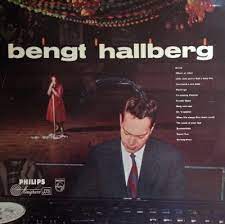
Bengt Hallberg was born on September 13, 1932 in Gothenburg, Sweden and studied classical piano from an early age. He wrote his first jazz arrangement at the age of 13. By 15 he recorded his first record as a member of a group led by bassist Thore Jederby and in 1949 he recorded with the Swedish alto saxophonist Arne Domnérus for the first time. The two musicians continued to play together for several decades.
During the Fifties, Bengt played with leading visiting American musicians tenor saxophonist Stan Getz and altoist Lee Konitz in 1951, and trumpeters Clifford Brown and Quincy Jones in 1953. During the same period he worked with Swedish baritone saxophonist Lars Gullin.
Hallberg had a versatile style and in his later years he wrote music for film and television, as well as choral arrangements. With Domnerus and Georg Riedel among others, he participated in the Jazz at the Pawnshop sessions in 1976.
Pianist, composer and arranger Bengt Hallberg, who also played accordion, transitioned on July 2, 2013 from congestive heart failure at the age of 80 in Uppsala, Sweden.
More Posts: arranger,bandleader,composer,history,instrumental,jazz,music,piano

TIERNEY SUTTON & RANDY BRECKER
“Ms. Sutton is a pure jazz spirit who respects a song. Even when going out on an improvisatory limb, she never lets its essence slip away.” – The New York Times “Brecker has the chops to play it cool or hot, laid-back or virtuosic.” – Downbeat
9-time Grammy-nominated vocalist Tierney Sutton and legendary multi-Grammy-winning trumpet master Randy Brecker share a stage for the very first time in an evening of spontaneous music-making. This special Tuesday night performance will also feature the illuminating pianist Christian Jacob.
Tierney Sutton – vocals | Randy Brecker – trumpet | Christian Jacob – piano
More Posts: adventure,club,genius,jazz,music,piano,preserving,restaurant,trumpet,vocal