


EMMET COHEN
Live From Emmet’s Place ~ Shelly Berg • Emmet Cohen • Wycliffe Gordon • James Morrison • Yasushi Nakamura • Lewis Nash • Ken Peplowski • Kyle Poole • Tierney Sutton
At the onset of the COVID pandemic, Emmet Cohen created a weekly streaming jazz performance, Live From EMMET’S PLACE, which quickly became the most watched streaming series in the jazz world.
Now, as the world returns to live performances, Emmet Cohen is bringing his trio and six jazz greats to the Miami Jazz Cooperative for an evening of jazz which will be remembered in South Florida for years.
This will be an intimate performance with fewer than 200 seats.
Reserved seats will be at tables of four closest to the stage and will be sold in groups of two. SOLD OUT!!!
Behind the reserved seats will be rows of chairs for general admission. The last row of general admission seats will be approximately 40 feet from the stage.
Discounted early ticketing begins on December 1, 2021. Prices will increase on December 15. Don’t miss out.
More Posts: adventure,album,club,festival,genius,jazz,museum,music,piano,preserving,restaurant,travel
The Jazz Voyager
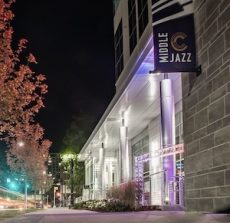
Back in the States from a whirlwind roundtrip across the pond to France and back on the east coast, heading south and bundled up and landed in Charlotte, North Carolina. The Jazz Voyager is on his way to Middle C Jazz tonight to be in the audience to check out a young, talented pianist and provocateur by the name of Connie Han. She is a member of this new wave of jazz artists who are bringing an edgy brand of modern and traditional energy to jazz.
I am excited to hear what she has to say musically on this one night opportunity. It all happens tomorrow but as usual when I have friends in town I always fly in early to hang out with them. This Jazz Voyager doesn’t waste a trip and not break bread.
Located at 300 S Brevard Street 28202. As always for more information visit notoriousjazz.com/event.

More Posts: adventure,album,club,festival,genius,jazz,museum,music,piano,preserving,restaurant,travel

KLAUS MUELLER BRAZILIAN QUARTET
A jazz pianist of diverse influences and abilities, Klaus Mueller, was born in Germany and raised in Japan, Chile, and Brazil. He began piano lessons in Japan at the age of six. After graduating from Stuttgart University of Music and Performing Arts in 1998, he was granted a full scholarship from the German Academic Exchange Service to further complete his studies at the New School in New York.
He has been an integral part of the New York Jazz and Brazilian music scene, having performed and recorded with artists including Portinho, Ron Carter, New York Voices, Harry Allen, Leny Andrade, Paquito D’ Rivera, Steve LaSpina, Emilio Santiago, Marcos Valle, Toninho Horta, and Filó Machado. Tours and workshops have led him throughout the United States, Europe, the United Kingdom, Russia, and the Caribbean.
Mueller is not only regarded as a fine keyboardist but also as an arranger, most notably for jazz piano legend Herbie Hancock, creating orchestral versions of songs from Hancock’s critically acclaimed “Gershwin’s World” album in collaboration with Robert Sadin in 2003. He also arranged music for the prestigious classical label Deutsche Grammophon, and worked as a musical director and accompanist for the opera singer and Tony Award-winner Paulo Szot.
On Mueller’s 2012 album release Far-Faraway, he performed with jazz bassist Ron Carter and Brazilian drummer Portinho. His latest album Village Samba, released in 2016, features mostly original compositions interpreted by some of today’s finest Brazilian and New York-based musicians.
Showtimes: 4:00pm & 6:00pm
More Posts: adventure,album,club,festival,genius,jazz,museum,music,piano,preserving,restaurant,travel

JOEY ALEXANDER TRIO
Josiah Alexander Sila, known professionally as Joey Alexander, is an Indonesian jazz pianist. He became the first Indonesian musician to chart on Billboard 200 when his album My Favorite Things debuted at number 174 and then peaked at 59.
Showtimes: 7:00pm & 9:30pm
More Posts: adventure,album,club,festival,genius,jazz,museum,music,piano,preserving,restaurant,travel

ELIANE ELIAS
A world-class pianist whose mastery of Jazz, Brazilian, Classical, Broadway and more has brought multiple awards, Eliane Elias celebrates the release of her new chart-topping album, “Quietude.” This all-Brazilian record follows her Grammy winning “Mirror Mirror.”
Jazz Weekly raves she is “not only one of the most adroit pianists in jazz, but with albums like this new one, has now entered the top tier of Brazilian vocalists.”
“Eliane Elias is of a generation of aggressive pianists who attack music like a lioness attacking its prey, at the same time expressing a tenderness within the core of her passion that at times has brought me to tears.”
– Herbie Hancock
December 9th & 10th Shows @ 7:00pm ~ SOLD OUT
More Posts: adventure,album,club,festival,genius,jazz,museum,music,piano,preserving,restaurant,travel,vocal