

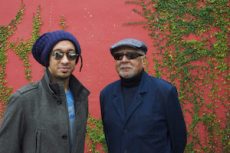
CHARLES LLOYD~GERALD CLAYTON DUO
NEA Jazz Master Charles Lloyd, celebrating his 85th year, has never sounded better. The depth of his sound reflects a lifetime of experience. A Memphis Music Hall of Fame inductee, and recipient of the prestigious Chevalier des Arts et Lettres from the French Minister of Culture, Lloyd has a legendary history in the music world.
His concerts and recordings are events of pristine beauty and elegance, full of intensely felt emotion and passion that touches deep inside the heart. This is not entertainment, but the powerful uncorrupted expression of beauty through music. When music vibrates, the soul vibrates and touches the spirit within.
Lloyd is joined by six-time GRAMMY®-nominated pianist Gerald Clayton, a supremely gifted improviser hailed as one of the finest pianists of his generation. Charles Lloyd and Gerald Clayton have performed together since 2013, sharing incredible chemistry.
THE 222 is a small intimate venue. All seats are very good and have a clear view of the stage.
Seating for this concert is club style with round tables that seat four people. Seating will be assigned by the date of purchase, so the sooner you buy your tickets the closer you will be within the ticket level you purchase from.
GOLD SEATING – FRONT MIDDLE TABLES
SILVER SEATING – SURROUNDING FRONT TABLES
GENERAL SEATING – REMAINDER
More Posts: adventure,album,club,festival,genius,jazz,museum,music,piano,preserving,restaurant,saxophone,travel
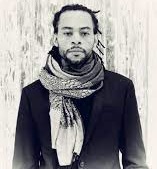
MARC CARY
In a jazz world brimming with brilliant and adventurous pianists, Marc Cary stands apart by way of pedigree and design as one of New York’s best jazz pianists. None of his prestigious peer group ever set the groove behind the drums in Washington DC go-go bands, nor are they graduates of both Betty Carter and Abbey Lincoln’s daunting bandstand academies.
“There isn’t much in the modern-jazz-musician tool kit that Marc Cary hasn’t mastered, but he has a particular subspecialty in the area of groove…with a range of rhythmic strategies, from a deep-house pulse to a swinging churn.” — New York Times
More Posts: adventure,album,club,festival,genius,jazz,museum,music,piano,preserving,restaurant,travel
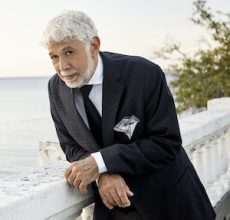
MONTY ALEXANDER
from Kingston, Jamaica, his hometown, Grammy nominated pianist Monty Alexander is an American classic, touring the world relentlessly with various projects, delighting a global audience drawn to his vibrant personality and soulful message. A perennial favorite at Jazz festivals and venues worldwide and at the Montreux Jazz Festival where he has appeared 23 times since 1976, his spirited conception is one informed by the timeless verities: endless melody-making, effervescent grooves, sophisticated voicings, a romantic spirit, and a consistent predisposition, as Alexander accurately states, “to build up the heat and kick up a storm.” In the course of any given performance, Alexander applies those aesthetics to a repertoire spanning a broad range of jazz and Jamaican musical expressions—the American songbook and the blues, gospel and bebop, calypso and reggae. Documented on more than 75 recordings and cited as the fifth greatest jazz pianist ever in The Fifty Greatest Jazz Piano Players of All Time (Hal Leonard Publishing), the Jamaican government designated Alexander Commander in the Order of Distinction in 2000 and in 2018 The University of The West Indies bestowed him with an honorary doctorate degree (DLitt) in recognition of his accomplishments.
Showtimes: 8:30pm & 10:30pm
More Posts: adventure,album,club,festival,genius,jazz,museum,music,piano,preserving,restaurant,travel
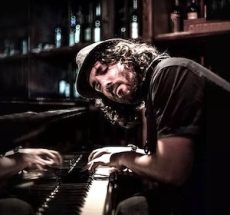
TAL COHEN TRIO
Grammy Award-winning Miami jazz pianist Tal Cohen has received much acclaim, winning the Barry Harris National Piano Competition and receiving the prestigious Freedman Fellowship. He performed to a sold-out crowd at the Sydney Opera House.
Recently, Cohen played across the globe with Terence Blanchard, Greg Osby, Ignacio Berroa, Joe Lovano and others. He currently leads his own ensemble, which has performed at iconic jazz festivals and venues such as Jazz Bez in Ukraine, Detroit Jazz Festival, Melbourne Jazz Festival in Australia and a three-week residency at the Black Cat in San Francisco. His most recent album, Gentle Giants, has received international acclaim and many reviews, including a four-star review from DownBeat magazine.
Cohen is among the most in-demand pianists as he continues to tour the globe with his blend of Jewish melodies, traditional jazz harmonies and impeccable rhythmic palette.
Live on the Plaza is a series of outdoor concerts on our Parker and Vann Thomson Plaza for the Arts.
Please note: Tables can be purchased for 1, 2, 3 or 4 guests. Ticket prices are per person. Locations are assigned in the order of purchase in parties of up to four guests based on reservation type.
Doors open at 6 p.m. with light bites and beverage service.
Happy hour pricing available until 7 p.m.
Performance starts at 7:30 p.m.
More Posts: adventure,album,club,festival,genius,jazz,museum,music,piano,preserving,restaurant,travel
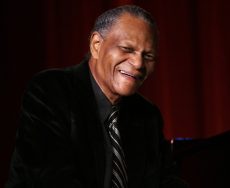
TRIBUTE TO MCCOY TYNER
Opening night of this week celebrating the 10th anniversary of the SFJAZZ Center honors the life, music, and legacy of the late pianist and composer McCoy Tyner, featuring a stellar lineup of musicians who recorded and performed with him. As part of the 10 anniversary celebration of SFJAZZ, and honored to be part of this wonderful show with Joe Lovano (Music Director), Gary Bartz, Kenny Barron, Eddie Henderson, Gerald Cannon, and Jeff “Tain” Watts.
From his early work with John Coltrane to his peerless career as a composer and bandleader, Tyner’s impact on jazz has been monumental. He was a major figure in SFJAZZ’s evolution as well, appearing over 10 times on our stages including the historic Opening Night concert at the SFJAZZ Center in January 2013 and his final appearance in June 2016 for an all-star tribute to him featuring Chick Corea, Geri Allen, Kenny Barron, and others.
More Posts: adventure,album,club,festival,genius,jazz,museum,music,piano,preserving,restaurant,saxophone,travel