


Daily Dose Of Jazz…
Jesse Alexandria Stacy was born on August 11, 1904 in Bird’s Point, Missouri, a small town across the Mississippi River from Cairo, Illinois. His first piano teacher was Mabel Irene Bailey, who played piano for silent movies. In 1918 Stacy moved to Cape Girardeau, Missouri. He received his only formal music training with Clyde Brandt, a professor of piano and violin at Southeast Missouri State Teachers College, now Southeast Missouri State University while holding down a job sweeping Clark’s Music Store.
By 1920, Stacy was playing piano in Peg Meyer’s jazz ensemble at Cape Girardeau High School, the Bluebird Confectionery, and the Sweet Shop. Schoolmates called them the Agony Four. By 1921, the band was known as Peg Meyer’s Melody Kings and started touring the Mississippi River on the Majestic and other riverboats.[6]
The early 1920s saw Jess moving to Chicago, Illinois where he performed with Paul Mares, leader of the New Orleans Rhythm Kings, playing Chicago-style jazz. In 1935, Benny Goodman asked him to join his band, then moved to New York City, and spent 1935–39 with the Benny Goodman Orchestra, including a Carnegie Hall concert in 1938, where he played an unplanned piano solo during Sing, Sing, Sing (With a Swing). After leaving the Goodman Orchestra, he joined the Bob Crosby Orchestra and the Bob Crosby Bob-Cats.
Moving to Los Angeles, California in 1950 his career declined to club work and after a drunken woman spilled beer in his lap he announced he was quitting the music business and retired from public performances. He worked as a salesman, warehouseman, postman, and for Max Factor cosmetics before being rediscovered. He played for Nelson Riddle on the soundtrack of The Great Gatsby in 1974, was invited to play at the Newport Jazz Festival in New York and was asked to record twice for Chiaroscuro, in 1974 and 1977, Stacy Still Swings.
After his brief revival in the 1970s, he again retired from music and lived with his third wife, Patricia Peck Stacy, for forty-five years. Pianist Jess Stacy ,who won the DownBeat magazine piano poll in 1940 and was inducted posthumously into the Big Band and Jazz Hall of Fame in 1996, transitioned from congestive heart failure in Los Angeles on January 1, 1995.

More Posts: bandleader,history,instrumental,jazz,music,piano
Three Wishes
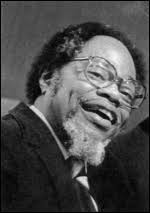
Roland Hanna had three wish answers he gave the Baroness when she inquired what his would be:
- “The first one would be to have been born with the wherewithal to have studied music to the fullest extent of my own capacity.”
- “My second wish would be that all men were created equally but different.”
- “My third wish… I wish my mother was still here.”
*Excerpt from Three Wishes: An Intimate Look at Jazz Greats ~ Compiled and Photographed by Pannonica de Koenigswarter
More Posts: baroness,history,instrumental,jazz,music,pannonica,piano,three,wishes
Daily Dose Of Jazz…
Wik Horn was born on August 9, 1943 in Amsterdam, Netherlands. Classically trained piano education for 4 years starting at 10, when he was 14 he started to play classic jazz with his younger brother trumpeter Fred.
After playing in several school bands he formed his first real band in 1965,The Court Town Rhythm Kings. The band played authentic old jazz in the way of Oliver, Morton, early Armstrong, Williams, Beiderbecke and Half Way House.
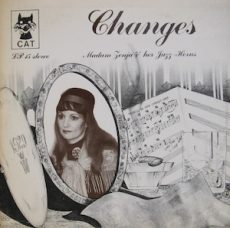
The band broke up in 1972 due to moving members and Wik moved from The Hague to resettle in Amsterdam. There along with his brother they founded in 1973 as Madam Zenja and Her Jazz Horns in 1973, together with singer Zenja Damm, recording two albums, Changes and Was It A Dream. From 1974 to 1980 he was president of the oldest and famous Jazzclub in Holland, the Haarlemse Jazz Club. Many of the great American musicians who came to Europe and Amsterdam performed there.
Settling in the little village of Leiderdorp between Amsterdam and The Hague, he spent some time in advertising and public relations. He started the jazz club De Wagenschuur from 1984 to 1994 and a new band, Swingin’ Crash, that started as a little swing ensemble but grew within a year into a small big band.
He went on to write charts and arrangements for the band and well as compose, song texts and write a little booklet for special occasions like the 60th anniversary of the The Hague Jazz Club. Pianist Wik Horn retired but has continued to have a life filled with music, writing and painting.
More Posts: arranger,bandleader,composer,history,instrumental,jazz,music,piano
Daily Dose Of Jazz…
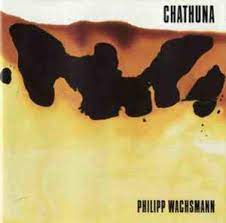
Philipp John Paul Wachsmann was born August 5, 1944 in Kampala, Uganda. Influenced greatly by the music of his country he studied violin with Isolde Menges, and music at Durham University, then received scholarships to study violin and composition at Indiana University in Bloomington. He went on to study composition with Nadia Boulanger in Paris in 1968 where he also attended courses in modern music given by Henri Pousseur, and, by Pierre Boulez in Basel. He subsequently lectured at Durham University 1969/70 and then moved to London to start a performing career.
He pioneered new sounds using the violin and electronics and can be heard on over 100 LPs/CDs on different labels including ECM, and plays worldwide. He performs with most of the musicians working in modern improvisation related music. He has performed and recorded with the Stellari String Quartet, The Imaginary String Trio but also works as a soloist.
He regularly conducts his own pieces with the London Improvisation Orchestra, including Three Draft Pistons’ for violin and electro-acoustic tape. He also works with film, dance and architecture. For many years he was Director of the Electronic Music Studio at Morley College and currently teaches courses in composition at the City Literary Institute.
Avant-garde jazz/jazz fusion violinist Philipp Wachsmann gives regular workshops in improvised music at various places and which have been a starting place for many of today’s performers, founded his own group Chamberpot, and has worked extensively in the free jazz and electronica idioms.
More Posts: bandleader,history,instrumental,jazz,piano
Daily Dose Of Jazz…
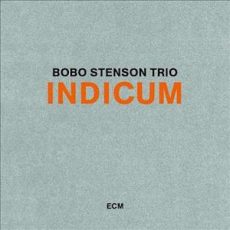
Bobo Stenson was born Bo Gustav Stenson on August 4, 1944 in Västerås, Sweden. Starting at the age of 8 he studied with Werner Wolf for 15 years. In 1963, he stepped up from the local scene in his hometown to begin playing frequently in Stockholm. There he accompanied a long line of visiting American players including Sonny Rollins, Stan Getz and Gary Burton. He worked closely with Don Cherry from the beginning of the trumpeter’s residency in Scandinavia.
The 1970s was an intensive period for Stenson, playing in many groups, amongst them the long-standing band Rena Rama with Palle Danielsson, and a trio with Arild Andersen and Jon Christensen. He would later work with Jan Garbarek.
In 1988, he joined the Charles Lloyd quartet and since 1996 has appeared at major jazz festivals with Tomasz Stańko’s septet/sextet. Pianist Bobo Stenson continues to perform to this day.
More Posts: bandleader,history,instrumental,jazz,music,piano