

The Quarantined Jazz Voyager
It is amazing but not surprising how people want to get back to the same old routine they were in before the pandemic instead of inventing themselves anew. As I move around my city I see more and more people not wearing masks in enclosed spaces. I am not surprised by the robotic sense of normalcy by society.
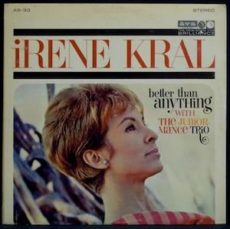
This week I have selected an album by the underrated and often unappreciated vocalist Irene Kral. The younger sister of pianist Roy Kral, I discovered her towards the end of her career in 1977 when I heard her album Where Is Love. I was enamored by her voice and the quiet understatement of her singing. Unfortunately I never had the opportunity to hear her live as she transitioned the followin year in August.
The album I present today is her third studio session, Better Than Anything, recorded on June 17 & 18, 1963 at the World Pacific Studios in Los Angeles, California. It was produced by Joe Burnett, engineered by Richard Bock and released the same year on Äva Records and distributed by MGM. Making up the quartet with Irene is the Junior Mance Trio.
The cover design was by Richter & Mracky Design Associates, the photography by Fred Seligo and the liner notes were written by Tommy Wolf.
Track List | 29:24
- Better Than Anything (David “Buck” Wheat, Bill Loughborough) ~ 2:21
- The Touch Of Your Lips (Ray Noble) ~ 2:22
- The Meaning of the Blues (Bobby Troup, Leah Worth) ~ 3:11
- Rock Me To Sleep (Benny Carter, Paul Vandervoort II) ~ 2:20
- No More (Tutti Camarata, Bob Russell) ~ 3:10
- Passing By (Laurent Hess, Charles Trenet, Jack Lawrence) ~ 1:54
- It’s a Wonderful World (Jan Savitt, Harold Adamson, Johnny Watson) ~ 2:34
- This Is Always (Mack Gordon, Harry Warren) ~ 3:23
- Just Friends (John Klenner, Sam M. Lewis) ~ 2:40
- Guess I’ll Hang My Tears Out to Dry (Jule Styne, Sammy Cahn) ~ 3:35
- Nobody Else But Me (Jerome Kern, Oscar Hammerstein II) ~ 1:54
- Irene Kral ~ vocals
- Junior Mance ~ piano
- Bob Cranshaw ~ bass
- Mickey Roker ~ drums

More Posts: adventure,album,bass,club,drums,genius,jazz,museum,music,piano,preserving,restaurant,travel,vocal
Daily Dose Of Jazz…
Donald Trenner was born in New Haven, Connecticut on March 10, 1927. He began his career playing with Ted Fio Rito from 1943 to 1945, and followed this with a slot in Buddy Morrow’s orchestra in 1947.
In the Fifties Donn worked with Charlie Barnet, Jerry Gray, Charlie Parker, Stan Getz, Georgie Auld, Jerry Fielding, Skinnay Ennis, Les Brown, Dick Haymes, Jack Jones, Lena Horne, Ann-Margret, Shirley MacLaine and Nancy Wilson. By 1957 he was playing with Oscar Pettiford and toured Europe the following year with Anita O’Day.
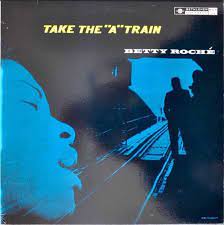
Entertaining the U.S. troops, Trenner toured with Bob Hope. In addition, he recorded with Tommy Dorsey, Vic Schoen, Howard McGhee, Frances Faye, Betty Roche, Nelson Riddle, Paul Broadnax, Dave Pell, Charles Mingus, and Ben Webster.
The 1960s saw him working as a studio musician, and leading The Steve Allen Show house band. He continued working in television throughout the 1970s and 80s. He led his own band, The Donn Trio with his first wife Helen Carr as the vocalist. Never recording as a leader, pianist and arranger Donn Trenner transitioned on May 16, 2020.
More Posts: arranger,bandleader,history,instrumental,jazz,music,piano
Daily Dose Of Jazz…
Anat Fort was born March 8, 1970 near Tel Aviv, Israel. She studied music at William Paterson University in Wayne, New Jersey and moved to New York City in 1996 to develop her skills in jazz improvisation under the guidance of pianist Paul Bley and study composition with Harold Seletsky before releasing her debut self-produced album Peel in 1999.
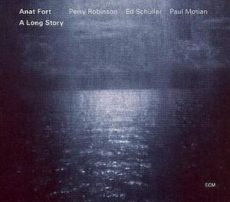
Signing with ECM Records, her first album A Long Story, released in 2007 arose from an association with drummer Paul Motian. This was followed by And If in 2010, the first album with her regular working group, the Anat Fort Trio.
Pianist and composer Anat Fort has recorded several acclaimed albums, has performed across Europe and the United States, and continues to pursue her jazz endeavors.
More Posts: bandleader,composer,history,instrumental,jazz,music,piano

Daily Dose Of Jazz…
Jean-Claude Naude was born on March 7, 1933 in Amiens, France. He attended the Amiens conservatory and played early in his career as a trumpeter for Raymond Fonsèque’s orchestra and with Georges Arvanitas.
By 1955 Naude was working with Maxim Saury, an association that would last a decade. He also played piano with Raymond Fonsèque in a trio with trombonist Luis Fuentes.
In the second half of the 1960s Jean~Claude led his own big bands and played with Gerard Badini, Jacky Samson, and Andre Paquinet. The 1970s saw him playing with Claude Bolling and in the 1980s with Bob Quibel.
Pianist and trumpeter Jean~Claude Naude transitioned on January 9, 2008.
More Posts: bandleader,history,instrumental,jazz,music,piano,trumpet
Requisites
Red Garland at The Prelude | By Eddie Carter
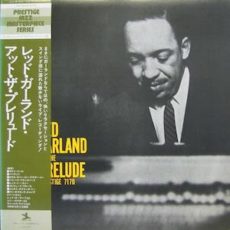
This morning’s discussion is by one of my favorite pianists. Red Garland at The Prelude (Prestige PRLP 7170) is the first of three live albums, plus a fourth containing two live tracks documenting a single night’s performance by The Red Garland Trio. The other LPs are Lil’ Darlin’ (1959), Red Garland Live! (1965), and Satin Doll (1971). Red is supported on this date by Jimmy Rowser on bass, and Charles “Specs” Wright on drums. My copy used in this report is the 1978 Prestige Jazz Masterpieces Series Japanese Mono reissue (Prestige SMJ-6581). The album gets underway with Satin Doll by Duke Ellington, Johnny Mercer, and Billy Strayhorn. The trio opens with an irresistible toe-tapping beat on the melody. Red is up first and picks up the pace with a lively opening solo, then engages in a cheery conversation with “Specs” ahead of the group’s vibrant ending.
The crowd has only a moment to catch its breath before the ensemble jumps into a vigorous rendition of Perdido by Juan Tizol, Ervin Drake, and Hans Lengsfelder. In Spanish, the title means lost, but Juan’s tune is named for the New Orleans street. Garland takes charge from the opening chorus and chews up even more terrain on the first solo. Wright has a short statement and reappears during the climax. The group turns to a popular song from the 1942 film Iceland next, There Will Never Be Another You by Harry Warren and Mack Gordon. The trio takes us to a happy place on the melody and everyone gets a solo opportunity. The pianist takes off first, providing scintillating energy on the opening statement. Jimmy comes in next and walks his bass with authority, and “Specs” has the final word in an effervescent exchange with Red preceding the trio’s exit.
popular standard, Bye Bye Blackbird by Ray Henderson and Mort Dixon brings the first side to a close with a marvelous rendition by the trio. Garland was a member of the Miles Davis Quintet when he recorded it on Round About Midnight (1956). The trio is magical on the melody, and Red begins with a thrilling interpretation inspired by the rhythm section’s backing. Rowser follows with a short statement that’s joyous and carefree before Red returns to take the song out. Side Two starts at a speedy pace with Let Me See by Count Basie, Harry “Sweets” Edison, and Jon Hendricks. Red flies out of the gate rapidly on the song’s theme, then continues swinging hard on an energized opening solo. Jimmy soars into the next presentation swiftly, and “Specs” shares a second heated discussion with Red leading to the threesome’s quick finish.
Prelude Blues is the pianist’s contribution to the set and slows things down for him to have the solo spotlight to himself. Garland delivers a reading as succulent as soul food with Rowser and Wright adding the tasty ingredients to make this delicious meal complete. Just Squeeze Me by Duke Ellington and Lee Gaines brings the beat back to midtempo and the group swings easily on the melody. Red gets the most solo space and does the tune justice with a statement of sheer delight. Jimmy is heard briefly during the closing chorus. This set ends with a vivacious rendition of Count Basie’s theme, One O’Clock Jump. Red and “Specs” bring the song to life with a short introduction, then the pianist attacks the only solo with an intense groove while Rowser and Wright maintain the aggressive beat until the climax and the trio’s short signoff.
Red Garland at The Prelude was originally recorded by Rudy Van Gelder, and Victor Musical Industries has done a superb job mastering the original tapes. The album has a marvelous soundstage with a great definition from each instrument that transports your listening room to the club as the trio is on stage. Now that I have this record in my library, I’ll be on the hunt for the other three to complete the entire night’s performance. If you’re a fan of Red Garland, I invite you to audition Red Garland at The Prelude for a spot in your library. If you love jazz, this is an album you should treat yourself to!
~ Lil’ Darlin’ (Status Records ST 8314), Red Garland Live! (Prestige New Jazz NJLP 8326), Round About Midnight (Columbia CL 949/CS 8649), Satin Doll (Prestige P-7859) – Source: Discogs.com
~ Bye Bye Blackbird, Just Squeeze Me, One O’Clock Jump, Perdido, Satin Doll, There’ll Never Be Another You – Source: JazzStandards.com © 2022 by Edward Thomas Carter

More Posts: choice,classic,collectible,collector,history,instrumental,jazz,music,piano