

Daily Dose Of Jazz…
Sam Allen was born in Middleport, Ohio on January 30, 1909 and beginning at the age of seven started playing the piano. By 10 he accompanied silent films on piano in movie theaters, allowing him to sit and extemporize as the action unfolded on screen. Over the next few years he absorbed plenty of slapstick hi-jinx and derring-do from the Hollywood sagas he accompanied.
1928 saw the 19 year old Sam moving to New York City where he joined Herbert Cowans’s band at the Rockland Palace. It wasn’t too long after the move before he moved back to Ohio, where he played with saxophonist Alex Jackson through 1930.
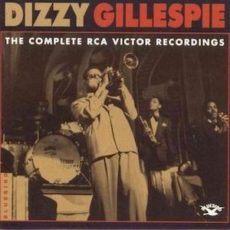
He joined James P. Johnson’s orchestra as a second pianist absorbing the intense chords in the scores that required two pianos. For amuch of the ’30s, he played with the dance band of Teddy Hill including a European tour. In the 1940s he had one of his most musically satisfying collaborations as piano man in the sometimes rowdy combo of violinist Stuff Smith. Playing in the hyper-drive bebop of Dizzy Gillespie, and then the shenanigans as pianist for the madcap jive jazz duo Slim Gaillard & Slam Stewart.
As the Fifties approached he relocated to Washington, shifting gears from touring sideman to stay-at-home featured soloist. He then headed for California where he settled into the Oakland jazz scene, often accompanying the fine singer Billie Heywood. Pianist Sam Allen transitioned at the age of 63 in April 1963.
More Posts: history,instrumental,jazz,music,piano
Daily Dose Of Jazz…
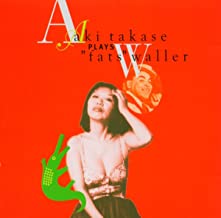
Aki Takase (高瀬 アキ) was born January 26, 1948 in Osaka, Japan and started to play piano at age 3. Raised in Tokyo, she studied classical piano at Toho Gakuen School of Music. Starting in 1978, he began performing and recording in the United States.
She has collaborated with Lester Bowie, Sheila Jordan, David Liebman, and John Zorn. Her first European appearance was in 1981 at the Berlin Jazz Festival in Germany. For many years, she has worked with her husband Alexander von Schlippenbach, as well as with Eugene Chadbourne, Han Bennink, Evan Parker, Paul Lovens, Fred Frith and many others, and in duets with Maria João, Louis Sclavis, David Murray and Rudi Mahall.
Through her constant touring and appearances at international jazz festivals, Takase quickly became one of the most sought-after musicians for recording and collaboration. In various projects, Takase has dealt with the respective oeuvres of numerous famous jazz musicians, including the works of Duke Ellington, Thelonious Monk, Eric Dolphy, W.C. Handy, Fats Waller, and Ornette Coleman.
Pianist and composer Aki Takase, who lives in Berlin, Germany and fuses rap, jazz and improvisation, landing between contemporary and jazz, continues to push the boundaries of her music.
More Posts: bandleader,composer,history,instrumental,jazz,music,piano
Daily Dose Of Jazz…
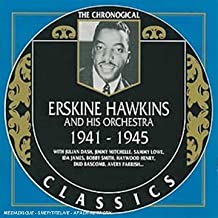
James Avery Parrish was born on January 24, 1917 in Birmingham, Alabama. Graduating from Parker High School he went on to matriculate Alabama State Teachers College, where he played in the Bama State Collegians, an ensemble led by Erskine Hawkins. He remained in Hawkins’s employ performing and arranging until 1942 and recorded with him extensively. Composing the music to After Hours, a 1940 recording of the tune with Hawkins’s orchestra resulted in its becoming a jazz standard.
Driving to gigs between Pittsburgh and Chattanooga in 1942 he was injured in an overturned car crash that killed Hawkin’s trumpeter Marcellus Green, one of the five men in the vehicle. Avery left Hawkins later that year and moved to California, where hebecame a commercially successful solo pianist. Hit in the head by a bar stool during a bar fight in 1943l put him in hospital for a few months. His injuries left him partly paralyzed, thus ending his career and ability to play music for the rest of his life.
Pianist, composer and arranger Avery Parrish transitioned of unknown causes on December 10, 1959. He was posthumously inducted twenty years later into the Alabama Jazz Hall of Fame.
More Posts: arranger,composer,history,instrumental,jazz,music,piano
The Quarantined Jazz Voyager
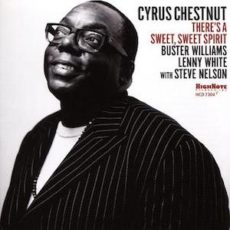
There’s A Sweet, Sweet Spirit ~ Cyrus Chestnut
Remain safe and healthy and be responsible for your health and others. That is all I request.
This week we listen to the music from There’s a Sweet Sweet Spirit, an album by pianist Cyrus Chestnut. Recorded on February 27, 2017 at Systems Two Recording Studios in Brooklyn, New York, the album was released on the HighNote label on Julyu 14, 2017.
- The Littlest One of All (Bobby Hutcherson) ~ 4:20
- Chopin Prelude (Frédéric Chopin) ~ 6:53
- Nardis (Miles Davis) ~ 7:33
- Little B’s Poem (Bobby Hutcherson) ~ 4:50
- Christina (Buster Williams) ~ 4:51
- CDC (Cyrus Chestnut) ~ 6:23
- You Make Me Feel Brand New (Thom Bell, Linda Creed) ~ 6:07
- Easy Living (Ralph Rainger, Leo Robin) ~ 8:32
- Rhythm-a-Ning (Thelonious Monk) ~ 4:51
- There’s a Sweet, Sweet Spirit (Doris Akers) ~ 5:36
The Players
- Cyrus Chestnut ~ piano
- Buster Williams ~ bass (tracks 1–4 & 6–9)
- Lenny White ~ drums (tracks 1–4 & 6–9)
- Steve Nelson ~ vibraphone (tracks 1, 4 & 8)
- Charlotte Small, Djoré Nance, Keesha Gumbs ~ vocals (track 7)

Tracks | 59:56
- The Littlest One of All (Bobby Hutcherson) ~ 4:20
- Chopin Prelude (Frédéric Chopin) ~ 6:53
- Nardis (Miles Davis) ~ 7:33
- Little B’s Poem (Bobby Hutcherson) ~ 4:50
- Christina (Buster Williams) ~ 4:51
- CDC (Cyrus Chestnut) ~ 6:23
- You Make Me Feel Brand New (Thom Bell, Linda Creed) ~ 6:07
- Easy Living (Ralph Rainger, Leo Robin) ~ 8:32
- Rhythm-a-Ning (Thelonious Monk) ~ 4:51
- There’s a Sweet, Sweet Spirit (Doris Akers) ~ 5:36
The Players
- Cyrus Chestnut ~ piano
- Buster Williams ~ bass (tracks 1–4 & 6–9)
- Lenny White ~ drums (tracks 1–4 & 6–9)
- Steve Nelson ~ vibraphone (tracks 1, 4 & 8)
- Charlotte Small, Djoré Nance, Keesha Gumbs ~ vocals (track 7)
The album was produced by the pianist who pulls from a multitude of generations for his song choices. From Monk and Miles to Chopin, Thom Bell and Linda Creed, blending them perfectly for our listening pleasure.This tight knit group of musicians carry the musical conversation forward never overstepping or interrupting but supporting whoever is speaking.
Tracks | 59:56
- The Littlest One of All (Bobby Hutcherson) ~ 4:20
- Chopin Prelude (Frédéric Chopin) ~ 6:53
- Nardis (Miles Davis) ~ 7:33
- Little B’s Poem (Bobby Hutcherson) ~ 4:50
- Christina (Buster Williams) ~ 4:51
- CDC (Cyrus Chestnut) ~ 6:23
- You Make Me Feel Brand New (Thom Bell, Linda Creed) ~ 6:07
- Easy Living (Ralph Rainger, Leo Robin) ~ 8:32
- Rhythm-a-Ning (Thelonious Monk) ~ 4:51
- There’s a Sweet, Sweet Spirit (Doris Akers) ~ 5:36
The Players
- Cyrus Chestnut ~ piano
- Buster Williams ~ bass (tracks 1–4 & 6–9)
- Lenny White ~ drums (tracks 1–4 & 6–9)
- Steve Nelson ~ vibraphone (tracks 1, 4 & 8)
- Charlotte Small, Djoré Nance, Keesha Gumbs ~ vocals (track 7)
More Posts: adventure,album,club,genius,jazz,museum,music,piano,preserving,restaurant,travel
Daily Dose Of Jazz…
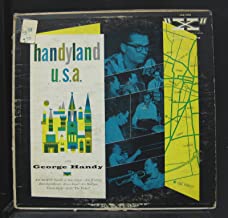
George Handy, born George Joseph Hendleman on January 17, 1920 in New York City, where his musical beginnings were fostered under the tutelage of composer Aaron Copland.
He first worked professionally as a swing pianist for Michael Loring in 1938. Soon afterward George was drafted into the United States Army in 1940. Post WWII, from 1944 to 1946 he became a member of the Boyd Raeburn Orchestra, composing and performing on piano. This was during a time when many big bands were transforming their musical tendencies toward bebop. Leaving the orchestra briefly to work for Paramount Studios, he returned to Raeburn quickly. During this period he entered one of his most creative periods, doing arrangements of older standards with a distinctly bebop quality.
A rift between him and Raeburn, just as he was entering his prime, forced him to depart the group. Handy continued to arrange for other musicians in his later career.
Pianist, arranger and composer George Handy, best remembered in retrospect for his bebop arrangements, transitioned in Harris, New York, on January 8, 1997 at the age of 76, from heart disease.
More Posts: arranger,composer,history,instrumental,jazz,music,piano