

Daily Dose Of Jazz…
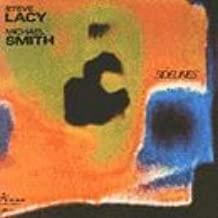
Michael Joseph Smith was born August 13, 1938 in Tiline, Kentucky. At the age of 6 years, he gave his first concert of original solo piano music in Nashville, Tennessee. After serving in the United States Navy, he studied electro-acoustic music, moving between Boston, Massachusetts and New York City. He became involved with the New England Conservatory of Music and the Juilliard School and developed a philosophy and notation form of his original music, titled Geomusic, and composed works with this method for various chamber groups, solo piano, and symphony orchestra.
Embarking on his first European concert tour in 1970, he completed his initial recordings in Italy and developed an interest in Jazz and improvisation. Moving to Paris, France in 1972 he had several concert tours and recordings in Western Europe and America with Steve Lacy, Anthony Braxton and others. In 1975 he began recording various albums in Europe and America and toured, mostly solo, Italy, Poland, East Germany, Hungary, Western Europe, South America and Scandinavia over the next year. 1977 saw Michael admitted to the Swedish Composers Society andtwo years later he became a member of the International Society for Contemporary Music.
A return to the United States landed a composer-in-residence in Atlanta, Georgia and completed three ballet projects, has been awarded numerous cultural prizes and stipends in Europe and Scandinavia, and has composed scores for films, television projects, and music for 10 major ballet works.
He has lectured in Atlanta, Boston, Massachusetts, Brunswick, Maine and in Beijing and Xian, China. He has founded three music corporations and has been inducted in the Royal Swedish Academy of Music’s Swedish Musical Heritage project as a “living musical heritage” of Sweden. Pianist and composer Michael Smith, who has released 55 recordings of original compositions in 17 countries and has three film portraits of his life, continues to remain active.


The Quarantined Jazz Voyager
Taking the high road and staying safe, socially distanced and listening to great music. This week I am choosing A Flower Is a Lovesome Thing is the second studio album by pianist Vince Guaraldi, credited to the Vince Guaraldi Trio. It was recorded at Fantasy Recording Studios in San Francisco, California on April 16, 1957 and released in the U.S. the following year on the Fantasy Records label. Ralph J. Gleason wrote the liner notes and in 1994, Phil De Lancie produced the digital remastering.
Track Listing | 34:40 Side One- A Flower Is A Lovesome Thing (Billy Strayhorn) ~ 5:37
- Softly, As In A Morning Sunrise (Oscar Hammerstein II, Sigmund Romberg) ~ 3:28
- Yesterdays (Jerome Kern) ~ 4:00
- Like A Mighty Rose aka Room At The Bottom (Vince Guaraldi) ~ 4:30
- Looking For The Boy (George & Ira Gershwin) ~ 4:06
- Autumn Leaves (Joseph Kosma) ~ 4:21
- Lonely Girl (Bobby Troup) 3:23
- Willow Weep For Me (Ann Ronell) ~ 5:14
- Vince Guaraldi – piano
- Eddie Duran – guitar
- Dean Reilly – double bass

More Posts: adventure,album,club,genius,jazz,museum,music,piano,preserving,restaurant,travel
Daily Dose Of Jazz…
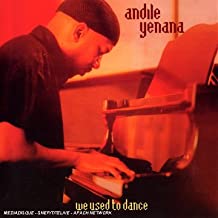
Andile Yenana was born on August 9, 1968 in King William’s Town, South Africa. His love of music was triggered at an early age and he grew up in a household where music was really loved. His father, Felix Thamsanqa Yenana, had a huge collection of music, ranging from jazz to Motown, and other forms of urban black music and this had a huge influence in his life.
Andile began music studies under Darius Brubeck at the University of Natal’s School of Jazz and Popular Music It was here that he became friends with saxophonist Zim Ngqawana and trumpeter Feya Faku.
Joining the Zim Ngqawana Quartet and worked with Zim on all five of his albums, including San Song recorded with Bjorn Ole Solburg and his Norwegian San Ensemble. He also worked on the Pan-African music project Mahube with saxophonist Steve Dyer and others. He has also worked as arranger for Sibongile Khumalo, Gloria Bosman and Suthukazi Arosi. In 2005 he was selected as the 2005 Standard Bank Young Artist for Jazz.
Pianist Andile Yenana, who made an indelible mark on the industry by switching from teaching to studying jazz, continues to perform and record.
More Posts: history,instrumental,music,piano
Daily Dose Of Jazz…
Luckey Roberts was born Charles Luckyth Roberts on August 7, 1887 in Philadelphia, Pennsylvania, and was playing piano and acting professionally with traveling Negro minstrel shows in his childhood. Settling in New York City about 1910 he became one of the leading pianists in Harlem, and started publishing some of his original rags.
Roberts toured France and the UK with James Reese Europe during World War I, then returned to New York where he wrote music for various shows and recorded piano rolls. With James P. Johnson, he developed the stride piano style of playing about 1919.
His reach on the keyboard was unusually large and Luckey could reach a fourteenth, leading to a rumor that he had the webbing between his fingers surgically cut. Those who knew him and saw him play live denounced it as false, he simply had naturally large hands with a wide finger spread.
By the 1920s Roberts teamed up with lyricist Alex C. Rogers, co-wrote three Broadway musicals, Go-Go and Sharlee in 1923, and My Magnolia in 1926, the latter starred Adelaide Hall, a major black revue star.
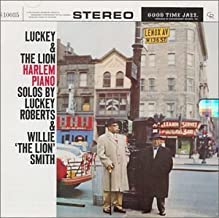
Hisnoted compositions include Junk Man Rag, Moonlight Cocktail, Pork and Beans, and Railroad Blues. The Glenn Miller Orchestra recorded Moonlight Cocktail, and was the best selling record in the United States for ten weeks in 1942.An astute businessman, he became a millionaire twice through real estate dealings. Pianist and composer Luckey Roberts, who recorded piano solos with Willie “the Lion “ Smith, passed away on February 5, 1968 in New York City.
Daily Dose Of Jazz…
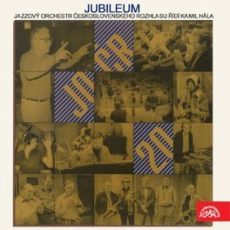
Kamil Hala was born on August 1, 1914 in Most, Czechoslovakia. During the late Fifties he led his own orchestra. He was a member of the Czechoslovak Radio Dance Orchestra beginning in 1960, starting as a pianist and later as its arranger and conductor. After the orchestra split in 1963 he was the conductor of the Czechoslovak Radio Jazz Orchestra until the 1990s.
Pianist composer, arranger, and conductor Kamil Hala passed away on October 29, 2014 in Prague, Czechoslovakia.
More Posts: arranger,bandleader,composer,conductor,history,instrumental,jazz,music,piano