

Daily Dose Of Jazz…
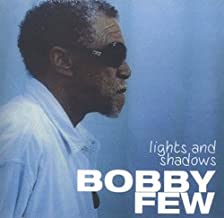
Bobby Few was born October 21, 1935 in Cleveland, Ohio and grew up in the Fairfax neighborhood of the city’s East Side. His mother encouraged him to study classical piano, later discovering jazz listening to his father’s Jazz at the Philharmonic records. His father became his first booking agent and soon he was gigging around the greater Cleveland area with other local musicians including Bill Hardman, Bob Cunningham, Cevera Jefferies, and Frank Wright.
Exposed to Tadd Dameron and Benny Bailey as a youth and knew Albert Ayler, with whom he played in high school. As a young man, Bobby gigged with local tenor legend Tony “Big T” Lovano, Joe Lovano’s father. The late 1950s had him relocating to New York City, where he led a trio from 1958 to 1964; there, he met and began working with Brook Benton, Rahsaan Roland Kirk, Jackie McLean, Joe Henderson and Ayler. Playing on several of Ayler’s albums, he also recorded with Alan Silva, Noah Howard, Muhammad Ali, Booker Ervin, and Kali Fasteau.
In 1969 he moved to France and rapidly integrated the expatriate jazz community, working frequently with Archie Shepp, Sunny Murray, Steve Lacy, and Rasul Siddik. Since 2001, he has toured internationally with American saxophonist Avram Fefer, with whom he recorded four critically acclaimed CDs. He plays extensively around Europe and continues to make regular trips back to the United States. Recently, Few has played with saxophonist Charles Gayle and leads his own trio in Paris. He is currently working on a Booker Ervin tribute project called Few’s Blues that features tenor player Tony Lakatos, bassist Reggie Johnson and drummer Doug Sides.
As a leader and co~leader, he recorded eighteen albums and fifty as a sideman. Pianist and vocalist Bobby Few, whose playing style has been described as delicate single-note melodies, roll out lush romantic chords, and rap out explicitly Monkish close-interval clanks, continued to perform and record until he passed away on January 6, 2021 at age 85.

More Posts: bandleader,history,instrumental,jazz,music,piano,vocal
Three Wishes
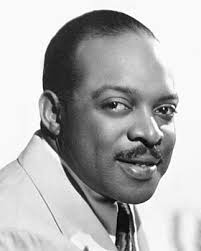
Nica was curious as to the response Count Basie would give and his three wishes were:
- “The health of my daughter could be corrected.”
- “I wish I could always be remembered.”
- “I wish everyone could love me as much as I love everyone.”
*Excerpt from Three Wishes: An Intimate Look at Jazz Greats ~ Compiled and Photographed by Pannonica de Koenigswarter

More Posts: baroness,history,instrumental,jazz,music,pannonica,piano,three,wishes

Daily Dose Of Jazz…
Masabumi Kikuchi was born on October 19, 1939 in Tokyo, Japan and lived his early life in World War II and post-war country. He studied piano and music at the Tokyo Art College High School. After graduating, he joined Lionel Hampton’s Japanese touring band.
Known for his eclectic music that ranges from vanguard classical to fusion and digital music. Not only working with Hampton, but he also performed with Sonny Rollins, Woody Herman, Mal Waldron, Joe Henderson, McCoy Tyner, Gil Evans, Elvin Jones, Miles Davis, Gary Peacock, Paul Motian, Billy Harper, and Hannibal Peterson.
As a leader and co~leader, he recorded twenty-five albums, and as a sideman or member of other groups, he recorded twenty~eight albums. Pianist and composer Masabumi Kikuchi passed away from a subdural hematoma on July 6, 2015 at a hospital in Manhasset, New York.
More Posts: bandleader,composer,history,instrumental,jazz,music,piano
Daily Dose Of Jazz…
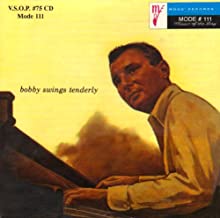
Robert William Troup Jr. was born on October 18, 1918 in Harrisburg, Pennsylvania. Graduating from The Hill School in 1937, he went on to graduate Phi Beta Kappa from the Wharton School at the University of Pennsylvania with a degree in economics. His earliest musical success came in 1941 with the song Daddy and Sammy Kaye and His Orchestra recorded it sending it to #1 for eight weeks on the Billboard chart and #5 record of 1941.
After graduating from college in 1941, he enlisted in the United States Marine Corps, completed officer training, and was assigned to recruit the first Black Marines at Montford Point. While there, he organized the first Negro band of U.S. Marines. During this time he composed Take Me Away From Jacksonville, which became an anthem of sorts for the Marines at Montford Point and other areas of Camp Lejeune. In 1942, his song Snootie Little Cutie was recorded by Frank Sinatra and Connie Haines with the Tommy Dorsey Orchestra and the Pied Pipers.
In 1946, Nat King Cole had a hit with Troup’s most popular song, Route 66. Troup’s fifteen albums in the 1950s and 1960s were not commercially successful, recording for Liberty and Capitol. He composed the music for the instrumental version of his song The Meaning of the Blues that appeared on the Miles Davis album Miles Ahead.
While relying on songwriting royalties, Bobby worked as an actor, appearing in Bop Girl Goes Calypso, The High Cost of Loving, The Five Pennies, and playing musician Tommy Dorsey in the film The Gene Krupa Story. He also appeared on several television shows in the Sixties. It was during this time that he met Julie London, encouraged her to pursue her singing career, and in 1955 produced her million-selling hit record Cry Me a River. Four years later, London married Troup. On February 7, 1999, pianist, singer, songwriter and actor Bobby Troup passed away of a heart attack in the Los Angeles, California neighborhood of Sherman Oaks.
More Posts: actor,history,instrumental,jazz,music,piano,songwriter,vocal
Daily Dose Of Jazz…
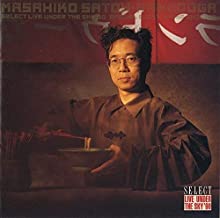
Masahiko Satoh was born on October 6, 1941 in Tokyo, Japan and the family home contained a piano. He started playing at the age of five, and twelve years later he began playing professionally accompanying singers, magicians, and strippers at a cabaret in the Ginza district.
By 1959 Satoh began playing in Georgie Kawaguchi’s band, together with alto saxophonist Sadao Watanabe and tenor saxophonist Akira Miyazawa. After graduating from Keio University, at the age of 26 he moved to the United States to study at the Berklee College of Music. During those two years of study, he read about composing and arranging, earned money working in a food shop, and played the piano in a hotel.
1968 had Masahiko writing and conducting the music for a series of pieces that were combined with dance and performed around New York City. After returning to Japan, he recorded Palladium, his first album as a leader, and appeared on a Helen Merrill album.
In the late 1960s and early 1970s, his career led him to perform in a free, percussive style. Masahiko played at the 1971 Berlin Jazz Festival as part of a trio, using at the time an unusual ring modulator to alter the sound. During that period he recorded with Attila Zoller, Karl Berger, and Albert Mangelsdorff. He wrote the psychedelic music for the 1973 anime film Belladonna of Sadness.
He went on to write arrangements for recordings led by, among others, Helen Merrill, Kimiko Itoh, and Nancy Wilson. He arranged for strings and quartet on Art Farmer’s 1983 album Maiden Voyage, formed a large group, named Rantooga, that combined various forms of folk music from around the world, and composed for film, television, and advertisements. By the early 1990s pianist, composer, and arranger Masahiko Satoh composed music for a choir of 1,000 Buddhist monks and now spends 70% of his time arranging and composing, the rest on playing and recording.
More Posts: arranger,bandleader,composer,history,instrumental,jazz,music,piano