

Daily Dose Of Jazz…
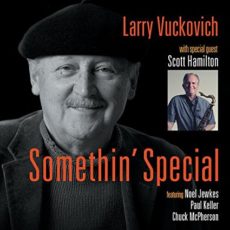
Larry Vuckovich was born on December 8, 1936 in Kotor, Montenegro and spent his childhood in Yugoslavia where he received classical piano lessons. He became familiar with jazz listening to radio broadcasts of AFN and Voice of America. Suffering persecution under Tito, his family emigrated to the US in 1951, received political asylum and settled in San Francisco, California.
Visited local jazz clubs Larry listened to jazz greats such as Miles Davis, Dizzy Gillespie and John Coltrane, and started playing jam sessions with musicians on the local jazz scene such as John Handy and Cal Tjader. He studied music at San Francisco State University alongside Roland Kirk, Mickey Roker and Bob Cranshaw, while getting instructed by Vince Guaraldi.
1959 saw Vuckovich starting his professional career in the band of Brew Moore. Soon thereafter, he accompanied singers like Irene Kral, David Allyn and Mel Tormé. By 1965 he had joined the band of Jon Hendricks to tour with him throughout the world, before settling in Munich, Germany as house pianist of the jazz club Domicile. While working there, he performed with Lucky Thompson, Pony Poindexter, Clifford Jordan, Dexter Gordon, Slide Hampton and Dusko Goykovich among others.
Returning to San Francisco he took up residency at the Keystone Korner until 1983 playing with the likes of Arnett Cobb, Buddy Tate, Leon Thomas, Philly Joe Jones and Charles McPherson. From 1985 to 1990, Vuckovich worked in New York City with Curtis Fuller, Milt Hinton, Al Cohn, Tom Harrell and many others. Afterwards, he returned to the West Coast in order to pursue projects of his own, which included bands Blue Balkan, Young at Heart and La Orquesta el Vuko.
He has also performed with Bobby Hutcherson, Larry Grenadier, Hadley Caliman, Cal Collins and Eddie Vinson. He became the artistic director for the West Coast Jazz Festival and the Nappa Valley Jazz Festival and founded his own label “Tetrachord Music”, for which he also acts as producer. Pianist Larry Vuchovich continues to perform, tour and record under his own name for Concord, Hot House, Inner City and Palo Alto Jazz record labels

Uplift Someone’s World

More Posts: piano

Daily Dose Of Jazz…
Paul Lingle was born on December 3, 1902 in Denver, Colorado and began learning to play the piano at age six. He first played professionally in the San Francisco, California area in the 1920s. He often accompanied Al Jolson in the late Twenties, including for his film soundtracks.
In the 1930s Paul worked mainly on radio, and also played with the Al Zohn band. He tuned pianos early in the 1940s and worked as a soloist in local San Francisco clubs, accompanying visiting musicians such as Lead Belly and Bunk Johnson.
Lingle released almost no recorded material during his lifetime, doing only one session for Good Time Jazz in 1952. This session for Good Time Jazz produced eight recorded numbers. After his death, Euphonic Records released several volumes of private recordings which were critically acclaimed.
Pianist Paul Lingle performed locally until his death on October 30, 1963 in Honolulu, Hawaii, relocating there in 1952.
Sponsored By

www.whatissuitetabu.com
More Posts: piano
Daily Dose Of Jazz…
Jack T. Perciful was born on November 26, 1925 in Moscow, Idaho and began playing the piano at the age of seven. During his high school years he was already part of the University of Idaho Jazz Band. From 1943 he served in the military in California, and from 1945 to 1946 in the Army orchestras in Japan.
Returning to the U.S. after his discharge he continued his studies at the University of Idaho, earning a Master in Music Education. After a few years, of giving music lessons, he moved into the music business, initially in Spokane, Washington. 1952 saw Jack in Los Angeles, California playing piano initially working as a studio musician, but also played with Dicky Wells, Ernie Andrews and Charlie Barnet.
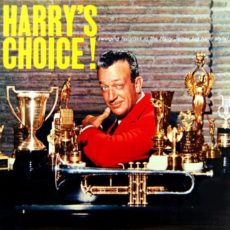
Harry James brought Perciful into his big band in Las Vegas, Nevada as a pianist and arranger, contributing to a total of 25 albums. He toured with the band throughout Europe, Latin America and Japan. As a sideman he appeared in 1970 on the album Two More Tenors: Boots and Corky by Boots Randolph and Corky Corcoran. After 18 years with the James outfit, he moved Olympia, Washington in 1974 and played at one of the local clubs, Tumwater Conservatory, accompanying soloists like Ernestine Anderson, and played with Bert Wilson and other local musicians. 1989 to 1991 he was a member of the Buddy Catlett Trio.
In subsequent years, he was on several albums on the Pony Boy label recording with Lance Buller and Charlie May. Perciful also appeared on the Ed Sullivan and Johnny Carson shows, performed with James in the Jerry Lewis film The Ladies’ Man in 1961 and in 2008 he was inducted into the Seattle Jazz Hall of Fame. Pianist and arranger Jack Perciful, who never recorded as a leader, passed away on March 13, 2008.
Sponsored By

More Posts: piano

Daily Dose Of Jazz…
Willie “The Lion” Smith was born William Henry Joseph Bonaparte Bertholoff Smith on November 25, 1897 in Goshen, New York. His biological father Frank Bertholoff was a light-skinned playboy who loved his liquor, girls, and gambling. His mother, Ida, threw Frank out of the house when William was two years old. After his father died, his mother married John Smith, a master mechanic from Paterson, New Jersey and Smith was added at age three.
In 1907, the family moved to Newark, New Jersey and when he was six discovered his mother’s piano in the basement and she taught him the melodies she knew. His uncle taught him to dance and subsequently he won a dance contest. It was at this time he decided to concentrate on music.
He attended the Baxter School, but after a theft incident involving a dime to see a traveling road show, he was transferred to Morton School in the sixth grade and then went on to Barringer High School, then Newark High, and attempted swimming, skating, track, basketball, sledding, cycling, and boxing to get the ladies attention. He also hung out with prizefighters like Jack Johnson, Jack Dempsey, Joe Louis, Gene Tunney and others, belong to a gang and eventually played piano in the back room of one of the members club.
Willie won an upright piano in a newspaper ad contest guessing the number of dots were in a printed circle. From that day forth, he sat down at the piano and played songs he heard in the clubs and saloons, including Scott Joplin’s Maple Leaf Rag by, Cannonball Rag by Joe Northrup, Black and White Rag by George Botsford, and Don’t Hit That Lady Dressed in Green, She’s Got Good Booty and Baby, Let Your Drawers Hang Low. By the early 1910s he was playing in New York City and Atlantic City, New Jersey.
Serving in World War I and seeing action in France, Willie played drums with the African-American regimental band led by Tim Brymn and played on the regimental basketball team. Legend has it that his nickname “The Lion” came from his reported bravery while serving as a heavy artillery gunner and he was a decorated veteran of the Buffalo Soldiers 350th Field Artillery regiment. Following the war he returned to work in Harlem clubs and at rent parties as a soloist, in bands or accompanying blues singers like Mamie Smith. Smith and his contemporaries James P. Johnson and Fats Waller developed a new, more sophisticated piano style later called “stride”.
By the 1940s his music found appreciation with a wider audience, and he toured North America and Europe up to 1971. He was at the taking of the jazz photograph A Great Day in Harlem in 1958, however, he was sitting down resting when the selected shot was taken, leaving him out of the final picture. The Lion was also an educator teaching privately and his students included such notable names as Mel Powell, Brooks Kerr, and Mike Lipskin. Although working in relative obscurity, he was a “musician’s musician”, influencing countless other musicians including Duke Ellington, George Gershwin, and Artie Shaw.
Duke Ellington demonstrated his admiration of the pianist by composing and recording the highly regarded “Portrait of the Lion” in 1939. In his later years, Newark, New Jersey honored him with Willie “The Lion” Smith Day, and Orange County, New York also proclaimed September 18th as Willie “The Lion” Smith Day, that was also the date of the first Goshen Jazz Festival.
Willie “The Lion” Smith passed away at the age of 79 on April 18, 1973 in New York City.

More Posts: piano
Daily Dose Of Jazz…
Wild Bill Davis was born November 24, 1918 in Glasgow, Missouri and originally played guitar and wrote arrangements for Milt Larkin’s Texas-based big band during 1939–1942. The band included Arnett Cobb, Illinois Jacquet, and Tom Archia on horns. After leaving the Larkin orchestra, he worked in Chicago, Illinois as a pianist, recording with Buster Bennett in 1945. He played a crucial role as the pianist-arranger in Louis Jordan’s Tympany Five from 1945 to 1947 at the peak of their success.
Leaving Jordan and Harlem, he returned to Chicago for a time, recording again with Bennett, working with Claude McLin and after switching from piano to organ, Davis moved back to the East Coast. In 1950, he began recording for Okeh Records, leading an influential trio of organ, guitar, and drums. Originally slated to record April in Paris with the Count Basie Orchestra in 1955 but could not make the session, Basie used his arrangement for the full band and had a major hit.
During the Sixties, in addition to working with his own groups, Wild Bill recorded several albums with his friend Johnny Hodges, leading to tours during 1969–1971 with Duke Ellington. In the 1970s he recorded for the Black & Blue Records label with a variety of swing all-stars, and he also played with Lionel Hampton, appearing at festivals through the early 1990s.
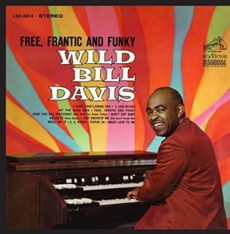
Pianist, organist and arranger William Strethen Davis, whose stage name was Wild Bill, passed away in Moorestown, New Jersey on August 17, 1995. He recorded some four-dozen albums as a leader and co-leader and another dozen as a sideman with Ray Brown, Sonny Stitt, Gene “Mighty Flea” Conners, Billy Butler, Floyd Smith and Eddie “Lockjaw” Davis among others. Prior to the emergence of Jimmy Smith in 1956, he was the pacesetter among organists and best known for his pioneering jazz electronic organ recordings.
Uplift Someone’s World