

Daily Dose Of Jazz…
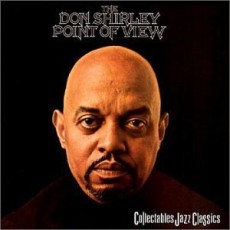
Don Walbridge Shirley was born January 29, 1927 in Kingston, Jamaica and under the tutelage of his mother began playing piano at 2½ and made his first public performance at the age of 3. By nine he was invited to study theory with Mittolovski at the Leningrad Conservatory of Music, later studying with organist Conrad Bernier, followed by study of advanced composition with both Bernier and Dr. Thaddeus Jones at Catholic University in Washington D. C.
Don’s music is hard to categorize treating every arrangement as a new composition, playing standards in a non-standard way, and playing everything from show tunes, to ballads, to his personal arrangements of Negro spirituals, to jazz, and always with the overtone of a classically-trained musician who has utmost respect for the music.
He has performed at the Exposition International du Bi-Centenaire De Port-au-Prince, with Arthur Fiedler and the Boston Pops, with the Detroit, Chicago, Cleveland and National Symphony Orchestras, in concert with his own trio for about 95 dates annually. During the 1950s and 60s he cut some 16 albums for Cadence Records, played around New York City, performed at Basin Street East, appeared on the Arthur Godfrey Show and his career was launch nationwide.
As an educator, Don holds a Doctorate of Music, Doctorate of Psychology (and Doctorate in Liturgical Arts, speaks eight languages fluently, and is considered an expert painter as well. The jazz pianist and composer continued to perform and record until his death of heart disease on April 6, 2013 in Manhattan, New York at the age of 86.
Daily Dose Of Jazz…
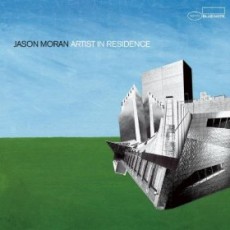
Jason Moran was born January 21, 1975 and grew up in Houston, Texas. He began playing the piano when he was six, though he had no love for the instrument until, at the age of 13, he first heard the song “Round Midnight” by Thelonious Monk and switched his efforts from classical music to jazz. He attended Houston’s High School for the Performing and Visual Arts, and then enrolled at the Manhattan School of Music where he studied with pianist Jaki Byard. While still in college Moran also received instruction from other avant-garde pianists including Muhal Richard Abrams and Andrew Hill.
In 1997, when Moran was a senior at the Manhattan School of Music he was invited to join the band of saxophonist Greg Osby for a European tour. Osby liked his playing and Moran continued to play with the group upon their return to the United States, making his first recorded appearance on Osby’s 1997 “Further Ado” for Blue Note, subsequently appearing on several Osby albums. This led to Blue Note signing Moran and his debut “Soundtrack to Human Motion” was released in 1999.
He has since released several albums playing with contemporaries Stefon Harris, Lonnie Plaxico, Eric Harland, Tarus Mateen, Nasheet Waits, Sam Rivers and Marvin Sewell as well as collaborations with Charles Lloyd, Cassandra Wilson, Joe Lovano, Don Byron, Lee Konitz, Steve Coleman, Ravi Coltrane, Von Freeman and Christian McBride.
Jason has been commissioned to create a number of works by the Walker Art Center, the Dia Art Foundation and Jazz at Lincoln Center. He has been voted Up-n-Coming Jazz Musician by the Jazz Journalists Association, Down Beat’s critics poll voted him Rising Star Jazz Artist, Rising Star Pianist, and Rising Star Composer for three years straight from 2003-2005, named Jazz Artist of the Year in 2007 by Playboy, and was named a USA Prudential Fellow.
Pianist Jason Moran is currently working on a multimedia project “In My Mind” inspired by Thelonious Monk’s 1959 large band concert at Town Hall. He serves as music advisor to the Kennedy Center, serves on the faculty of the New England Conservatory of Music and the Manhattan School of Music, as he continues to compose, perform, tour and record.
Daily Dose Of Jazz…
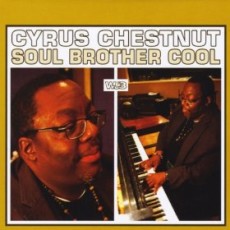
Cyrus Chestnut was born January 17, 1963 in Baltimore, Maryland. He started his musical career at the age of six, playing piano at Mount Calvary Baptist Church. By age nine, he was studying classical music at Peabody Institute and in 1985 earned a degree in jazz composition and arranging from Berklee College of Music where he was awarded the Eubie Blake Fellowship, the Quincy Jones Scholarship and the Oscar Peterson Scholarship.
A year after graduating his prolific career began with a tour with Jon Hendricks, followed by two-year stints with Terence Blanchard, Donald Harrison, Wynton Marsalis and Betty Carter. Under Betty’s tutelage, Cyrus was advised to take chances and play things she had never heard.
Signing with Atlantic Records in 1993 he released the critically acclaimed Revelation followed by The Dark Before The Dawn the next year, debuting at #6 on the Billboard charts. He has performed and/or recorded with Freddy Cole, Bette Midler, Freddie Hubbard, Jimmy Scott, Chick Corea, Isaac Hayes, Kevin Mahogany, Dizzy Gillespie, Manhattan Transfer, Vanessa L. Williams, Brian McKnight, Christian McBride, Lewis Nash, James Carter, Wycliffe Gordon and the list continues.
Never straying far from his church roots he collaborated and toured with soprano opera diva Kathleen Battle, recording the notable “So Many Stars” in 1996. Later that same year came Blessed Quietness: A Collection of Hymns, Spirituals and Carols.
Chestnut’s leadership and prowess as a soloist has also led him to be a first call for the piano chair in many big bands including the Lincoln Center Jazz Orchestra, Dizzy Gillespie Big Band and the Carnegie Jazz Orchestra. He has amassed a further string of critically acclaimed albums while continually touring with his trio, playing jazz festivals around the world as well as clubs and concert halls.
More Posts: bandleader,composer,piano
Daily Dose Of Jazz…
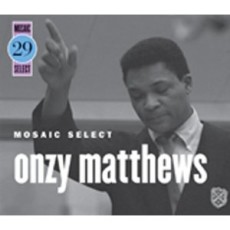
Onzy Matthews was born in Fort Worth, Texas on January 15, 1936, grew up in Dallas until he was 14, when his mother pulled up stakes and moved to Los Angeles for a better job. He graduated from high school at 16 and had already decided he wanted to sing. Nearly every day he walked to a nearby park, where he could play piano for hours in the recreation building.
Augmenting his early gospel roots with healthy doses of smooth California jazz and big band music, Matthews taught himself to accompany his singing on piano until he realized he needed arrangements.
He attended Westlake College of Music, studied ear training and harmony, started singing with a dance band and learning about arranging. After several years of performing, attending concerts and asking questions he had 21 original songs arranged for big band.
His musical career sprang from eight bars of music. As an aspiring singer, pianist and composer in 1963, a young Mr. Matthews gave his first professional arrangement to Les Brown for a tryout with the Band of Renown. Out of the arrangement came 8 bars that sounded good to Onzy and Les Brown advised him to take those 8 bars and start from there. Doing so he went on to become one of the most sought-after arrangers in jazz and pop music. It was later through Dexter Gordon that these first twenty-one were played by the best musicians in Hollywood that turned into a regular Wednesday night jam session. The word spread and he started getting courted by record labels to work with their artists.
Onzy’s first major arranging job was on Lou Rawls’ album Black & Blue, followed by his debut as a leader in 1964 on “Blues With A Touch Of Elegance” for Capitol. About a year later, with his career in full swing, he held a guest spot on a New York radio show hosted by mercer Ellington who introduced him to his dad, friendship was struck and four years later became collaborators, filling the void from Billy Strayhorn’s death.
Matthews tailors the arrangements according to the empathy of the artist by listening to the artist and arranging to bring out things in them they weren’t aware of. This was his magic. After Ellington death in ’74, he moved to Seattle, formed a big band for three years moved between Texas and New York and finally moved to Paris in ’79, put together another big band, played with Miles Davis and finally moved back to Dallas in 1994.
Onzy D. Matthews, whose 35-year career had him working with some of jazz’s most notables, was discovered in his Dallas apartment passed away at his typewriter by jazz singer Jeanette Brantley and her husband Hans Wango on November 15, 1997. He was 67.
Daily Dose Of Jazz…
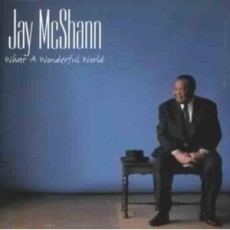
Jay McShann, born James Columbus McShann on January 12, 1916 in Muskogee, Oklahoma began played the piano from the age of 12. His primary education came from Earl “Fatha” Hines late-night radio broadcasts from the Grand Terrace Café. Leaving home he spent time at college and working with bands throughout Oklahoma, Arkansas, Arizona and New Mexico.
In the 1930 Jay moved to Kansas City working with both local groups and his own band with his 1938 band comprised of Charlie Parker, Bernard Anderson, Al Hibbler, Paul Quinichette, Earl Coleman, Ben Webster and Walker Brown, creating a music that would become known as the Kansas City sound.
Nicknamed Hootie, it was during the 1940s that he stood at the forefront of the blues and hard bop jazz musicians mainly from Kansas City. His first recordings were all with Charlie Parker, the first as “The Jay McShann Orchestra” on August 9, 1940. After World War II he began to lead small groups featuring blues shouter Jimmy Witherspoon. Witherspoon started recording with McShann in 1945, and fronting McShann’s band, and had a hit in 1949 with “Ain’t Nobody’s Business”.
Jay McShann was inducted into the Blues Hall of Fame, was nominated twice for a Grammy Award, performed regularly with violinist Claude Williams and continued to recording and touring into the nineties around Kansas City and Toronto, Ontario. The blues and jazz pianist Jay McShann, whose career spanned more than sixty years, passed on December 7, 2006, at St. Luke’s Hospital in Kansas City.