

Daily Dose Of Jazz…
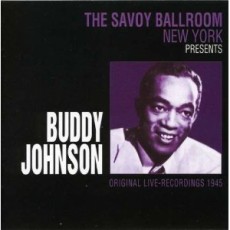
Buddy Johnson was born Woodrow Wilson Johnson on January 10, 1915 in Darlington, South Carolina. He took piano lessons as a child and classical music remained one of his passions. In 1938 he moved to New York and the following year toured Europe with the Cotton Club Revue, but was expelled from Nazi Germany. Later in 1939 he first recorded for Decca Records with his band, soon afterwards being joined by his sister Ella as vocalist.
In 1941 he assembled a nine-piece orchestra and soon began a series of R&B and pop chart hits that included “They All Say I’m The Biggest Fool” with Arthur Prysock on vocals and his sister Ella’s recording of “Since I Fell for You” in 1945, that would later become a jazz standard. In 1946 Buddy composed a Blues Concerto, which he performed at Carnegie Hall two years later. His orchestra remained a major touring attraction through the late 1940s and early 1950s, and continued to record in the jump blues style with some success for Mercury Records. By the end of the 50s Buddy switched to Roulette Records the next year, and bowed out with a solitary session for Hy Weiss’s Old Town label in 1964.
Buddy Johnson, jazz and blues pianist and bandleader passed away on February 9, 1977 in New York at the age of 62 from a brain tumor and sickle cell anemia.
More Posts: bandleader,piano
Daily Dose Of Jazz…
Bobby Tucker was born Robert Nathaniel Tucker on January 8, 1923 in Morristown, New Jersey. His rise to recognition came On November 12, 1946 when during Billie Holiday’s stay at the Down Beat Club he was drafted to accompany Holiday because Eddie Heywood refused his opportunity. Billie’s stay at the Down Beat was so successful due to Tucker’s playing that she decided to keep him as her accompanist. The partnership lasted until 1949, where Tucker quit due to Holiday’s abusive lover, John Levy (not the bassist) threatening him.
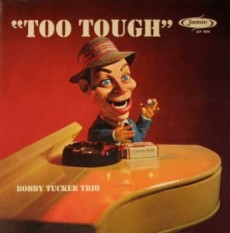
After leaving Holiday, Tucker began playing with Billy Eckstine, a partnership and friendship that last more than forty years. He recorded on multiple sessions with Billy but was featured on the 1960 album “No Cover, No Minimum”, in which he arranged and conducted the orchestra behind Eckstine. That same year Tucker also released his only known album under his own name “Too Tough”.
Bobby was especially sought out as an accompanist for singers among them Johnny Hartman, Lena Horne and Antonio Carlos Jobim. He was a musician’s musician whose quiet yet prolific career renders little biographical information, yet spanned the jazz age from the 40s to the 60s and beyond with his friend Billy Eckstine.
Pianist, arranger and conductor Bobby Tucker passed away of a heart attack on April 12, 2007 in his hometown of Morristown, New Jersey at the age of 85.
Daily Dose Of Jazz…
Bulee “Slim” Gaillard was born on January 4, 1916 in Santa Clara, Cuba. His childhood in Cuba was spent cutting sugarcane and picking bananas, as well as occasionally going to sea with his father. At age 12, he made his way to America settling in Detroit. A move to New York City in the late 1930s saw Gaillard’s rise to prominence as part of Slim & Slam, a jazz novelty act he formed with bassist Slam Stewart. Their hits included “Flat Foot Floogie”, “Cement Mixer” and the hipster anthem, “The Groove Juice Special”.
Gaillard’s appeal was that he presented a hip style with broad appeal, was a master improviser whose stream of consciousness vocals ranged far afield from the original lyrics along with wild interpolations of nonsense syllables. Gaillard could play several instruments, such as guitar and piano and always managed to turn the performance from hip jazz to comedy.
In the late forties and early fifties, Gaillard frequently opened at Birdland for such greats as Charlie Parker, Flip Phillips and Coleman Hawkins. Slim composed theme songs for radio shows, appeared in several shows in the 1960s and 1970s, such as Charlie’s Angels, Mission Impossible, Along Came Bronson and Roots: The Next Generation. By the early 1980s he was touring the European jazz festival circuit, playing with such musicians as Arnett Cobb.
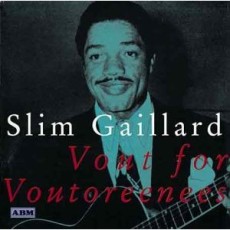
Slim Gaillard, singer, songwriter, pianist, guitarist and actor noted for his vocalese, spoke 9 languages including “Vout”, a language he constructed out of word play and created a dictionary, passed away on February 26, 1991 in London, England at the age of 75.
Daily Dose Of Jazz…
Herbie Nichols was born in San Juan Hill, Manhattan, New York City on January 3, 1919. His first known work was with the Royal Barons in 1937, a few years later performing at Minton’s Playhouse but he did not find a very happy experience due to a competitive atmosphere that did not suit his personality.
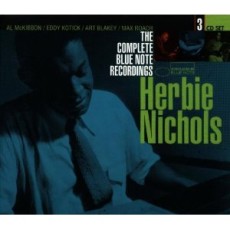
Nichols was drafted into the Infantry in 1941. After the war he worked in various setting, beginning to achieve some recognition when Mary Lou Williams recorded some of his songs in 1952. He befriended Thelonious Monk and from about 1947 persisted in trying to persuade Alfred Lion at Blue Note to sign him. Lion finally acquiesced and between 1955 and 1956 Herbie recorded less than half his 170 compositions that produced three albums, with other tracks from these sessions not being issued until the 1980s.
As a player he was capable not only of dark lyricism but also of writing melodies so harmonically adventurous that placed his music in a rhythmic league of its own. Nichols was indeed fortunate in the drummers with whom he worked Art Blakey and Max Roach. As a composer he penned such notable standards as “Serenade” that had lyrics added as well as “Lady Sings The Blues” that became synonymous with Billie Holiday, to which she set lyrics and adopted the title for her autobiography.
Jazz pianist and composer Herbie Nichols died from leukemia at the age of 44 on April 12, 1963 in New York City. Although he lived most of his life in relative obscurity, he is now highly regarded by many musicians and critics.
Daily Dose Of Jazz…
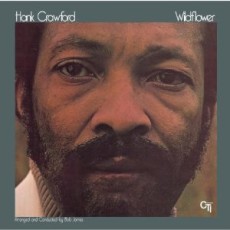
Hank Crawford was born Bennie Ross Crawford, Jr. on December 21, 1934 in Memphis, Tennessee. He began formal piano studies at age nine and was soon playing for his church choir. His father had brought an alto saxophone home from the service and when Crawford entered Manassas High School, he took it up in order to join the band, hanging out with George Coleman, Booker Little, Harold Mabern and Frank Strozier. At eighteen he appeared on an early 1952 Memphis recording for B. B. King playing alongside Ben Branch and Ike Turner.
In 1958 Crawford attended Tennessee State University, majored in music studying theory and composition, played alto and baritone saxophone in the Tennessee State Jazz Collegians and led his own rock ‘n’ roll quartet, “Little Hank and the Rhythm Kings”. It was during this period that he met Ray Charles and got his nickname “Hank” because he looked and sounded like local legendary saxophonist Hank O’Day.
Charles hired Crawford originally as a baritone saxophonist but he switched to alto in ’59 and became musical director until ’63 when he left to form his own septet, having already established himself with several albums on Atlantic Records, recording a dozen albums between 1960 and 1970. He also arranged for Etta James, Lou Rawls and others, although much of his career has been in R&B. However, in the Seventies, Hank had several successes on the jazz and pop charts.
In 1983 a move to Milestone Records gave him the opportunity to become a premier arranger, soloist, and composer, writing for small bands—that include guitarist Melvin Sparks, Dr. John and organist Jimmy McGriff, the later with whom he toured extensively and co-led dates for Milestone’s “Soul Survivor”, Steppin’ Up”, “On The Blue Side” and Road Tested”. The new century found Crawford pursuing a more mainstream jazz sound with the “World of Hank Crawford”, covering Ellington and Tadd Dameron compositions.
Hank Crawford, alto and baritone saxophonist in the hard bop, R&B, jazz-funk and soul jazz genres, credits Charlie Parker, Louis Jordan, Earl Bostic and Johnny Hodges as early influences. His piercing full-bodied signature sanctified church sound, easily recognizable, will live on through his music since his passing on January 29, 2009 at 74.