

Daily Dose Of Jazz…
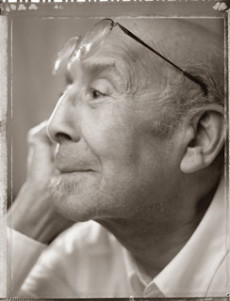
Allen “Al” Tinney was born on May 28, 1921 in Ansonia, Connecticut. As a child he was taught piano, worked in local dance bands and as a stage actor/dancer in several Broadway plays and was an original cast member in the production of George Gershwin’s Porgy and Bess. His piano playing was so good that he became rehearsal pianist and assistant to Gershwin.
From 1939 to 1943 he held sway in the house band at Monroe’s Uptown House playing with young musicians who gravitated to him like Charlie Parker, Max Roach, Little Bennie Harris, George Treadwell and Victor Coulsen. An influential bebop pianist his playing was light, flowing and occasionally percussive, while his improvisations were harmonically advanced for the period and his style can be heard in the playing of Bud Powell, George Wallington, Al Haig, and Duke Jordan.
Abhorring the connection between jazz and drugs, by 1946 Tinney began to play less jazz and more in other styles. He was a member of The Jive Bombers who were one hit wonders with “Bad Boy” in 1957. He moved to Buffalo in 1968, played local jazz clubs, worked in the state prison music program, and lectured at SUNY Buffalo. He recorded one album as a leader with Peggy Farrell titled Peg & Al in 2000.
Pianist Allen Tinney passed away on December 11, 2002 in Buffalo, New York at age 81.
More Posts: piano
Daily Dose Of Jazz…
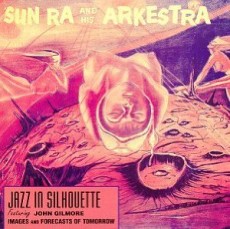
Sun Ra was born Herman Poole Blount in Birmingham, Alabama on May 22, 1914 and as a child was a skilled pianist. By twelve he was writing original songs and could sight read sheet music. With Birmingham being an important stop for touring musicians, during his childhood he was able to see famed musicians like Fletcher Henderson, Duke Ellington and Fats Waller.
By his teenage years he was producing from memory full transcriptions of big band songs he had heard and began playing semi-professional solo piano in ad hoc jazz bands. Attending Birmingham Industrial High School he took lessons the tutelage of John T. “Fess” Whatley, a demanding disciplinarian and producer of many professional musicians.
Claiming that he was of the “Angel Race” and not from Earth, but from Saturn, Sun Ra developed a complex persona of “cosmic” philosophies and lyrical poetry that made him a pioneer of “afro-futurism” as he preached awareness and peace above all. He abandoned his birth name and took on the name and persona of Sun Ra (Ra being the ancient Egyptian god of the sun).
From the mid-1950s to his death, Sun Ra led “The Arkestra”, an ensemble with an ever-changing lineup and names, asserting that the ever-changing name of his ensemble reflected the ever-changing nature of his music. His mainstream success was limited, but Sun Ra was a prolific recording artist and frequent live performer with music ranged from keyboard solos to big bands of over 30 musicians and music touching on virtually the entire history of jazz, from ragtime, swing, bebop, free improvisation, electronic and space music.
Sun Ra had several music periods during his lifetime – late 30s creating a conservatory workshop in his family home, conscientious objector during the war years, Chicago playing blues and jazz with Fletcher Henderson, Coleman Hawkins and Stuff Smith, New York Monday night gig at Slug’s Saloon and praise from Dizzy Gillespie and Thelonious Monk, and Philadelphia that would be the base of operations for the Arkestra until his death.
Sun Ra known for his “cosmic philosophy, musical compositions and performances was inducted into the Alabama Jazz Hall of Fame in 1979. The prolific Jazz composer, bandleader, piano and synthesizer player, poet and philosopher passed away on May 30, 1993, at 79.
Daily Dose Of Jazz…
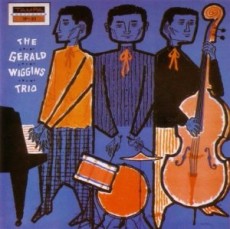
Gerald Wiggins was born on May 12, 1922 in New York City. He started classical piano lessons when he was four but by his teenage years became interested in jazz. He doubled on bass while attending High School & Art and for a period in the 40s accompanied Stepin’ Fetchit. Following this he worked and toured with the big bands of Les Hite, Louis Armstrong and Benny Carter. Stationed in Seattle while in the military he played in the local jazz clubs.
By the mid 40s Wiggins relocated to Los Angeles and played music for television and film. He has worked with Lena Horne, Kay Starr, Nat King Cole, Lou Rawls, Jimmy Witherspoon Helen Humes, Joe Williams, Ernie Andrews and Eartha Kitt to name a few. He also worked at the Hollywood studios as a vocal coach and worked with Marilyn Monroe and others.
Always a highly flexible pianist, Wiggins was comfortable in swing and bop settings with a consistently witty style filled with catchy riffs became his distinctive signature. His best-known recording as an organist was Wiggin’ Out but it was Wiggins’ trio work with Andy Simpkins and Paul Humphreys that is legendary. Pianist Gerald Wiggins passed away at the age of 86 on July 13, 2008.
More Posts: piano
Daily Dose Of Jazz…
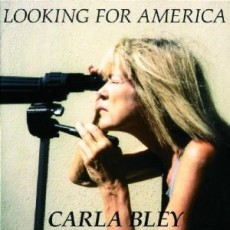
Carla Bley was born Carla Borg on May 11, 1936 is best known for her work as a jazz composer, pianist, organist and band leader in the post bop generation and free jazz movement of the 60s.
Raised in Oakland, California she was encouraged by her father, piano teacher and choirmaster, to sing and learn the piano. Giving up church to immerse herself in roller-skating at fourteen, Carla moved to New York and became a cigarette girl at Birdland. It is here that she met and married Paul Bley, who encouraged her to start composing. Her compositions would later begin to appear on recordings by George Russell and Jimmy Guiffre, with compositions being performed by Gary Burton, Art Farmer and Paul Bley.
In 1964 she was involved in organizing the Jazz Composer Guild bringing together the most innovative musicians in New York and started the JCOA record label, which released albums by Clifford Thornton, Don Cherry and Roswell Rudd, Michael Mantler and herself. With Mantler the two started the New Music Distribution Services, now defunct, that specialized in small, independent labels issuing creative improvised music.
Carla Bley has collaborated with a number of other artists, including Kurt Weill, Jack Bruce, Charlie Haden, Phil Woods, Johnny Griffin, Pink Floyd drummer Nick Mason, Blood, Sweat & Tears, Lew Soloff, Phil Woods and her current partner bassist Steve Swallow. She has continued to record frequently with her own big band and a number of smaller ensembles.
More Posts: bandleader,composer,organ,piano
Daily Dose Of Jazz…
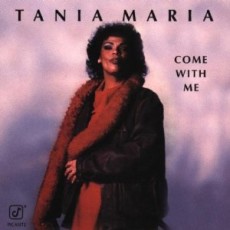
Tania Maria was born on May 9, 1948 in Sao Luis, Maranhao in northern Brazil. She began playing piano at 7, became a leader at 13 of a band organized by her father, won first place in a local music contest and began playing dances, in clubs and on the radio. It was her father who encouraged her to study piano so that she could play in his weekend jam sessions. By doing so she absorbed the rhythms and melodies of samba, jazz, pop and Brazilian chorinho. Since then she has never worked in anyone else’s group.
Tania released her first album ”Apresentamos” in 1969 with a second in 1971 but it was her move to France that exploded her on the international scene. She began touring and while performing in Australia she caught the ear of guitarist Charlie Byrd who recommended her to Concord Records.
Tania’s formidable musical precision and freewheeling spirit has been heard at virtually every important jazz festival in the world and has appeared on countless television and radio shows. She has recorded numerous albums, has been nominated for a Grammy in the category of “Best Jazz Vocal Performance, Female, and has played with such greats as Steve Gadd, Anthony Jackson, Sammy Figueroa and Eddie Gomez to name a few.
The Brazilian artist, singer, composer, bandleader and pianist also has a law degree She sings mostly in Portuguese but also English. Her music is sometimes pop, jazz, and unmistakably Brazilian. Whether playing fiery samba, tranquil bossa or any other style, Tania Maria maintains a style that is uniquely her own. Her vibrant voice, brilliant piano work and outstanding performances have made an artist of increasing international popularity.