

Daily Dose Of Jazz…
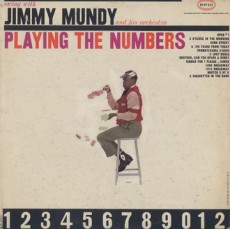
Jimmy Mundy was born James Mundy in Cincinnati, Ohio on June 28, 1907. He learned to play the saxophone as a child but gained his arranging skills in his early twenties playing in the local bands of Erskine Tate, Tommy Miles and Carroll Dickerson.
In 1932 he sat in the saxophone chair of the Earl Hines band for four years, but swiftly developing a reputation as an arranger. Arranging a couple of tunes for Claude Hopkins in 1932, it was after selling one of his arrangements to Benny Goodman in 1935 that Mundy was hired him away from Hines, becoming Goodman’s staff arranger.
Mundy was also a significant supplier of arrangements to Count Basie from about 1940 to 1947, as well as writing for Gene Krupa, Paul Whiteman, Dizzy Gillespie, Charlie Spivak, Harry James and many others. He briefly led his own band in 1939, but after WWII he returned to arranging for Basie, James, and others.
Jimmy wrote the score to the 1955 musical “The Vamp” that starred Carol Channing. The 1957 musical “Livin’ The Life” and the 2010 dance revue “Come Fly Away” also had some of his music.
In 1959, a move to Paris had Mundy as the musical director for Barclay Records but he returned to the U.S. in the Sixties. He continued an active career as a writer well into the 1970s. He recorded three albums as a leader with his last “Fiesta In Brass” the year before his death. On April 24, 2003, tenor saxophonist, arranger and composer Jimmy Mundy passed away.
More Posts: saxophone
Daily Dose Of Jazz…
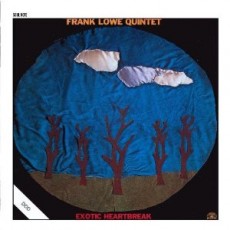
Frank Lowe was born on June 24, 1943 and raised in Memphis, Tennessee. Taking up the tenor saxophonist he was extremely influenced by the first and second waves of free jazz throughout the 1960s. He moved to San Francisco, California to explore the avant-garde jazz scene. While making several visits to New York City he began playing with Sun Ra and Alice Coltrane, recording with the later in 1971.
As a leader he recorded two-dozen albums between 1973 and 2002 working with the likes of Don Cherry, Billy Bang, Jack Walrath, James Carter, Geri Allen, Charnett Moffett, Carlos Ward and numerous others.
Composer and tenor saxophonist Frank Lowe passed away on September 19, 2003 of lung cancer. His legacy was a varied body of recordings and memorable performances and his composition “Spirits in the Field” was performed on Arthur Blythe’s 1977 album The Grip.
More Posts: saxophone
Daily Dose Of Jazz…
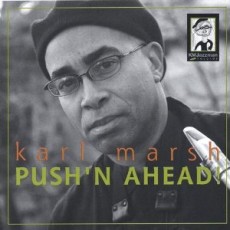
Karl Marsh was born on June 14, 1959 in Los Angeles, California. He learned to play the saxophone as a child coming out of the tradition of John Coltrane, Joe Henderson and Pharoah Sanders, with an added twist of Ben Webster.
Marsh’s big & warm toned tenor saxophone is comfortable in a variety of performance settings, from combos, duos and quintets delivering heartfelt ballads and standards and straight-ahead, earthy and spirit-filled original compositions.
Since 2009 Karl has held a regular gig at the Left Coast Wine Bar and Gallery, has played Maggiano’s at The Grove and the LA Farmer’s Market Summer Jazz Concert series in Los Angeles, has performed at Belgocargo in France, the Joe Henderson Tribute Concert and art venues throughout metro Los Angeles. He released his debut album titled “Push’N Ahead!” in 2005.
Tenor saxophonist Karl Marsh currently serves as the saxophone instructor for the Pasadena Community Youth Orchestra and also offers private instruction.
More Posts: saxophone
Daily Dose Of Jazz…
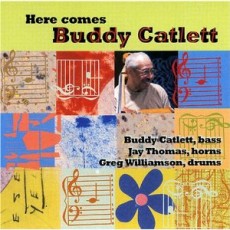
Buddy Catlett was born George James Catlett on June 13, 1933 and grew up in Seattle, Washington. During his childhood he listened to records his mother brought home, and learned to play the cornet around age 10 after hearing Louis Armstrong, and by fourteen had saved enough money from his movie theater job to buy a saxophone. He would soon be gigging with his childhood friend Quincy Jones till 5:30 in the morning and then the two would go to Garfield High School a few hours later. It was during this time that he also met and performed with Ray Charles.
He first professional gig was with vibraphonist Bumps Blackwell’s band that included Ernestine Anderson, but by 17 had to stop performing due to tubercular pleurisy that hospitalized him for two years. Not to be beaten, he started taking bass lessons with Tiny Martin of the Seattle Symphony. Learning quickly he was soon asked to join pianist Horace Henderson’s band and on the road he went. This was followed up with a stint with Cal Tjader, a move to New York in 1958, and a European tour with Quincy Jones playing for the musical Free and Easy starring tapper Harold Nicholas.
Throughout his career he performed with Billie Holiday, Ella Fitzgerald, Sarah Vaughan, Frank Sinatra, Count Basie and Louis Armstrong among others. He has appeared on over 100 recordings and is recognizable on the Sinatra/Basie arrangement of Fly Me To The Moon and Armstrong’s What A Wonderful World. With declining health, bassist Buddy Catlett scaled down his jazz performances in his hometown of Seattle but has not lost his popularity or respect from an admiring community. Bassist Buddy Catlett passed away on November 12, 2014, at age 81 at the Leon Sullivan Health Care Center in Seattle’s Central District.
Daily Dose Of Jazz…
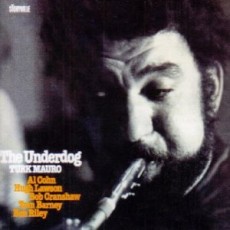
Turk Mauro was born Mauro Turso on June 11, 1944 in New York City into a family of first-generation Italian-Americans and he first experienced jazz when his father who played in local swing bands and began playing alto saxophone at 14. He soon met his mentor, trumpeter Henry Allen, who started getting him gigs around the city until he graduated from high school in 1962.
Mauro worked in a mailroom while playing jazz, got married, had two children, hit the road and his marriage fell apart by the mid-70s. While touring he met Billy Mitchell, a member of Dizzy Gillespie’s band, that led to a few hits with Gillespie but a permanent spot in Buddy Rich’s band. His reputation as a perfectionist made him a popular sideman in the New York area, and in 1977 he release his debut album, The Underdog.
He would go on to play the Blue Note, release his sophomore project The Heavyweight, which unfortunately flopped. This began a dry period for Turk through the ’80s and he abandoned jazz for taxi and limo driving. However, in 1987 after running into Sonny Rollins who suggested Europe, Mauro packed up and moved to France. He found work as a sideman and renewed success in Paris. But success was fleeting and with work drying up in Paris and another failed marriage, his second dry spell ensued by the Nineties.
By 1994 Mauro was back in the States with his new wife taking care of his father in Florida. He managed to play at the few jazz clubs in South Florida at the time but also began to gamble in attempt to regain the good times of Paris. Health problems came by the end of the decade and a burst colon hospitalized the saxophonist. An physical altercation in which he punched local singer Beverly Barkley in the early 2000s sidelined the musician after being arrested for battery. This incident put a halt to his career and with a year probation and 50 hours of community service, since the turn of the century the hard bop saxophonist Turk Mauro made the occasional gig around the Florida area until his death on August 15, 2019 in Fort Lauderdale, Florida.
More Posts: saxophone