

Daily Dose Of Jazz…
Harry Alexander White was born on June 1, 1898 in Bethlehem, Pennsylvania. As a teenager, he played drums, then switched to trombone after moving to Washington, D.C. around 1919. In the early Twenties he played with Duke Ellington, Elmer Snowden, and Claude Hopkins. Then in 1925 he formed the family band called the White Brothers Orchestra, which played the mid-Atlantic states for several years with regular gigs in New York City and Philadelphia, Pennsylvania.
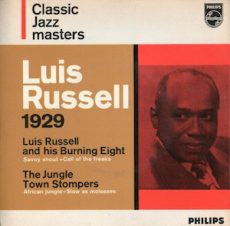
Late in the 1920s, he played with Luis Russell, then joined the Mills Blue Rhythm Band in 1931. The following year he joined Cab Calloway’s orchestra, working as an arranger and composer in addition to his duties on trombone. One of Calloway’s trumpeters, Edwin Swayze, overheard Harry use the term “jitterbug”, and wrote a tune called The Jitterbug. Calloway’s 1934 recording of the song brought the term into widespread currency.
Returning to play with Russell in 1935 when the band was backing Louis Armstrong, he eventually quit playing for part of the Thirties decade. He would later perform with Manzie Johnson, Hot Lips Page, Edgar Hayes, and Bud Freeman.
Trombonist, pianist, saxophonist, arranger and composer Harry White, who was affectionately known as Father White, transitioned on August 14, 1962 in New York City.

More Posts: arranger,bandleader,composer,history,instrumental,jazz,music,piano,saxophone,trombone
MELTON MUSTAFA: JUNETEENTH JUKE JOINT
More Posts: adventure,album,club,festival,genius,jazz,museum,music,preserving,restaurant,saxophone,travel
Daily Dose Of Jazz…
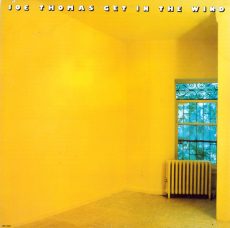
Joseph Samuel Thomas was born on May 31, 1933 in Newark, New Jersey. As a child, he learned to play alto and soprano saxophone, trombone, flute and piano, and also taught himself how to write music. Encouraged by his older brother, he began performing in clubs from the age of fifteen and was ultimately noticed by James Moody.
After enlisting in the United States Army he received a Purple Heart during combat in the Korean War. Returning to the States, Joe performed with Specks Williams and joined Rhoda Scott’s Trio in the early 1960s.
Thomas recorded with organist Jimmy McGriff and released a dozen albums under his own name in the late 1970s and early 1980s. As a sideman he also recorded five albums with Scott, and one each with Ambersunshower, Beck, Buddy Terry and Joe Tex.
Flutist, tenor saxophonist and bandleader Joe Thomas passed away in Orange, New Jersey at the age of 84 on July 26, 2017.

More Posts: flute,history,instrumental,jazz,music,piano,saxophone,trombone
Requisites
Sonny Stitt Blows The Blues | By Eddie Carter
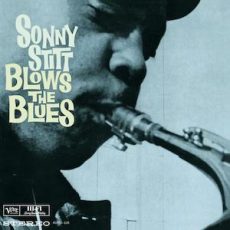
It happened like this; after listening to Bud Powell ’57, I wanted something else to hear while reading. So, I chose another of my mom’s favorite albums that she loved playing while cooking dinner. Sonny Stitt Blows The Blues (Verve Records MG V-8374/MG V6-8374) is an excellent 1960 date culled from two 1959 December sessions. Sonny Stitt was equally fluent on the tenor and baritone sax but is exclusively heard here on the alto sax. He assembled an exceptional rhythm section to join him, Lou Levy on piano, Leroy Vinnegar on bass, and Mel Lewis on drums. My copy is the 1995 Classic Records US Stereo audiophile reissue (Verve Records MG VS-6149).
The opener, Blue Devil Blues, is the first of five tunes by Mr. Stitt. It starts with Mel’s brief introduction; next, Sonny emerges to establish the easygoing melody, then gives an exquisite opening statement. Lou follows with a few flowing lines, and Leroy punctuates the solos with a brief comment. Home Free Blues picks up the pace to a medium beat for Stitt’s alto to lead the quartet in the melody of this happy swinger. He continues laying down strong lines in the first solo that pack a lot of punch. Levy delivers a splendid statement next, then Vinnegar takes a soulful walk ahead of the reprise and ending.
Blue Prelude is a pretty song by Isham Jones that Lou sets in motion with a concise introduction segueing into Sonny’s lightly swinging opening chorus and the song’s only interpretation. The rhythm section lays a lush foundation behind him into the song’s exit. Frankie and Johnny is the story of a couple’s relationship that ends tragically because of the young man’s infidelity. The quartet brings out the best in this old chestnut, with Stitt stating the melody. He then gives an impressive lead solo. In the second statement, Levy gets to the song’s heart; then, Vinnegar has a delightfully light reading ahead of Stitt’s final thoughts.
Side Two starts with Birth of The Blues by Ray Henderson, Lew Brown, and Buddy DeSylva. The quartet opens the song with a mellow theme, then steps aside for Sonny to show off his impeccable chops in the opening statement. Lou is up next with a fine outing, then Leroy has a delightful reading before the climax. A Blues Offering is Sonny’s slow-tempo invitation for the group to relax and take it easy from the start of the melody. Stitt sets the scene thoughtfully and with care first, then Levy responds with tenderness and sincerity in the subsequent interpretation preceding the ensemble’s graceful finale.
Sonny Stitt’s Hymnal Blues is unlike any song I heard when I attended church as a youngster. The foursome starts with a vibrant opening chorus; then, Sonny takes flight and wails in the opening presentation. Lou matches the altoist in the following statement. Leroy wraps it up with a neat finale before the quartet’s closing chorus disappears into nothingness. Vinnegar’s bass introduces After Morning Blues, segueing into Stitt’s sultry theme. The saxophonist has the song’s only reading and turns in a sensuously warm interpretation closely shadowed by the rhythm section’s gorgeous groundwork into the culmination.
The initial producer and the recording engineer of Sonny Stitt Blows The Blues are unknown. However, the sound quality of this Classic Records reissue is fantastic. Bernie Grundman mastered the album, and the instruments emerge from your speakers as if the quartet is playing right before you. The record is pressed on 180 grams of audiophile vinyl and silent until the music starts. If you’re not already a fan of Sonny Stitt, this is an excellent choice to begin your journey into his extensive discography. Every time I hear it, I’m taken back to my childhood and a pleasant memory of my mom. Sonny Stitt Blows The Blues is an enjoyable album from first note to last with a superb supporting cast that highlights the leader’s capabilities as a composer. If you love jazz, I can’t recommend it enough for a spot in your library!
~ Birth of The Blues, Frankie and Johnny – Source: Wikipedia.org © 2023 by Edward Thomas Carter
More Posts: choice,classic,collectible,collector,history,instrumental,jazz,music,saxophone
Daily Dose Of Jazz…
Skeets Herfut was born Arthur Relsmond Herfut on May 28, 1911 in Cincinnati, Ohio and raised in Denver, Colorado. While attending the University of Colorado he played in different bands. By 1934 he was performing with Smith Ballew, and through the decade with Jimmy and Tommy Dorsey, and Ray Noble.
After moving to California, Herfut worked with Alvino Rey, then served in the Army from 1944 to 1945. After the war, he flourished as a studio musician in Hollywood, California and led his own band. Between 1946 and 1947 he performed with Benny Goodman and Earle Spencer.
Into the 1960s Skeets’ studio sessions were with Billy May, Louis Armstrong, Georgie Auld, Jack Teagarden, Stan Kenton and again with Goodman. By the end of the 1960s he joined the Ray Conniff orchestra for several tours of Japan and Germany as well as recording sessions during the 1970s.
Herfurt bacme a member of Lawrence Welk’s orchestra and weekly television show from 1979 to 1982, performing on lead alto saxophone. During his career he recorded with Glen Gray, Ray Anthony, Joe “Fingers” Carr, Frankie Carle, Larry Clinton, Bob Eberly, Helen O’Connell, The Four Freshmen, Bob Keene and Pete Rugolo.
Saxophonist and clarinetist Skeets Herfut, who appeared as a saxophonist in the 1956 film The Nightmare, playing clarinet on the soundtrack, and performed on the soundtrack to the 1974 film The Fortune, transitioned in New Orleans, Louisiana at the age of 80 on April 17, 1992.
More Posts: clarinet,history,instrumental,jazz,music,saxophone