

The Jazz Voyager
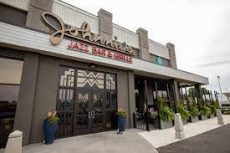
This week the Jazz Voyager is on his way to landing in Kansas City, Missouri and going to Liberty, Missouri to experience the ambience of Johnnie’s Jazz Bar and Grille. Named after the owner’s daughter, who wanted a son, she was always the life of the party, selling tickets at the theater they owned and loved playing bridge.
The venue offers pub eats, ample bourbons and live music in a cozy club setting named for a female piano player. Johnnie, so named, by the way, since her father had selected Johnny as a boy’s name, was playing at The Lyric Theater in Salisbury, Missouri when Elmer Bills bought the location in 1924. Smitten by her natural charm, love of life, and youthful exuberance, Elmer fell in love and the two married a few years later. Their son Elmer Bills, Jr. would join forces with Sterling Bagby to formally create B&B Theatres.
This week I’ll be listening to a talented saxophonist by the name Herschel McWilliams who grew up and is a lifelong resident of Kansas City, Kansas. The son of musicians, a drummer father and pianist mother, he was introduced to many musical influences at an early age. He started learning piano at 8 and alto saxophone when he was ten years old. He serves on the Board of Directors for Kansas City Jazz Ambassadors as well as running his own jazz website LiveJazzKC.com.
The club is located at 1903 Victory Drive, Liberty, MO 64068 and the number is 816-792-2675. For more info visit notoriousjazz.com/event/herschel-mcwilliams-trio.
More Posts: adventure,album,club,festival,genius,jazz,museum,music,preserving,restaurant,saxophone,travel
Daily Dose Of Jazz…
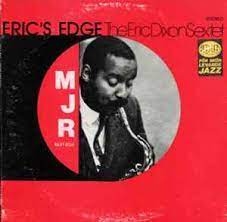
Eric “Big Daddy” Dixon was born on March 28, 1930 in New York City, New York. Although he played bugle as a child,he switched to the tenor saxophone at the age of 12. Following a stint as a musician in the US Army from 1951 to 1953 he played in groups that sometimes included Mal Waldron, with whom he would later record.
In 1954, he played with Cootie Williams and the following year with Johnny Hodges. In 1956, he performed and recorded with Bennie Green and also took up the flute.
The late Fifties had him spending four years in the house band led by Reuben Phillips at the Apollo Theatre in New York. At the end of the decade he toured Europe and recorded with the Cooper Brothers.
He also worked with Paul Gonsalves, Ahmed Abdul-Malik, Oliver Nelson, Quincy Jones, Jack McDuff, Joe Williams, Frank Foster, and Eddie “Lockjaw” Davis, but is probably best known for his tenure in Count Basie’s band, which lasted almost two decades. Dixon continued to play in the ghost band after Basie’s death.
Tenor saxophonist, flautist, composer, and arranger Eric Dixon, who has been credited on as many as 200 recordings, transitioned on October 19, 1989 in New York City.
More Posts: arranger,composer,flute,history,instrumental,jazz,music,saxophone

MARK RUSSO
Join us, as trumpeter, educator, and composer, Mark Russo, takes us on a musical journey throughout the “The Blue Note Era”, with his jazz quartet.
Line-up: Mark Russo: Trumpet, A.J. Kluth – Tenor Sax, Ian Kinnaman – Bass, Jonathan Hooper – Piano, Ricky Exton – Drums
A freelance jazz trumpet player and educator in the greater Cleveland area. He holds degrees in Music Performance In Jazz Studies From Bowling Green State University and a Music Education from Kent State University (Magna Cum Laude) and is currently the director of bands at Constellation Schools: Parma Community High School.
More Posts: adventure,album,club,festival,genius,jazz,museum,music,preserving,restaurant,saxophone,travel,trumpet

Daily Dose Of Jazz…
Lance Bryant was born on March 23, 1961 in Markham, Illinois. His early musical experience was in the Baptist church. He received his formal education at Berklee College of Music in Boston, Massachusetts where he studied saxophone composition and arranging. Moving to New York City in the mid Eighties he continued his study of saxophone and arranging privately with Frank Foster.
In the Nineties he began his relationship with the Lionel Hampton Orchestra and three years later became the orchestra’s musical director and principal arranger. He made his film debut in Spike Lee’s Malcolm X. He traveled extensively with Phyllis Hyman, Jon Hendricks, Pete “LaRocca” Sims, Wallace Roney, Abdullah Ibrahim, Bootsy Collins,James Williams and numerous others. He was an on-stage musician for the Broadway musical review Swing, has recorded with Carla Cook, George Gee, Yoron Israel.
Returning to his church roots he became Director of Instrumental Music at Fountain Baptist Church, Minister of Music for Andover Baptist Church and released Psalm in 2002, his first of a four cd series of originals and jazz arrangements of hymns and spirituals. As an educator he has taught Covenant Christian Academy, Phillips Academy, his alma mater Berklee, and Jazz At Lincoln Center’s Educational Department.
Saxophonist, arranger and vocalist Lance Bryant when not touring with Abdullah Ibrahim and Ekaya, he continues to perform around New York and New Jersey with Andy Farber Orchestra and the New Lionel Hampton Big Band.
More Posts: arranger,history,instrumental,jazz,music,saxophone,vocal
Daily Dose Of Jazz…
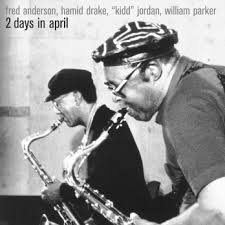
Fred Anderson was born in Monroe, Louisiana on March 22, 1929. When he was ten, his parents separated, and he moved to Evanston, Illinois, where he initially lived with his mother and aunt in a one-room apartment. When Anderson was a teenager, a friend introduced him to the music of Charlie Parker, and he soon decided he wanted to play saxophone, purchasing his first instrument for $45. He listened to Lester Young, Johnny Hodges, Dexter Gordon, Gene Ammons, and Illinois Jacquet, all of whom would influence his playing. He also heard Young and Parker in concert on multiple occasions.
Unlike many musicians at the time, Anderson did not play with dance bands or school ensembles, and instead focused on practicing, taking private lessons, and studying music theory at the Roy Knapp Conservatory in Chicago, Illinois all the while supporting his family by working as a waiter. He also began making an effort to develop a personal sound on his instrument, with the goal of combining Ammons’ big sound with Parker’s speed.
At around this time, he began to develop a series of exercises which he incorporated into his daily practice routine, and which eventually became a book titled Exercises for the Creative Musician.
In the early 1960s, Anderson began listening to and studying the music of Ornette Coleman, and immediately related Coleman’s playing to that of Charlie Parker. Influenced by Coleman, he formed a piano-less band with trumpeter Bill Brimfield, bassist Bill Fletcher, and drummer Vernon Thomas, playing a mixture of bebop standards and Anderson originals. During the decade he would go on to play weekly jam sessions, joined the AACM (Association for the Advancement of Creative Musicians) and remained in the States when many of his AACM colleagues left for Europe seeking better opportuities.
In the Seventies he formed the Fred Anderson Sextet, with trombonist George E. Lewis, reedist Douglas Ewart, bassist Felix Blackmon, drummer Hamid Drake, and vocalist Iqua Colson. By 1977 he and Brimfield visited Europe, where they recorded Accents with the Austrian trio Neighbours, then returned and opened a venue in Chicago that he named the Birdhouse, after Charlie Parker. Unfortunately, Anderson encountered resistance and harassment from officials and people in the neighborhood, who were suspicious of his motives, and he ended up closing the club a year later.
The following decade saw Fred taking over ownership of a bar in Chicago called the Velvet Lounge, and transformed it into a center for the city’s jazz and experimental music scenes, hosting Sunday jam sessions and numerous concerts. The club expanded and relocated in the summer of 2006.
Though he remained an active performer, Anderson rarely recorded for about a decade beginning in the early Eighties. In 1990, however, he received the first Jazz Masters Fellowship from Arts Midwest, and by the mid-1990s, he resumed a more active recording schedule, both as a solo artist, and in collaboration with younger performers. He would go on to perform as a soloist with 30 piece orchestras, mentor young musicians, and his Velvet Lounge has international fame.
Tenor saxophonist Fred Anderson, rooted in the swing, hard bop and free jazz idioms, who continued to record and tour throughout the 2000s and was scheduled to perform the day he died, transitioned on June 24, 2010.
More Posts: bandleader,history,instrumental,jazz,music,saxophone