

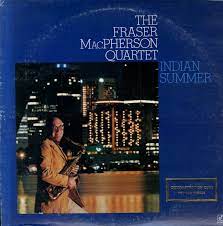
Daily Dose Of Jazz…
John Fraser MacPherson was born on April 10, 1928 in Saint Boniface, Manitoba, Canada. He moved with his parents to Victoria, British Columbia, Canada as a child where he learned piano, clarinet, and alto and tenor saxophones. After relocating to Vancouver, British Columbia to continue a commerce degree, he played in bands led by Ray Norris, Dave Robbins, Paul Ruhland, and Doug Parke.
He led his own groups and eventually took over the leadership of the Cave supper club band.In 1958 Fraser took a year’s leave to study in New York City, adding flute to his list of instruments.
Throughout the 1960s and 1970s MacPherson was a first-call studio player in Vancouver, as well as leading the house band at the Cave supper club. He also taught briefly in the Jazz and Commercial Music department at Vancouver Community College, where his students included future Powder Blues Band baritone saxophonist Gordie Bertram and New Orleans based saxophonist and jazz educator John Doheny.
Fraser’s debut album as leader of a small jazz group, Live at the Planetarium, was recorded for broadcast on the French-language CBC radio network. He leased the master tapes and released them on his own independent label, West End Records. The album was re-released by Concord Records, and he recorded several other releases for them. He also recorded for Sackville and Justin Time record labels.
In the summer of 1993, Pacific Music Industry Association (PMIA) created the Fraser MacPherson Scholarship Fund which annually awards grants of $2000 to four to eight aspiring music students.
Fraser MacPherson, who won a Juno Award for Best Jazz Album and was awarded the Order of Canada, transitioned in Vancouver at the age of 65 on September 27, 1993.
More Posts: bandleader,clarinet,history,instrumental,jazz,music,piano,saxophone
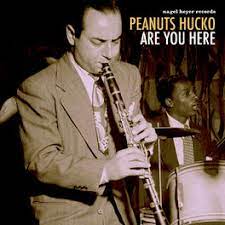
Daily Dose Of jazz…
Peanuts Hucko was born Michael Andrew Hucko in Syracuse, New York on April 7, 1918. He moved to New York City in 1939 where he played tenor saxophone with Will Bradley, Tommy Reynolds, and Joe Marsala until 1940.
After a brief time with Charlie Spivak, he joined the Glenn Miller Army Air Force Band while serving in Europe during World War II. During this time, Peanuts began to concentrate on the clarinet. He was featured in Miller’s hard-driving versions of Stealin’ Apples and Mission to Moscow. Post-war, he played in the bands of Benny Goodman, Ray McKinley, Eddie Condon and Jack Teagarden. From 1950 to 1955, he was busy in New York as a studio musician for CBS and ABC.
He continued working with Goodman and Teagarden, When he visited Tokyo, Japan in 1951 as the lead alto saxophonist in Benny Goodman’s Orchestra, he listened to clarinetist Shoji Suzuki and his Rhythm Aces. With Suzuki and his band, they recorded the song Suzukake No Michi, which broke sales records in Japan. He then joined the Louis Armstrong All-Stars for two years from 1958 to 1960.
Hucko led his own group at Eddie Condon’s Club from 1964 to 1966. He became known for his work with Frank Sinatra as the clarinet soloist on Cole Porter’s What Is This Thing Called Love?, which was featured on Sinatra’s album In the Wee Small Hours. In 1964, he opened his own nightclub Peanuts Hucko’s Navarre, in Denver, Colorado which featured his singer wife Louise Tobin and Ralph Sutton. From 1966, he was featured regularly at Dick Gibson’s Colorado jazz parties where he appeared with the Ten Greats of Jazz, later called the World’s Greatest Jazz Band.
The Seventies saw Peanuts leading the Glenn Miller Orchestra and toured across the U.S. and abroad. He also toured with the Million Airs Orchestra, and appeared with the Lawrence Welk Orchestra. The next decade he toured with his Pied Piper Quintet before going into semi-retirement with his wife in Denton, Texas. He recorded his last session Swing That Music in 1992 featuring Tobin, trumpeter Randy Sandke, and pianist Johnny Varro.
As a composer he wrote or co-wrote See You Again, A Bientot, Peanut Butter, Blintzes Bagel Boogie, Falling Tears, First Friday, Tremont Place, and Sweet Home Suite. Big band clarinetist Peanuts Hucko, who sometimes played saxophone, transitioned in Fort Worth, Texas on June 19, 2003 at the age of 85.
More Posts: bandleader,clarinet,club owner,history,instrumental,jazz,music,saxophone

Three Wishes
Pannonica asked Benny Winestone what his three wishes would be and he said:
- “There’s only one wish in the world I would want: a visa to enter the United States legally.”
- “There’s only two other wishes, and that’s money and youth. What else could I wish for? That’s it!.”
*Excerpt from Three Wishes: An Intimate Look at Jazz Greats ~ Compiled and Photographed by Pannonica de Koenigswarter

More Posts: baroness,clarinet,history,instrumental,jazz,music,pannonica,saxophone,three,wishes
Requisites
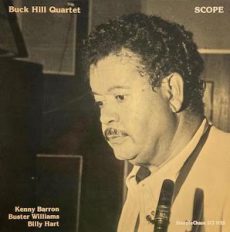
Scope ~ Buck Hill Quartet | By Eddie Carter
This week’s choice from the library is from Buck Hill, the wailing mailman from Washington, D.C. He delivered mail during the day and performed at night in the city’s jazz clubs. The Buck Hill Quartet enters the spotlight of this discussion with Scope (SteepleChase Records SCS-1123). It was his second album as a leader, and the follow-up to This Is Buck Hill, his debut from a year earlier. Buck’s capabilities as a composer are also on display as the tenor saxophonist wrote all the tunes. His bandmates again are Kenny Barron on piano, Buster Williams on bass, and Billy Hart on drums. My copy is the original 1979 Danish Stereo pressing.
Side One starts at a speedy clip with the title tune, Scope. Buck and company begin the melody quickly; then, the saxophonist flies out of the gate in a rapid opening solo. Kenny follows with an electrically charged reading while Buster and Billy propel them toward a brisk climax. Ballad Repeter slows the tempo down for the foursome’s tender theme, which is repeated with melodic beauty. Barron takes the lead with a delicately pretty reading that’s beautifully structured. Hill continues this serene sequence with warmth and sensitivity in the following interpretation, matched by the charming compliment of Williams and Hart into the saxophonist’s passionately elegant reprise and ending.
Blue Bossa, a Latin-flavored original, ends the first side on an upbeat note and grabs the listener from the start of the quartet’s infectious melody. Buck kicks off the solos with a festive presentation, then Kenny provides a happy showcase on the subsequent reading ahead of the closing chorus. Side Two gets underway with Beast Beautiful. It’s taken at a lively pace, and the saxophonist steps up first to give an energetic performance. Barron meets the challenge in the following interpretation with a youthful spirit and feeling. Williams significantly contributes to the final reading preceding the song’s abrupt climax.
The Sad Ones is a gorgeous ballad with a haunting poignancy in Buck’s delivery of the melody. The opening solo by Buck is a stunning showcase of warmth and tenderness that beautifully illustrates his creativity as a ballad composer. Kenny compliments the saxophonist with an emotionally moving presentation sustained by Buster and Billy’s gentle accompaniment into Buck’s delicate finale. Funk Dumplin’ is a blues that comes to life with the ensemble’s brisk theme. Hill starts the opening solo with a spicy flavor, then Barron spreads his wings in the following reading. Williams takes an exhilarating walk next, and Hart delivers a fascinating finale leading to the ensemble’s exit.
Nils Winther produced Scope, Elvin Campbell recorded the album, and Freddy Hansson was the mixing engineer. The sound quality is so good the listener will think they’re in the studio as the musicians are recording. The soundstage is stunning, and the record is silent until the music starts. If you’re a fan of Buck Hill or enjoy the tenor sax, I happily recommend and invite you to check out Scope by The Buck Hill Quartet on your next vinyl excursion. It’s an excellent album that will appeal to any novice or seasoned jazz fan and whet their appetite to hear more by the wailing mailman from Washington, D.C.
~ This Is Buck Hill (Steeplechase Records SCS 1095) – Source: Discogs.com © 2023 by Edward Thomas Carter

More Posts: choice,classic,collectible,collector,history,instrumental,jazz,music,saxophone
Daily Dose Of Jazz…
Jimmy Vass was born March 31, 1937, in Philadelphia, Pennsylvania and acquired his first saxophone at age 18. After honing his chops on the local club scene, he relocated to New York City in 1963, working a series of day jobs while moonlighting as a musician.
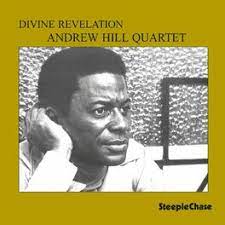
Vass first appeared on record in 1968 via Sunny Murray’s Hard Cores. With 1971’s Soul Story, he began an extended collaboration with the great soul-jazz organist Charles Earland. His most notable partnership paired him with avant-jazz pianist Andrew Hill, beginning with 1975’s Divine Revelation.
He played on Roberta Flack’s Feel Like Makin’ Love. He also lent his talents to recording sessions with Muhal Richard Abrams, Rashied Ali, Charles Mingus, Lionel Hampton, Ronnie Boykins and Woody Shaw. Never leading a recording date of his own, in the autumn of his career Jimmy worked as a music instructor and led his own New York-based group playing standards and originals.
Alto and soprano saxophonist and flutist Jimmy Vass, who emerged as one of the premier jazz sidemen of the 1970s, transitioned on September 21, 2006, at the age of 69.
