

Daily Dose Of Jazz…
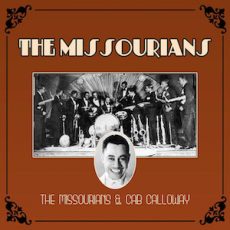
William Thornton Blue was born on January 31, 1902 in St. Louis, Missouri and grew up playing in local bands in his hometown, where his father was a part-time music instructor.
He played with Wilson Robinson’s Bostonians, a territory band, where he was introduced to the rigors of the road. In 1924 he worked with Charlie Creath, then went to New Orleans, Louisiana and joined Dewey Jackson in the middle of the 1920s. This association eventually took Blue back to St. Louis as part of the touring schedule but Blue didn’t stay long. Heading to New York City later that decade he had an extended stint working with Andrew Preer’s Cotton Club Orchestra. This led to a European tour as a member of Noble Sissle’s ensemble.
Remaining for a brief time in Paris, France he collaborated with bassist John Ricks. When Bill returned to New York City, he joined The Missourians, led by Cab Calloway, then worked with pianist Luis Russell.
Due to failing health he played very little in the late Thirties and afterwards. Clarinetist and alto saxophonist William Thornton Blue, sometimes credited as Bill Blue, transitioned in 1968 after spending the last several years of his life in a New York sanatorium.

More Posts: clarinet,history,instrumental,jazz,music,saxophone
Requisites
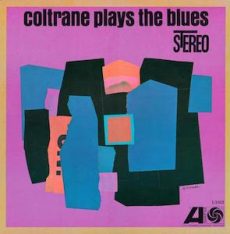
Coltrane Plays The Blues ~ John Coltrane | By Eddie Carter
The weather outside is cold, dreary, and rainy, with a thick and impenetrable fog enveloping the area, making it a perfect day to enjoy the blues. Submitted for your consideration from the library is Coltrane Plays The Blues (Atlantic 1382/SD 1382) by John Coltrane. It’s a quartet date that hit the stores in 1962 but was initially recorded at the 1960 session that produced My Favorite Things and perfectly fit the bill for this morning’s discussion. The ensemble is John Coltrane on soprano sax (tracks: A2, B2) and tenor sax (A1, A3, B1, B3), McCoy Tyner on piano (A1, B1 to B3), Steve Davis on bass, and Elvin Jones on drums. My copy is the 1972 Japanese Stereo reissue (Atlantic P-7504A) by Warner-Pioneer Corporation.
Side One starts with Blues To Elvin by Elvin Jones, a tasty dish of soul food that McCoy and the rhythm section begin making the listener feel at home in the introduction. John serves the song’s appetizing melody and prepares a luscious main meal in the opening statement. McCoy enters next with a delicious interpretation, then John’s final course is a succulent dessert made all the more delectable by the trio’s supplement. Blues To Bechet, written for Sidney Bechet, is the first of five by John Coltrane, placing the leader on soprano sax, backed by just Davis and Jones. The threesome opens with a relaxing melody. Coltrane begins the song’s only solo with an easy swing that blossoms into one of his most innovative improvisations preceding a soft climax.
The pace quickens for the first side finale, Blues To You. John’s back on tenor and backed again by Steve and Elvin for this fast-paced tune. Coltrane grabs you from the get-go and doesn’t let go until his brief exchange with Elvin leads the listener into the climax. Side Two begins with the quartet back in complete form for his third original, Mr. Day. Davis and Jones set the groove in motion, segueing into Coltrane leading the charge on the melody. The leader continues to wail on an energetic opening statement. Tyner takes the listener on an exuberant joyride in the second interpretation. Coltrane adds an incredibly satisfying exclamation ahead of the theme’s reprise, and Davis closes the song as he began.
Mr. Syms slows the pace down for the quartet to take it easy during the opening and ending theme with John back on soprano sax. In between, McCoy has the solo spotlight and finds a comfortable groove that builds to a perfect climax. The foursome closes the album with Mr. Knight, an easy-flowing tune that displays an interesting mixture of African and West Indian music in its structure. After the group establishes the melody, Coltrane draws the listener to a few fascinating elements in the first reading. Tyner takes the reins next and makes a compelling point that paces well against the rhythm section preceding Coltrane’s reprise of the theme and the rhythm section’s slow disappearance into nothingness.
Nesuhi Ertegün supervised Coltrane Plays The Blues, and Tom Dowd was the recording engineer. The sound quality is splendid, with a clean, crisp, well-balanced soundstage. If you’re a fan of John Coltrane and in the mood, for an album to enjoy at the end of a long day or week, I invite you to check out Coltrane Plays The Blues on your next vinyl shopping trip. It’s an enticing invitation to explore and enjoy an overlooked but fascinating album that shows his lyrical side and is well worth the price of admission for a spot in your library!
~ My Favorite Things (Atlantic 1361/SD 1361) – Source: Discogs.com © 2023 by Edward Thomas Carter

More Posts: choice,classic,collectible,collector,history,instrumental,jazz,music,saxophone

RAVI COLTRANE QUARTET
Ravi Coltrane is a critically acclaimed Grammy™ nominated saxophonist, bandleader, and composer. In the course of a twenty plus year career, Mr. Coltrane has worked as a sideman to many, recorded noteworthy albums for himself and others and founded a prominent independent record label, RKM.
Born in Long Island, the second son of John Coltrane and Alice Coltrane, Ravi was named after Indian sitar legend Ravi Shankar. He was raised in Los Angeles where his family moved after his father’s death in 1967. His mother, Alice Coltrane, was a significant influence on Ravi and it was he who encouraged Alice to return to performance and the recording studio after a long absence. Subsequently, Ravi produced and played on Alice Coltrane’s powerful, ‘Translinear Light’, which was released in 2004.
Ravi has released six albums as a leader. His latest, ‘Spirit Fiction’, was released in June of 2012 for the Blue Note label. Additional credits include performances as well as recordings with Elvin Jones, Terence Blanchard, Kenny Baron, Steve Coleman, McCoy Tyner, Jack DeJohnette, Matt Garrison, Jeff ‘Tain’ Watts, Geri Allen, Joanne Brackeem, The Blue Note 7, among others. He is a co-leader of the Saxophone Summit with Joe Lovano and Dave Liebman.
Ravi lives in Brooklyn, NY and maintains a fast paced touring, recording, composing and performance schedule. He leads the effort to restore the John Coltrane Home in Dix Hills, Long Island thecoltranehome.org and presides over important reissues of his parent’s recordings.
Friday 3/3 ~ 7:00 pm & 9:30 pm | $35~$45 + fee
Saturday 3/4 ~ 7:00 pm & 9:30 pm | $35~$45 + fee
Sunday 3/5 ~ 5:00 pm & 7:30 pm | $35~$45 + fee
Streaming Pass: 5:00pm & 7:00pm only | $10.00 + fee
More Posts: adventure,album,club,festival,genius,jazz,museum,music,preserving,restaurant,saxophone,travel
Daily Dose Of Jazz…
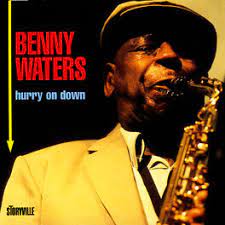
Benjamin Waters was born on January 23, 1902 in Brighton, Baltimore, Maryland. He began on organ, then switched to clarinet and later added saxophone. The first band he joined in 1918 was Charly Miller’s band. In 1922 he attended the New England Conservatory of Music where he gave lessons to Harry Carney.
From 1926 until 1931, Waters was a member of Charlie Johnson’s band. He would later work with King Oliver, Fletcher Henderson, Claude Hopkins, and others. During these years he made several recordings with King Oliver and Clarence Williams.
In the years 1941 and 1942 he played with the Jimmie Lunceford Orchestra, and later in the 1940s with Roy Milton. He went on to form his own band, playing at the Red Mill in New York City. After this stint in the city he moved to California for four years.
From 1952 to 1992 Benny lived in Paris, France. In 1996, he received the Legion of Honour from the French Ministry of Culture. He continued to perform regularly up to his 95th birthday.
Saxophonist and clarinetist Benny Waters, who became blind in 1992 due to cataracts, transitioned on August 11, 1998 in Columbia, Maryland.
More Posts: bandleader,clarinet,history,instrumental,jazz,music,saxophone

Requisites
The Young Bloods ~ Phil Woods and Donald Byrd | By Eddie Carter
This morning’s choice from the library brings together two of my favorite musicians for a quintet jam session, Phil Woods and Donald Byrd. The Young Bloods (Prestige LP 7080) is a 1957 release reuniting altoist Phil Woods, trumpeter Donald Byrd and bassist Teddy Kotick who appeared together on Jazz For The Carriage Trade a year earlier. Al Haig on piano and Charlie Persip on drums round out the ensemble. My copy is the 2022 Analogue Productions US Mono Audiophile reissue (Prestige PRLP 7080).
The opener, Dewey Square by Charlie Parker, takes off right out of the gate with Haig’s introduction segueing into the ensemble’s melody. The song takes its title from the Harlem hotel where Parker and other musicians resided during the forties. Donald leads off with a cooking opening solo; then, Al continues swinging in the second reading. Phil blows up a storm with a lengthy statement, succeeded by Charlie’s enthusiastic exchange with the front line ahead of the climax. Dupeltook, the first of four from Phil Woods, begins with a danceable theme by the ensemble. Woods is up first and manages the opening statement efficiently. Byrd grabs us by the ears with an inspired improvisation, then Haig hits a scintillating groove. Persip, Woods, and Byrd share a final conversation leading to the ending.
Once More, a relaxing blues by Woods opens with the front line moving in unison on the melody. Phil leads off with a marvelous opening reading. Donald delivers a pleasant presentation of sheer enjoyment; next, Al says some exciting things in his statement. Teddy walks a few bass lines toward the quintet’s theme reprise and climax. House of Chan is Woods’ dedication to his wife, Chan Parker, who initially was the common-law wife of Charlie Parker. The horns establish the medium theme together; Woods gets a good thing going in the opening statement. Byrd takes a few fine choruses in the second solo. Haig responds with a gorgeous bounce in the third reading, and Persip wraps it up in a brief exchange with Woods and Byrd preceding the group’s exit.
Phil’s final tune is In Walked George, named for pianist George Wallington. The front line sets the stage for the ensemble’s collective melody. Byrd takes the opening solo with a delightful interpretation, and woods follows with a statement as light as a fall breeze. Al puts the joyously cheerful exclamation point on the song ahead of the closing chorus and climax. Lover Man, by Jimmy Davis, Roger Ramirez, and James Sherman, receives a warm tribute by the quintet. Al opens the standard with a tender introduction segueing into a lovely melody and lead solo by Phil that takes your breath away. Donald expresses care and thoughtfulness in the second reading, followed by Al, who delivers a delicately graceful finale before the ensemble takes the song out softly.
Bob Weinstock supervised the initial recording of The Young Bloods, and Rudy Van Gelder was behind the dials. Kevin Gray mastered this audiophile reissue, and the sound quality is fantastic. The musicians emerge from your speakers with superb clarity. The record is 180 grams of audiophile vinyl that’s silent until the music starts, and the album jacket has a high gloss worthy of displaying on the wall. The Young Bloods is an excellent album that one can enjoy any time of the day or evening. If you’re looking for a great Hard-Bop album and are a fan of Phil Woods and Donald Byrd, The Young Bloods is a title you should seriously consider for a spot in your library!
~ Lover Man – Source: JazzStandards.com © 2023 by Edward Thomas Carter
More Posts: choice,classic,collectible,collector,history,instrumental,jazz,music,saxophone,trumpet