

Requisites
Heavy Soul ~ Ike Quebec | By Eddie Carter
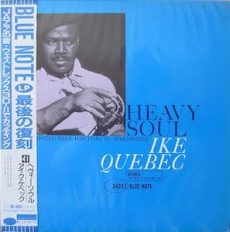
A few nights ago, I was thinking about my mom and reflecting on some of the records she loved to play while cooking dinner when my sister and I were younger. I listened to one of her favorite albums by tenor saxophonist Ike Quebec, which led me to this morning’s choice from the library. Heavy Soul (Blue Note BLP 4093/BST 84093) is a quartet date and the third of four records the label released in 1962. His bandmates on this record are Freddie Roach on organ, Milt Hinton on bass, and Al Harewood on drums. Their first appearance together was on an earlier release that year; It Might As Well Be Spring. My copy is the 1990 Toshiba-EMI Limited Japanese Stereo reissue sharing the original catalog number.
Side One kicks off with the first of three originals by Ike Quebec. Acquitted is a catchy tune that begins with a lively groove for the quartet’s theme. Ike kicks off the solos with a driving rhythm, and Freddie treats the listener to a zesty performance. The leader returns to share a few more thoughts preceding the ending theme, fading into nothingness. Just One More Chance by Sam Coslow and Arthur Johnston first appeared in the 1931 featurette, One More Chance. Quebec and company make an indelible impression on the melody, then the saxophonist leads off with a stylish performance. Freddie adds a deep sense of nostalgia in the second statement, leading to the tenor’s elegant conclusion.
Que’s Dilemma, also by Quebec, moves the beat upward for the saxophonist’s agile melody. He begins the song’s only solo with Milt and Al in the background, Freddie joins the festivities next, and Ike completes his invigorating statement into the closing chorus and disappearance. Brother, Can You Spare A Dime? by Jay Gorney and E.Y. Harburg poignantly gives a glimpse into the times during the Great Depression. The quartet presents the melody with a sad simplicity that serves as a springboard into Ike’s deeply affecting opening solo. The following presentation by Freddie is equally gentle and stunningly executed with Milt and Al’s assistance. Ike sums up the song’s story with a gorgeous reprise and finish.
Side Two gets underway with George, and Ira Gershwin’s, The Man I Love. The ensemble states the theme slowly; next, the tempo quickens for Ike to wail on the song’s only interpretation. The group slows the beat down for the closing chorus and finale. Ike’s third tune, Heavy Soul, is a down-home blues that commences with an introduction, first by Milt. Then, Ike, Al, and Freddie enter with subtly conceived statements to complete the theme. Ike draws an exceptionally tender tone from his tenor sax in the first presentation. Freddie maintains a therapeutic mood with one of his most relaxed performances. Milt has the last word and effectively walks toward the saxophonist’s ending theme, which disappears into oblivion.
I Want a Little Girl by Murray Mencher, and Billy Moll is a beautiful ballad that hasn’t been over-recorded. Ike and the rhythm section establish an affectionately exquisite theme, and he continues telling a sensitive story in the opening interpretation. Freddie emerges next with a delicately expressed reading, then Ike returns to add a heartfelt exclamation preceding the quartet’s return for the gentle climax. The album’s closing track, Nature Boy by Eden Ahbez, is a two-instrument conversation between tenor and bass. Ike creates an enchanting illustration on the opening and closing melody, and Milt provides supportive warmth and sensitivity into a charming finale. Alfred Lion produced the initial session, and Rudy Van Gelder was the recording engineer.
The reissue’s sound quality is fantastic, with a spacious soundstage that’s clear and detailed. Toshiba-EMI has also done an excellent job on the remastering, and the vinyl is quiet until the music begins. Ike Quebec was an accomplished dancer and pianist before taking up the tenor sax in his twenties. In 1940, his recording career began with the Barons of Rhythm, and he’s performed with Cab Calloway, Benny Carter, Roy Eldridge, Ella Fitzgerald, Coleman Hawkins, Hot Lips Page, and Trummy Young. Most of Ike’s discography as a leader and sideman is on Blue Note, and he also served as an arranger and talent scout for the label. He occasionally recorded during the fifties due to heroin addiction but began a comeback in 1959. Four years later, he lost his battle with lung cancer on January 16, 1963, at age forty-three.
If you’re in the mood for mellow tenor sax, I invite you to add Heavy Soul to your list the next time you are out vinyl shopping. It’s an excellent place to start discovering the music of Ike Quebec and a delightful album perfect for late-night listening or long drives with the windows down. The fast numbers crackle with excitement, and the slow tunes reveal the depths of Ike Quebec’s creative ingenuity, resulting in an easy choice for any jazz lover’s library that’s hard to beat!
~ It Might As Well Be Spring (Blue Note BLP 4105/BST 84105) – Source: Discogs.com ~ Nature Boy, The Man I Love – Source: JazzStandards.com ~ Ike Quebec, Brother, Can You Spare a Dime? – Source: Wikipedia.org ~ © 2022 by Edward Thomas Carter

More Posts: choice,classic,collectible,collector,history,instrumental,jazz,music,saxophone

The Jazz Voyager
New year, new destinations, new adventures await me as the Jazz Voyager is hitting the road once again and heading to Tarrytown, New York to catch a set or two at Jazz Forum Arts. Having spent the week in the Big Apple it’s just a little over an hour ride up the Swa Mill Parkway or 87. In house this weekend will be none other than NEA Jazz Master and the Big Chief of Congo Square Donald Harrison with his quartet. There is nothing better than a warm atmosphere on a chilly night with great music and hot chocolate to heat up a memory.
Celebrating five years, the club was opened by the late Roy Hargrove who excited the capacity crowds for their first weekend at the club. Jazz Forum Arts has brought the music to the area and the patrons have supported it and the club has become a mainstay for this part of the state.
Looking to the future, please be responsible for your personal health, which will spill over on to others, and like the music promotes kindness in this world. Practice random acts of love whenever the opportunity presents itself. Have an abundant year!
The club’s number is 914-631-1000. If you want to get more information visit notoriousjazz.com/event/donald-harrison-quartet.

More Posts: adventure,album,club,festival,genius,jazz,museum,music,preserving,restaurant,saxophone,travel

LSAT: LAUREN SEVIAN & ALEXA TARANTINO
Award-winning saxophonist-composers Lauren Sevian and Alexa Tarantino return to Dizzy’s Club to co-lead their acclaimed quintet LSAT, engaging a swinging rhythm section primed for interaction and improvisation. Their sets transmit a shared vocabulary across original material as well as fresh interpretations of enduring favorites. In addition to appearing throughout the city and across the country, the ensemble placed first at the 2018 Made in New York Jazz Competition and headlined the 2020 Jazz Education Network Conference.
Showtimes ~ 7:30pm | 9:30pm
Lineup
Lauren Sevian, baritone saxophone
Alexa Tarantino, alto saxophone
Steven Feifke, piano
Philip Norris, bass
E.J. Strickland, drums
More Posts: adventure,album,club,festival,genius,jazz,museum,music,preserving,restaurant,saxophone,travel
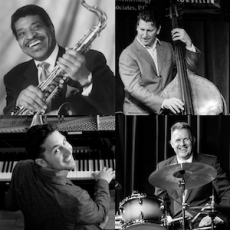
GEORGE COLEMAN w/ EMMET COHEN, JOHN WEBBER & JOE FARNSWORTH
No tenor saxophonist better epitomizes the robust muscularity of that heavyweight instrument of jazz expression than George Coleman. With brilliant technique and a deeply soulful tone firmly rooted in his hometown of Memphis, George has performed with many of jazz’ most legendary figures and influenced countless saxophonists during his half century in music.
Growing up in Memphis’ rich musical environment of the late ‘40s and early ‘50s, alongside such notables as Booker Little, Harold Mabern, Frank Strozier, Jamil Nasser, Hank Crawford, Phineas Newborn Jr., and blues immortal B.B. King, Coleman began to teach himself to play the alto saxophone. For two years George was a member of that groundbreaking quintet with Herbie Hancock, Ron Carter and Tony Williams, recording four classic albums – Seven Steps to Heaven, My Funny Valentine, Four and Miles Davis in Europe – before departing to pursue other projects, leaving that highly visible position to Wayne Shorter.
For the past 30 years George has also been a major force in jazz education. In addition to his private teaching of advanced jazz techniques, he has also been a consultant and teacher at the New School University, Long Island University, New York University and Mannes School of Music, and has conducted workshops, seminars and master classes at universities all over the U.S. At 76 years old, George is still in full motion. His latest CD, Four Generations of Miles with Ron Carter, Jimmy Cobb and Mike Stern was released on Chesky Records in October 2002.
Multifaceted American jazz pianist and composer Emmet Cohen is one of his generation’s pivotal figures in music and the related arts. Downbeat praised the “nimble touch, measured stride and warm harmonic vocabulary” he employs to communicate with other musicians and audiences at what he terms “the deepest level of humanity and individuality.” Leader of the “Emmet Cohen Trio” and creator of the “Masters Legacy Series,” Cohen is an internationally acclaimed jazz artist and dedicated music educator.
John Webber is an American jazz double-bassist. In 1987, John moved to NYC and began performing with Bill Hardman and Junior Cook; he played on Juniors last record date ‘You Leave Me Breathless.’ His career has included long-running collaborations with Johnny Griffin, George Coleman, Eric Alexander and Jimmy Cobbs Mob as well as freelance work with Etta Jones, Horace Silver, Ryan Kisor, Lou Donaldson, Milt Jackson, Benny Greene, Barry Harris. Brad Mehidau and many, many others.
One of the most highly regarded jazz drummers on the scene today, Joe Farnsworth is known for his blazing speed, precision, musical, and melodic playing. Joseph’s career includes recording over 100 CD’s as leader and side-man, jazz festivals and world tours with Pharaoh Sanders, Horace Silver, Harold Mabern, McCoy Tyner & more. He is currently the drummer for McCoy Tyner and a member of the Pharaoh Sanders Quartet, Harold Mabern Trio, and is a founding member of the renowned One for All Quintet.
Showtimes: Friday & Saturday ~ 7:00pm | 9:30pm
Sunday ~ 5:00pm & 7:30pm
Stream @ 5:00pm & 7:00pm Only | $10.00
More Posts: adventure,album,club,festival,genius,jazz,museum,music,preserving,restaurant,saxophone,travel
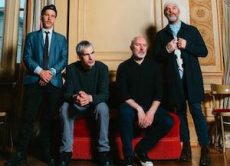
THE BAD PLUS
Reid Anderson – bass
Dave King – drums
Ben Monder – guitar
Chris Speed – tenor saxophone
The Bad Plus are the ultimate originals. A democratic unit with a clear vision and a refusal to conform to convention. For the past two decades they have played with spirit and adventure, made their own rules and done so with a bold sense of creativity and intent. Avoiding easy categorization, The Bad Plus has won critical acclaim and a legion of fans worldwide with their unique sound and flair for live performance.
Now in their 21st year, The Bad Plus continues to push boundaries as founding members Reid Anderson (bass) and Dave King (drums) embark on a new piano-less incarnation of the band with Ben Monder (guitar) and Chris Speed (tenor saxophone) – instigating a new wave of excitement and anticipation within the band that is re-energizing their sound and inspiration. The Bad Plus have constantly searched to bridge genres and techniques while exploring the infinite possibilities of exceptional musicians working in perfect sync.
The Bad Plus released their 15th studio recording and debut self-titled album as a dynamic new quartet via Edition Records on Friday, September 30th. “Evolution is necessary for life and creativity,” say Dave King and Reid Anderson. “We’ve evolved, but we’re still The Bad Plus.”
More Posts: adventure,album,bass,club,drums,festival,genius,guitar,jazz,museum,music,preserving,restaurant,saxophone,travel