

Daily Dose Of Jazz…
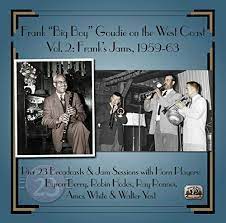
Frank “Big Boy” Goudie was born on September 13, 1899 in Youngsville, Louisiana, 150 miles west of New Orleans, Louisiana in the area of the state known as Cajun country, where he lived until the age of eight. His family then moved to New Orleans, where he began playing cornet, and became proficient enough to find work with local bands such as Papa Celestin’s Original Tuxedo Band and the Magnolia Band, two of the top New Orleans bands at that time. He began studying clarinet and tenor saxophone, which would eventually become his primary instruments.
Arriving in New Orleans around 1907 meant Frank had a front-row seat to the blossoming of early jazz with King Oliver, Kid Ory, Johnny Dodds, Freddie Keppard, Jimmie Noone and a host of others, were in their prime and working at many venues throughout the city.
With the 1918 closure of Storyville and the early 1920s, New Orleans experienced a diaspora of musicians, one of whom was Goudie. In 1921 he joined a band accompanying a traveling minstrel show, and for the next four years he performed in Louisiana, Texas, New Mexico and California. He joined another traveling group, Frank Matthews and the Louisiana High Browns, ending up in Tampico, Mexico in 1925.
That same year he sailed to France, making Paris his home base for the next 14 years. Work was plentiful for expat Black musicians in Paris prior to World War II. He would go on to work with bands led by Benny Peyton, Louis Mitchell, Sam Wooding, Noble Sissle, Freddy Johnson, Bill Coleman, and Willie Lewis during the Thirties. He worked at “Bricktop’s,” owned and operated by Ada “Bricktop” Smith, who was a supporter of American jazz musicians. Frank played often and recorded with Django Reinhardt.
While living in Europe, Goudie carried a wicker suitcase full of upholstery tools with which to augment his income – a trade he learned as a young man in New Orleans. He left Paris in late 1939, moving to South America, where he worked in Brazil and Argentina with guitarist Oscar Aleman, and fronted his own groups.
In 1946, Frank moved back to Paris, playing there with Arthur Briggs, Harry Cooper, and Bill Coleman. In 1951, he moved to Berlin, led his own band and recorded there in 1952 and 1953 and in Yugoslavia in 1955.
Returning to the States in 1957 to run his uncle’s business in San Francisco, California, his presence became known to the close-knit Bay Area jazz community. It didn’t take long before he again was in demand and playing with trumpeter Marty Marsala, pianists Earl Hines, Bill Erickson and Burt Bales, trombonist Bob Mielke and other local groups.
Trumpeter, alto and tenor saxophonist and clarinetist Frank Goudie, who as a young man, his great height earned him the nickname “Tree,” and he became known as “Big Boy” during his years in Paris, transitioned from cancer at age 64, in San Francisco on January 9, 1964.

More Posts: bandleader,clarinet,history,instrumental,jazz,music,saxophone,trumpet
Requisites
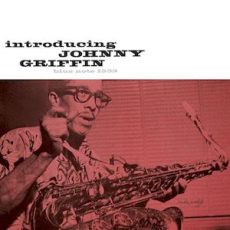
Introducing Johnny Griffin ~ Johnny Griffin | By Eddie Carter
Submitted for your approval this morning is the 1956 debut by tenor saxophonist, Johnny Griffin. Introducing Johnny Griffin aka Chicago Calling (Blue Note BLP 1533/BST 81533) is the first of three releases he made as a leader for Alfred Lion’s label. The other two are A Blowing Session (1957) and The Congregation (1958). Johnny was nicknamed The Little Giant for his small size, but he possessed a robust sound and dazzling technique that kept him recording and in demand as a leader and sideman for over sixty years. For his first album, Griff’s working with three of the best musicians in the business, Wynton Kelly on piano, Curly Russell on bass, and Max Roach on drums. My copy used in this report is the 2002 Classic Records Mono audiophile deep groove reissue sharing the original catalog number.
Side One opens briskly with Mil Dew, the first of three tunes by Johnny Griffin. Max begins the fireworks with a brief introduction. Johnny grips you right away from a fast-moving opening chorus and a wild ride on the first solo. Wynton stokes the fire with fierce heat next, then Max aggressively exchanges notes with Griff ahead of Curly’s vigorous comment during the closing chorus. Chicago Calling, also by the leader, is listed as the album’s title tune and the quintet begins the melody in a relaxed groove. Johnny eases into the opening statement leisurely, then takes the tempo up for the remainder of his reading. Wynton meets the challenge with a nimble solo that’s absolutely stunning; next Griff returns with a delightfully carefree interpretation leading to the climax.
These Foolish Things by Harry Link, Eric Maschwitz (using the pseudonym Holt Marvell), and Jack Strachey made its debut in the British musical comedy, Spread It Abroad (1936). Wynton introduces the song tenderly, segueing into a heart-warming opening chorus and lead solo by Griff. Kelly delivers a delicate interpretation that’s beautifully constructed to match Russell and Roach’s sultry support preceding Johnny’s beautiful finale. The Boy Next Door by Ralph Blaine and Hugh Martin begins with a light-hearted theme by the quartet. Griff opens the solos expressing great joy on the first interpretation. Wynton steps up next with a very satisfying performance. Griff swings soulfully for a few more verses before the foursome reassembles for the ending.
Side Two starts with the group inviting us to get comfortable and enjoy a breezy blues by Griffin that’s Nice and Easy. The saxophonist takes the listener to a notably relaxed atmosphere on the melody and opening statement. Wynton offers a carefree interpretation that’s just right, followed by Curly who gives a delightfully mellow performance into the ensemble’s finale. It’s All Right With Me by Cole Porter takes off at a blistering pace from the quartet’s opening chorus into Griffin’s ferociously speedy first flight that ascends to a peak of intensity. Kelly continues soaring into the stratosphere with equally explosive verses, then Griff comes back with a few final fiery choruses leading to the melody’s reprise and abrupt conclusion.
Lover Man by Jimmy Davis, Roger Ramirez, and James Sherman opens with a sensitive introduction by Kelly that blossoms into Johnny’s hauntingly beautiful melody. Griff swings gently on the opening solo, then Wynton enhances the song’s intimacy with a lovely reading. Johnny adds a few tenderly expressed thoughts into the close.
Introducing Johnny Griffin was remastered by Bernie Grundman who knocks it out of the park with a breathtaking soundstage from Rudy Van Gelder’s original tapes. The highs sparkle, the midrange is clean and crisp, and the bass is deep. The album is pressed on 200 grams of Quiex SV-P Super Vinyl and is quiet until the music starts. If you’re a fan of tenor sax or are new to the music of Johnny Griffin, I highly recommend Introducing Johnny Griffin for a spot in your library. It’s a great album for anyone who loves jazz that gets better with repeated listening!
~ A Blowing Session (Blue Note BLP 1559), The Congregation (Blue Note BLP 1580) – Source: Discogs.com ~ These Foolish Things, Lover Man – Source: JazzStandards.com ~ The Boy Next Door – Source: Wikipedia.org © 2022 by Edward Thomas Carter

More Posts: choice,classic,collectible,collector,history,instrumental,jazz,music,saxophone
The Jazz Voyager
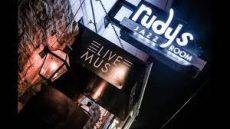
The Jazz Voyager is grabbing a plane for a quick hop to Music City for some jazz. It’s my first club outing since the pandemic lockdown so I’ll be wearing my mask at all times indoors. This week’s destination is Rudy’s Jazz Room located at 809 Gleaves Street, Nashville, Tennessee.
This Saturday I will be catching a triple threat of jazz from the Joel Frahm Trio, Jody Nardone Trio and Don Aliquo with a late afternoon start at 5:30 pm and heading well into midnight and beyond. Rudy’s Jazz Room embodies the history and spirit of traditional jazz clubs, where musicians played their hearts out while people gathered to listen, dance, eat, drink and socialize in a swingin’ atmosphere.
The evening’s performances have a cover charge of $15.00, $20.00 and $10.00 at the door and I plan on giving up my $45.00 when I arrive for the first show. I like going in my pocket one time for things. Doors at 5:00pm, dinner and late night bites are available, however, for additional information, the number is 615.988.2458 and web address is rudysjazzroom.com.
More Posts: adventure,album,bass,club,festival,genius,jazz,museum,music,piano,preserving,restaurant,saxophone,travel
Daily Dose Of Jazz…
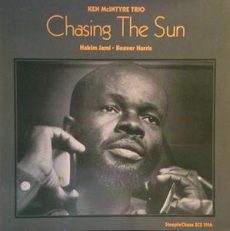
Makanda Ken McIntyre was born Kenneth Arthur McIntyreon on September 7, 1931 in Boston, Massachusetts to a father whoplayed mandolin. He started his musical life on the bugle when he was eight years old, followed by piano. In his teens he discovered the music of Charlie Parker and began playing saxophone at nineteen, then clarinet and flute two years later. Serving in the Army in 1953, for two years he played saxophone and piano in Japan.
Following his discharge Ken attended the Boston Conservatory where he studied with Gigi Gryce, Charlie Mariano, and Andy McGhee. In 1958 he received a degree in flute and composition with a master’s degree the next year in composition. He also received a doctorate (Ed.D.) in curriculum design from the University of Massachusetts Amherst in 1975.
1960 saw McIntyre recording as a leader with Eric Dolphy. The following year and for the next six he taught music in public schools. He took oboe lessons in New York before playing with Bill Dixon, Jaki Byard, and the Jazz Composer’s Orchestra. He went on to spend three years with pianist Cecil Taylor. During the 1970s he recorded with Nat Adderley and Beaver Harris and in the 1980s with Craig Harris and Charlie Haden.
In 1971, he founded the first African American Music program in the United States at the State University of New York College at Old Westbury, teaching for 24 years. He also taught at Wesleyan University, Smith College, Central State University, Fordham University, and The New School for Jazz and Contemporary Music.
In the early 1990s, while performing in Zimbabwe, a stranger handed him a piece of paper with the word “Makanda” written on it, which translates to many skins in the Ndebele language and many heads in Shona. He changed his name to Makanda Ken McIntyre. At the age of 69 on June 13, 2001 he transitioned from a heart attack in New York City.
More Posts: bass clarinet,bassoon,double bass,drums,flute,history,instrumental,jazz,music,oboe,piano,saxophone

Three Wishes
The question that came to Charles Lloyd from the Baroness when she asked if he had three wishes what would his answers be and he told her:
- “That’s awful difficult! Well, no – I wish I could play the music that I feel, and play with the musicians I’d like to.”
- “I would like to be a … to derive some kind of financial success from my music, and to know that it’s aesthetically pleasing.”
- “I’d like to make a contribution to art.”
*Excerpt from Three Wishes: An Intimate Look at Jazz Greats ~ Compiled and Photographed by Pannonica de Koenigswarter

More Posts: baroness,history,instrumental,jazz,music,pannonica,saxophone,three,wishes