


AN EVENING WITH BRANFORD MARSALIS
The NEA Jazz Master, Grammy Award winner and Tony Award nominee is equally at home performing concertos with symphony orchestras and sitting in with members of the Grateful Dead, but the core of his musical universe remains the Branford Marsalis Quartet. The quartet that saxophonist Branford Marsalis has led for the past three decades has always been a model of daring, no-apologies artistry, of ever-widening musical horizons and deepening collective identity.
More Posts: adventure,album,club,genius,jazz,museum,music,preserving,restaurant,saxophone,travel

Daily Dose Of Jazz…
Joki Freund was born Walter Jakob Freund on September 5, 1926 in Höchst, Frankfurt am Main, Germany. He began playing the accordion as a child, switching to tenor saxophone after World War II ended.
Early in the postwar era, he played with Joe Quitter, Carlo Bohlander, Gerry Weinkopf, Joe Klimm, and Jutta Hipp, before forming his own ensemble. He began performing with American musicians, including Donald Byrd, Art Taylor, and Doug Watkins during their European festival appearances.
He went on to play with and arranged for Albert Mangelsdorff in the jazz orchestra of Hessischer Rundfunk, and Erwin Lehn in the Süddeutscher Rundfunk orchestra. He played with the Frankfurt Jazz Ensemble on soprano saxophone in the 1970s, also performing as a leader around this time.
Saxophonist Joki Freund, who predominantly played in a quintet setting but also in orchestras or big bands, transitioned on February 15, 2012 in Schwalbach am Taunus, Germany.

More Posts: arranger,bandleader,history,instrumental,jazz,music,saxophone
Requisites
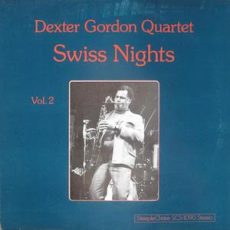
Swiss Nights, Vol. 2 ~ Dexter Gordon Quartet | By Eddie Carter
I begin September with a return to The Zürich Jazz Festival ’75 for this morning’s discussion of Swiss Nights, Vol. 2 (SteepleChase Records SCS-1090) by The Dexter Gordon Quartet. The tenor saxophonist’s back on stage with Kenny Drew on piano, Niels-Henning Ørsted Pedersen on bass, and Alex Riel on drums. My copy used in this report is the 1978 SteepleChase Records German Stereo Audiophile release.
Dexter opens the set introducing There’s No Greater Love by Isham Jones and Marty Symes. The quartet launches into an exciting melody, stepping aside for Dexter who leads off the first solo vigorously. Kenny shows off his creative powers in the second reading, next Niels-Henning walks the bass enthusiastically. Dexter trades thoughts with Alex leading to his final solo ahead of the reprise and finish.
Sticky Wicket, the first of two tunes by Dexter eases the throttle back to a comfortable pace on the foursome’s opening chorus. Gordon leads off the solos with a relaxed statement. Drew continues cruising to a carefree beat, then Pedersen takes a laid-back stroll with his bass. Gordon and Riel share a brief exchange preceding the reprise and the audience’s approval.
Side Two opens to a timeless standard from The Great American Songbook, Darn That Dream by Jimmy Van Heusen and Eddie Lange. Dexter and the trio introduce the song with a delicately gentle theme. Dexter’s tenor sax is the epitome of graceful elegance on the opening solo, next Kenny compliments him with a mellow reading of soft warmth. Niels-Henning and Alex hold everything together as Dexter returns for the climax.
Montmartre is Dexter Gordon’s tribute to the Copenhagen jazz club and is off to the races from the foursome’s opening theme. The leader kicks off the solos with a robust performance that gains momentum as it unfolds. Drew has a very good time on the second statement, next Gordon and Riel exchange a few ideas, then the drummer gets the spotlight briefly. The quartet returns to take the song out with an abrupt finish, followed by the group’s theme and musician introductions to great applause.
Nils Winther produced Swiss Nights, Vol. 2, and Helmuth Kolbe recorded and mixed the album. The soundstage is excellent, placing the listener in a front row seat to enjoy the quartet at work. The record is pressed on 180 grams of audiophile vinyl and is very quiet until the music starts. Like its two companions, Swiss Nights, Vol. 2 is a great live album by The Dexter Gordon Quartet with tight musicianship and outstanding sound. If you’re a fan of Dexter Gordon, it’s definitely worth adding to your library!
~ Swiss Nights, Vol. 1 (SteepleChase Records SCS-1050), Swiss Nights, Vol. 3 (SteepleChase Records SCS-1110) – Source: Discogs.com ~ There’s No Greater Love, Darn That Dream – Source: JazzStandards.com © 2022 by Edward Thomas Carter

More Posts: choice,classic,collectible,collector,history,instrumental,jazz,music,saxophone
Daily Dose Of Jazz…
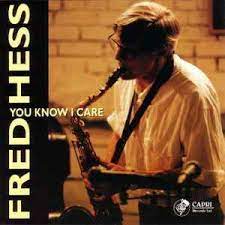
Fred Hess was born in Abington, Pennsylvania on September 3, 1944 but was raised in New Jersey. He studied at Trenton State College with his early studies with saxophonist Phil Woods, a stint with bandleader Fred Waring, and composing music for the world premiere of a Sam Shepard play.
As a composer, his influences encompass avant-garde classical sources, as well as Anthony Braxton and the members of the AACM. Moving to Boulder, Colorado in 1981, he founded the Boulder Creative Music Ensemble. Fred then completed further studies at the University of Colorado, Boulder, taking his doctorate in composition in 1991.
He recorded his debut album Sweet Thunder in 1991 and by 2012 had sixteen albums as a leader in his catalog. He was the Director of Music Composition at Metro State College in Denver, Colorado.
In addition to his own projects as a leader, BCME, The Fred Hess Group and the Fred Hess Big Band, he was the founding director of Denver’s Creative Music Works Orchestra and was a member of drummer Ginger Baker’s Denver Jazz Quintet, as well as ensembles led by trumpeter Ron Miles.
His playing was influenced by Lester Young, John Coltrane, the Association for the Advancement of Creative Musicians, and Eric Dolphy. Tenor saxophonist Fredd Hess transitioned on October 27, 2018.
Bestow upon an inquiring mind a dose of a Abington saxophonist to motivate the perusal of the genius of jazz musicians worldwide whose gifts contribute to the canon…
More Posts: bandleader,history,instrumental,jazz,music,saxophone

Daily Dose Of Jazz…
John Zorn was born September 2, 1953 in New York City, New York and attended the United Nations International School, where he studied piano, guitar and flute from an early age. Exposed by his families musical tastes in classical, world, jazz, French chansons, country doo-wop and rock and roll records, he spent his teenage years exploring classical and film music, listening to The Doors and playing bass in a surf band. He explored experimental and avant-garde music as well as cartoon soundtracks and film scores. He went on to teach himself orchestration and counterpoint by transcribing scores and studied composition under Leonardo Balada.
After discovering Anthony Braxton’s album For Alto when he was studying composition at Webster College in St. Louis, Missouri, Zorn began playing saxophone and attended classes taught by Oliver Lake. While at Webster, he incorporated elements of free jazz, avant-garde and experimental music, film scores, performance art and the cartoon scores of Carl Stalling into his first recordings.
Leaving Webster after three semesters, John lived on the West Coast before returning to Manhattan where he gave concerts in his apartment and other small NY venues, playing saxophone and a variety of reeds, duck calls, tapes, and other instruments. He immersed himself in the underground art scene, assisting Jack Smith with his performances and attending plays by Richard Foreman
Zorn entered New York City’s downtown music scene in the mid-1970s, collaborating with improvising artists while developing new methods of composing experimental music. Over the next decade he performed throughout Europe and Japan and recorded on independent US and European labels. In 1986 he received acclaim with the release of his radical reworking of the film scores of Ennio Morricone, The Big Gundown, followed by Spillane, an album featuring his collage-like experimental compositions. Spy vs Spy and Naked City both demonstrated his ability to merge and blend musical styles in new and challenging formats.
Having spent time in Japan in the late 1980s and early ’90s John returned to Lower East Side Manhattan to establish the Tzadik record label in 1995, enabling him to establish independence, maintain creative control, and ensure the availability of his growing catalog of recordings. He prolifically recorded and released new material for the label, issuing several new albums each year, along with recordings by many other artists.
He performs on saxophone with the groups Naked City, Painkiller, and Masada but more often conducts bands like Moonchild, Simulacrum and several of his Masada-related ensembles. He composes concert music for classical ensembles and orchestras, produces music for opera, sound installations, film and documentary, and tours Europe, Asia, and the Middle East. Composer, conductor, saxophonist, arranger and producer John Zorn continues his exploration of music and adds to his diverse repertoire.
Bestow upon an inquiring mind a dose of a New York City composer to motivate the perusal of the genius of jazz musicians worldwide whose gifts contribute to the canon…
More Posts: arranger,bandleader,composer,history,instrumental,jazz,music,saxophone