

Daily Dose Of Jazz…
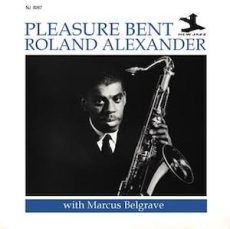
Roland Alexander was born in Boston, Massachusetts on September 25, 1935 and grew up with his parents and sister, Gloria, in Cambridge, Massachusetts. He earned a bachelor’s degree in music composition from the Boston Conservatory in 1958.
A prolific composer and arranger, Alexander wrote and played for many of the better known bands in Boston during the 1950s, associating himself with Sabby Lewis, Preston ‘Sandy’ Sandiford, Richie Lowery, Jaki Byard and many more. He co-led a group called the Boston All Stars that featured trumpeter Joe Gordon, and after Joe Gordon left to play with Dizzy Gillespie’s band, he was replaced by Wajid Lateef (Crazy Wilbur Lucaw), and Gordon Wooly.
In 1956 he recorded High Step as a sideman with bassist Paul Chambers before moving to New York City the year he graduated from the conservatory. In addition to a 1961 and 1978 release as a leader, he played and recorded with John Coltrane, Howard McGhee, Max Roach, Sonny Rollins, Roy Haynes, Philly Joe Jones, Blue Mitchell, Sam Rivers, Archie Shepp, and Mal Waldron.
Post bop saxophonist Roland Alexander, who in addition to playing tenor and soprano saxophone was also a pianist, transitioned on June 14, 2006.

More Posts: bandleader,history,instrumental,jazz,music,piano,saxophone
TIA FULLER, MIMI JONES & MATT WILSON
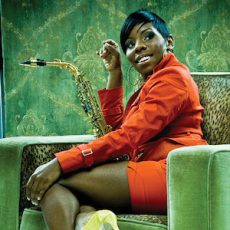
Join saxophonist Tia Fuller, bassist Mimi Jones, and drummer Matt Wilson as they cap off their week in St. Louis with performances on the Ferring Jazz Bistro stage! Jazz St. Louis’s Artist Residency bands are one-of-a-kind groupings brought together for the specific purpose of securing the future of jazz through clinics, masterclasses, and in-school performances. Jazz St. Louis engages these artists for an entire week, during which they visit area schools and conduct masterclasses and clinics for middle and high school students.
Valet Parking ~ $10.00 prepaid
Valet parking is available for all Jazz St. Louis performances. Discounted $10 valet parking may be purchased when ordering your tickets. Please make sure to select the correct date and time when adding parking to your cart with your tickets before purchasing.
October 28 ~ 7:30pm | 9:30pm
October 29 ~ 7:30pm | 9:30pm
More Posts: adventure,album,bass,club,drums,festival,genius,jazz,museum,music,preserving,restaurant,saxophone,travel

Three Wishes
Zoot Sims was given the proposition of three wishes by Pannonica that if they could be fulfilled what would they be and he said this to her:
- “Peace of mind.”
- “Woman I could live with.”
- “Piece of ground.”

More Posts: baroness,history,instrumental,jazz,music,pannonica,saxophone,three,wishes
Daily Dose Of Jazz…
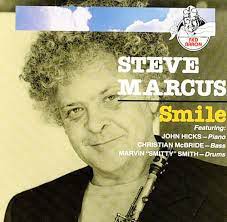
Steve Marcus was born September 18, 1939 in The Bronx, New York, and studied at the Berklee College of Music in Boston, Massachusetts between 1959 and 1961. He gained experience playing in the bands of Stan Kenton, Herbie Mann and Larry Coryell from 1963 to 1973.
His debut album as a leader included an arrangement of the Beatles’ song, Tomorrow Never Knows, which also was the album’s title. He worked with jazz drummer Buddy Rich for the last twelve years of the drummer’s life. After Rich died, Marcus led the band and renamed it Buddy’s Buddies.
Saxophonist Steve Marcus transitioned on September 25, 2005 in New Hope, Pennsylvania. He was 66.
More Posts: bandleader,history,instrumental,jazz,music,saxophone
Daily Dose Of Jazz…
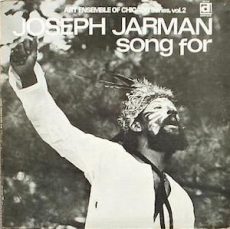
Joseph Jarman was born on September 14, 1937 in Pine Bluff, Arkansas, and grew up in Chicago, Illinois. At DuSable High School, he studied drums with Walter Dyett, switching to saxophone and clarinet when he joined the United States Army after graduation. During his time there, he was part of the 11th Airborne Division Band for a year.
After his discharge in 1958, Jarman attended Wilson Junior College, where he met bassist Malachi Favors Maghostut and saxophonists Roscoe Mitchell, Henry Threadgill, and Anthony Braxton. These men would often perform long jam sessions at the suggestion of their professor, Richard Wang. Mitchell introduced Jarman to pianist Muhal Richard Abrams, and Jarman, Mitchell, and Maghostut joined Abrams’ Experimental Band, a private, non-performing ensemble, when that group was founded in 1961. The same group of musicians along with Fred Anderson and Phil Cohran went on to found the Association for the Advancement of Creative Musicians (AACM) in 1965,.
His solo recording career began at this time, putting together a sextet, however, Jarman disbanded the group in 1969 after the passing of two members. He had joined Mitchell, Maghostut and Lester Bowie in the Roscoe Mitchell Art Ensemble which would eventually become known as the Art Ensemble of Chicago. The group was known for being costumed on stage for different reasons.
The group moved to Paris in 1969, and lived there for many years in a commune that included Steve McCall, the drummer who went on to form the jazz trio Air. Moving back to Chicago in the 1970s, Joseph lived in a musicians’ building in Hyde Park, with Malachi Favors as his roommate. In 1983, he moved to Brooklyn, New York.
Jarman left the Ensemble until 1993 to focus on his spiritual practice, and didn’t return to music until 1996, releasing two albums and then joining a trio with Myra Melford in Chicago, which would eventually be called Equal Interest.
Along with the saxophone and clarinet, Jarman also played (and recorded on) nearly every member of the woodwind family, as well as a wide variety of percussion instruments. Aside from his work with relatively traditional jazz line-ups, he also composed for larger orchestras and created multimedia pieces for musicians and dancers.
Saxophonist, composer, and poet Joseph Jarman transitioned from respiratory failure at the Lillian Booth Actors Home in Englewood, New Jersey on January 9, 2019. He was 81.
More Posts: bandleader,composer,history,instrumental,jazz,music,poet,saxophone