

Daily Dose Of Jazz…
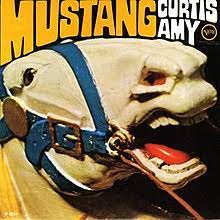
Leroy “Hog” Cooper ws born on August 31, 1928 in Dallas, Texas and by age twenty, fom 1948 to 1951, he toured with the Ernie Fields territory band. A childhood friend of David Fathead Newman, in 1954 the two played together in the sax section backing Lowell Fulson on his first single for Chess Records, Reconsider Baby.
In 1957, upon the Newman recommendation of Cooper to Ray Charles, who joined Charles’ band the same summer as bassist Edgar Willis, both musicians stayed on with Charles for some twenty years.
Leroy also played, recorded and/or toured with Lightnin’ Hopkins, Clarence “Gatemouth” Brown, The Righteous Brothers, Dr. John, Del Shannon, Bobby Short, and Joe Cocker.
Performing locally in Orlando, Florida with the Smokin’ Torpedoes & Josh Miller Blues Band till the time of his death, baritone saxophonist Leroy Cooper, who was affectionately known as Hog in the industry, transitioned on January 15, 2009.
Bestow upon an inquiring mind a dose of a Dallas saxophonist to motivate the perusal of the genius of jazz musicians worldwide whose gifts contribute to the canon…

More Posts: history,instrumental,jazz,music,saxophone
Daily Dose Of Jazz…
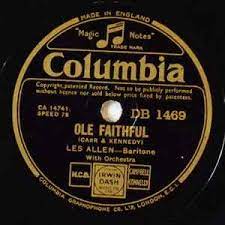
Leslie Allen was born on August 29, 1902 in Ealing, London, England and at the age of 3, he and his family moved to Canada. As a child, he played clarinet alongside his father in the Queen’s Own Rifles Band and later learned to play the saxophone. He performed with the dance bands of Burton Till and Luigi Romanelli and in 1922 worked briefly in New York City before travelling to England in 1924 as part of a band of fellow Canadians recruited by Hal Swain. Intending his band to play at the Rector’s Club in London, once there, he found it closed.
The band found a residency at the New Prince’s restaurant in Piccadilly and became The New Princes Toronto Band. Under this name, they recorded for Columbia Records for eighteen months with Allen serving as alto saxophonist and occasional vocalist. Between 1926 and 1927, Allen joined several of his NPTB colleagues on a European tour where they performed as Dave Caplin’s Toronto Band under the leadership of banjoist Caplin.
After returning to England in 1927, Allen spent the next five years playing and singing with several leading British dance orchestras, including those of Carroll Gibbons, George Melachrino and Geraldo and making a number of freelance recordings, with duets with Al Bowlly.
In 1932, he joined Henry Hall’s BBC Dance Orchestra as a featured vocalist and enjoyed national hits with The Sun Has Got His Hat On and Auf Wiedersehen My Dear. Parting ways with Hall in 1934, he began a solo career, scoring hits with Tell Me Tonight, Love Is The Sweetest and the children’s ballad, Little Man You’ve Had A Busy Day on which his wife Anne and son Norman had speaking parts.
In 1935, he starred in the musical comedy Heat Wave, subsequently formed his own bands, the Les Allen Melody Four and the male voice singing group, Les Allen & His Canadian Bachelors, with fellow countrymen lead singer Jack Curtis, tenor Herbie King, and baritone and arranger Cy Mack.
During World War II, Les travelled and entertained Canadian troops. After the war, he played the juvenile lead in the 1945 revival of Miss Hook of Holland before returning to Toronto, Canada in 1948, where he started a second career in the office supply trade. Retiring in 1971, alto saxophonist and vocalist Les Allen transitioned in Toronto on June 25, 1996.
More Posts: bandleader,history,instrumental,jazz,music,saxophone,vocal
Daily Dose Of Jazz…
Meredith Irwin Flory, was born on August 27, 1926 in Logansport, Indiana and was encouraged by his organist mother to learn clarinet as a child. During World War II he was an Army Air Force pilot and after his discharge went on to matriculate through Indiana University, graduating with a degree in philosophy.
Known professionally as Med Flory, in the early 1950s he played in the bands of Claude Thornhill and Woody Herman, before forming his own ensemble in New York City. 1955 saw him relocating to California and starting a new group, which played at the 1958 Monterey Jazz Festival. In the late 1950s, he played with Terry Gibbs, Art Pepper, and Herman again, playing both tenor and baritone saxophone. He was cast in twenty-nine episodes from 1956 to 1957 of the ABC variety show, The Ray Anthony Show.
In the 1960s Med turned his attention away from music and concentrated on acting and screenwriting in television and film. His long list of credits include mostly westerns and crime dramas, which were popular at the time.
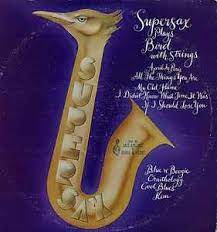
By the mid Sixties Flory returned to music and worked with Art Pepper and Joe Maini on transcriptions and arrangements of Charlie Parker recordings. In 1972, he co-founded Supersax, an ensemble devoted to Parker’s work. Supersax’s debut album, Supersax Plays Bird, won a Grammy Award.
Tenor and baritone saxophonist, bandleader, and actor Med Flory transitioned on March 12, 2014 in North Hollywood, Los Angeles, California.
Bestow upon an inquiring mind a dose of a Logansport saxophonist to motivate the perusal of the genius of jazz musicians worldwide whose gifts contribute to the canon…
More Posts: history,instrumental,jazz,music,saxophone

Three Wishes
Nica was curious as to the three wish of Ben Webster but he had only one answer and that was:
- “Right now, I wish I could write a couple of tunes.”
*Excerpt from Three Wishes: An Intimate Look at Jazz Greats ~ Compiled and Photographed by Pannonica de Koenigswarter
More Posts: baroness,history,instrumental,jazz,music,pannonica,saxophone,three,wishes
Requisites
Saturday Night at The Montmartre ~ Ben Webster | By Eddie Carter
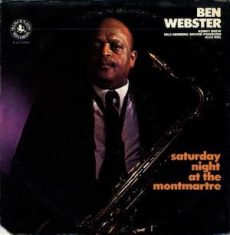
This morning’s subject submitted for your consideration is a delightful live date by tenor saxophonist, Ben Webster. Saturday Night at The Montmartre (Black Lion Records BLP 30155) is the first of three LPs chronicling his quartet’s January 30 performance at the renowned club shortly after Ben moved to Europe. Midnight at The Montmartre and Sunday Morning at The Montmartre (1977) complete the evening’s concert. He’s joined on stage by Kenny Drew on piano, Niels-Henning Ørsted Pedersen on bass, and Alex Riel on drums. My copy used in this report is the 1974 US Stereo release (Black Lion Records BL-302).
The rhythm section begins the evening with a bit of relaxed cooking on the introduction to Our Love Is Here To Stay by George and Ira Gershwin. Ben takes the lead on the theme and swings effortlessly on the first interpretation. Kenny and Niels-Henning are completely at ease in the next two readings. Alex and Ben engage in a delightful conversation preceding the theme’s reprise and finish. The pace slows down for a gorgeous rendition of My Romance by Richard Rodgers and Lorenz Hart. A brief introduction by Kenny opens the way for Ben’s richly toned, emotional expression on the melody. The pianist starts the solos with an enchanting presentation, next Webster gives an incredibly beautiful performance ahead of the song ending quietly.
Blues For Herluf is Ben Webster’s uptempo tribute to Jazzhus Montmartre’s manager, Herluf Kamp-Larsen. Kenny kicks off this tune with a brief introduction that evolves into the foursome’s invigorating theme. Ben opens with a hard-blowing swinger. Kenny tells a vigorously spirited story on the second solo. Niels-Henning goes for a short walk in the third spot and Alex’s drums dance briefly with the leader into the finale. The quartet slows the tempo again to begin Side Two with a very pretty song, Londonderry Air. The trio begins their introduction gracefully, then Webster touches a soft spot in everyone’s heart on the theme and provides a wonderful feeling of peaceful serenity as the song’s only soloist into a lovely finale.
Mack The Knife by Kurt Weill, Mark Blitzstein, and Bertolt Brecht first appeared in The Threepenny Opera (1928). The rhythm section introduces this song at midtempo leading to the collective melody led by Ben who also sparkles on the first reading. Kenny and Niels-Henning contribute something fun on the next two solos. Alex and Ben exchange a few riffs before the conclusion. I Can’t Get Started by Vernon Duke and Ira Gershwin is one of the most beautiful standards in The Great American Songbook. The trio introduces the song leading to a sincerely poignant theme by Webster. Drew speaks to the listener intimately in the opening statement. Webster’s passion for ballad interpretation is abundantly evident in a delicately pretty reading perfectly matched to the trio’s sensuous support.
The Theme by Miles Davis brings this set to a close in rapid fashion. The foursome launches the theme collectively, next Ben, Kenny, Niels-Henning, and Alex give four quick statements ahead of the melody’s reprise and the audience’s approval. Saturday Night at The Montmartre and its companions were produced by Alan Bates, and Birger Svan was the recording engineer. The album’s sound quality is amazing with a breathtaking soundstage placing the listener in a seat among the audience as the quartet performs. If you’re a fan of Ben Webster and like your jazz swinging and soulful, I invite you to check out Saturday Night at The Montmartre on your next search for vinyl treasure. It sets the mood for a great evening of jazz that’s perfect to enjoy with the lights dimmed and your favorite drink as you listen!
~ Midnight at The Montmartre (Black Lion Records BLP 30173), Sunday Morning at The Montmartre (Black Lion Records BLP 30182) – Source: Discogs.com ~ I Can’t Get Started, Mack The Knife, My Romance, Our Love Is Here To Stay – Source: JazzStandards.com © 2022 by Edward Thomas Carter
More Posts: choice,classic,collectible,collector,history,instrumental,jazz,music,saxophone