

Daily Dose Of Jazz…
Skip Martin was born Lloyd Vernon Martin on May 14, 1916 in Robinson, Illinois. He was an active arranger during the swing jazz band era of the 1930s and 1940s. working with Count Basie, Charlie Barnet, Benny Goodman and Glenn Miller. He doubled as a reedist with the latter three, and recorded with trumpeter Cootie Williams in the early 1940s as well.
Later in the 1940s Skip worked with Les Brown before moving to Los Angeles, California in the 1950s, where he did extensive work as a staff and freelance orchestrator, studio conductor and popular song arranger Tony Martin, The Pied Pipers, the Andrews and De Castro sister groups, and Barbara Ruick.
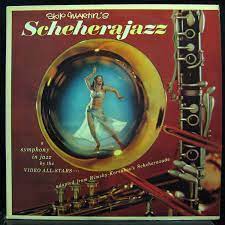
Martin recorded three albums as a leader and produced material for West Coast jazz and swing concept albums such as Scheherajazz in 1959 for Somerset Records. In 1963 he joined Nelson Riddle on a dream team of arrangers working on the Sinatra-Burke compilation albums for the ambitious Reprise Musical Repertory Theatre project, featuring the singing members of the Rat Pack, plus Bing Crosby, Rosemary Clooney and Jo Stafford.
In Hollywood, Skip was one of the team of orchestrators contributing to Singin’ in the Rain, Guys and Dolls, and shared arrangement credits with Conrad Salinger on Summer Stock, Kiss Me Kate and Funny Face, where a few songs of the Great American Songbook came from. He retained sole credit as orchestrator for Judy Garland’s comeback vehicle A Star Is Born, which gave us The Man That Got Away and It’s A New World.
Saxophonist, clarinetist, and music arranger Skip Martin transitioned on February 12, 1976, in Los Angeles, California.

More Posts: bandleader,clarinet,history,instrumental,jazz,music,saxophone
The Quarantined Jazz Voyager
Contrary to the announcement that the pandemic is over and the unmasking the country has clearly exhibited, a variant is still present and this Jazz Voyager is getting out remains distant from crowds and enclosed spaces. So we will continue to listen to great music.
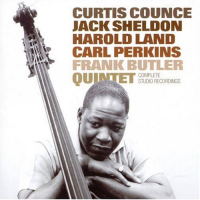
My selection this week is the Complete Studio Recordings, a two compact disc set whose songs were recorded between 1956 and 1958 by the Curtis Counce Quintet composed of Counce, Jack Sheldon, Harold Land, Carl Perkins and Frank Butler went into the studio of Contemporary Records and recorded twenty-four songs. Though the group was short~lived, their impact produced a powerhouse two-disc set of music comprising the main recordings on the Contemporary label.
The group’s expressed purpose was to develop a West Coast answer to the soulful, hard-bop East Coast sound. Each of the musicians was among the most gifted on his instrument, yet the focus was always on a collaborative result that would reflect undiscovered possibilities within a familiar post-bop idiom. Seldom does a group of musicians come together and play so seamlessly that they sound like one voice speaking. The contribution of each of the five principals, therefore, invites close scrutiny.
The beauty of the recorded disc is that it is a lasting tribute to the musicians who performed on this recording. Lester Koenig at Contemporary Records was known for extremely high audio standards and turned out some of the best-sounding records of the day thanks to the expertise of engineer Roy DuNann. The audio on these Contemporary dates is rich in depth and detailing, allowing the listener to pick out each of the subordinate motifs and subtle moving harmonies. The engineering created a naturally ambient soundscape inviting the listener to partake of the worthy.
The caveat is that this music appeared on previously released albums by Curtis Counce and this is an opportunity to pick up the excellence of 24 tracks of music in a one~stop shop. This represents African-American indigenous art of the highest order. Released by Gambit Records in 2007 and definitely one for the collector.
Track Listing | 150:00+
Disc 1- Landslide (Harold Land) ~ 8:37
- Time After Time (Sammy Cahn/Jule Styne) ~ 6:32
- Mia (Carl Perkins) ~ 4:55
- Sarah (Jack Sheldon) ~ 11:38
- Fifth For Frank (Gerald Wiggins/Cal Tjader) ~ 7:14
- Big Foot (Charlie Parker) ~ 9:07
- Sonar (Kenny Clarke/Gerald Wiggins) ~ 7:28
- Stranger In Paradise (Robert Wright/George Forrest) ~ 7:04
- Woody’n You (Dizzy Gillespie) ~ 6:18
- Pink Lady (Jack Sheldon) ~ 4:41
- Councelation (Curtis Counce) ~ 6:05
- Love Walked In (George Gershwin/Ira Gershwin) ~ 4:56
- Too Close For Comfort (Larry Holofcener) ~ 5:38
- How Deep Is The Ocean (Irving Berlin) ~ 6:37
- Complete (Curtis Counce) ~ 5:52
- Nica’s Dream (Horace Silver) ~ 8:00
- How Long Has This Been Going On (George Gershwin/Ira Gerswin) ~ 3:18
- Mean To Me (Fred E. Ahlert/Roy Turk) ~ 4:31
- I Can’t Get Started (Vernon Duke/Ira Gershwin) ~ 8:01
- Larue (Clifford Brown) ~ 5:04
- Carl’s Blues (Carl Perkins) ~ 5:54
- Night In Tunisia (Dizzy Gillespie/Frank Paparelli) ~ 8:17
- Love Walked In (George Gershwin/Ira Gershwin) ~ 2:55
- Sophisticated Lady (Duke Ellington) ~ 4:10
- Fifth For Frank (Gerald Wiggins/Cal Tjader) ~ 1:56
- The Butler Did It (Frank Butler) ~ 4:39
Personnel
- Jack Sheldon ~ trumpet
- Harold Land ~ tenor saxophone
- Carl Perkins ~ piano
- Curtis Counce ~ bass
- Frank Butler ~ drums
- Gerald Wilson ~ trumpet (replaces Sheldon on three tracks of disc 2)

More Posts: adventure,album,bass,club,drums,genius,jazz,museum,music,piano,preserving,restaurant,saxophone,travel,trumpet

Daily Dose Of Jazz…
Ernst Heinrich “Teddy” Stauffer was born May 2, 1909 In Murten, Fribourg, Switzerland He was dubbed Germany’s “Swing-King” of the 1930s. He formed the band known as the Teddies, which is also billed as the Original Teddies or the International Teddies, which continued after he left in 1941.
Annual trips to the Swiss cities of St. Moritz, Arosa and also a guest appearance in London, England were responsible for the international fame of the Teddies band. Until 1939, he appeared with his Original Teddies-Band especially in Berlin and Hamburg, Germany. He enjoyed his popularity at the 1936 Olympics, had hits with Goody~Goody, and turned Horst Wessel Lied, the National Socialist’s anthem, into a jazz number in 1938. With his jazzy swing music, however, Stauffer increasingly got in trouble with the Reichsmusikkammer, a Nazi institution that promoted “good German music” which was composed by Aryans and seen as consistent with Nazi ideals.
Returning to Switzerland in 1939, he eventually emigrated to the United States and then to Mexico. His reputation as a playboy and a well~known womanizer who was married to Hedy Lamar, did not sway him from also having affairs with Rita Hayworth and Barbara Hutton.
Violinist, saxophonist and bandleader Teddy Stauffer who was also an actor, nightclub owner, and restaurateur transitioned on August 27, 1991 in Acapulco, Mexico at the age of 82.
More Posts: bandleader,club owner,history,hotelier,instrumental,jazz,music,saxophone,violin
Three Wishes
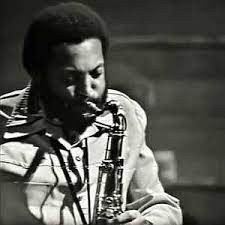
Harold Vick was asked what his three wishes would be and he told Pannonica this:
-
-
“To be able to play my instrument.”
-
“Some money.”
-
“And help a chick. You know: We have a common understanding!”
-

More Posts: flute,history,instrumental,jazz,music,pannonica,saxophone,three,wishes
Daily Dose Of Jazz…
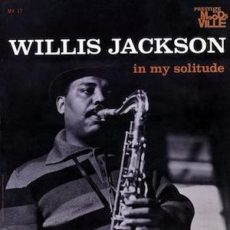
Willis “Gator” Jackson was born on April 25, 1928 in Miami, Florida and educated at the University of Miami. In 1948 he joined the Cootie Williams band as a teenager, and was part of it on and off until 1955.
Under his own name, Willis Jackson and His Orchestra, he recorded various rhythm-and-blues instrumentals for Atlantic Records. His most famous record for Atlantic is Gator’s Groove in 1952, with Estrellita as the B-side.
He toured as leader of the backing band for singer Ruth Brown. Publicly they were married, but privately they never were but lived together from 1950 to 1955. Joining Prestige Records in 1959, he made a string of albums with Pat Martino, Brother Jack McDuff, and Johnny “Hammond” Smith among many others. He also recorded for Atlantic, Muse, Trip, Big Chance, Verve, and Argo record labels.
Tenor saxophonist Willis “Gator” Jackson transitioned in New York City one week after heart surgery on October 25, 1987 at the age of 55.
More Posts: bandleader,history,instrumental,jazz,music,saxophone