


Daily Dose Of Jazz…
David Kenneth Brooks, Jr. was born May 29, 1922 in Fayetteville, North Carolina, the older brother of Tina Brooks. His first professional gig was with the medicine show of Pepper McAllister.
He served in the Army during World War II where he played with James Moody. He moved to New York City after his discharge in 1944, where he played at Minton’s Playhouse and the Harlem Grill. He toured North Carolina in a band alongside Sonny Payne in 1947, then played with George Barkley at the Baby Grand in New York. He first recorded with Barkley around 1947 or 1948, then went on to play with Sonny Thompson from 1948 to 1957.
In 1958 he worked with Jimmy McCracklin and in 1961 with Phil Upchurch. While doing session work with pop musicians in the 1960s. From 1967 to 1973 he played at the Fantasy East in New York City with alto saxophonist Charles Williams and Don Pullen, recording three albums as a trio for Mainstream Records.
After a short run with Jimmy McGriff in 1974, Brooks became a member of Bill Doggett’s ensemble, where he remained for two decades from 1976 to 1996. He worked in the middle of the 1990s with Bross Townsend, Carrie Smith, and the Harlem Blues and Jazz Band, and toured France with Al Casey in 1999.
He recorded with Wynonie Harris, Phil Upchurch, Charles Williams, Bill Doggett, Bross Townsend, Michel Pastre, Joseph Carter, and Bobby Forrester. Tenor saxophonist David Kenneth Brooks, Jr., better known as Bubba Brooks or Bubber Brooks, transitioned on April 11, 2002.

More Posts: history,instrumental,jazz,music,saxophone
Daily Dose Of Jazz…
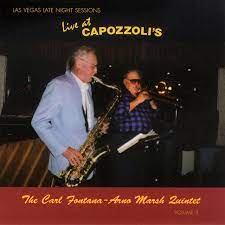
Arno Marsh was born on May 28, 1928 in Grand Rapids, Michigan and played early on in local dance bands, then played in Woody Herman’s ensemble from 1951 to 1953, where he soloed frequently on Herman’s Mars Records releases.
He led a band in a Grand Rapids residency from 1953 to 1955, then rejoined Herman intermittently through 1958. He recorded with Stan Kenton, Charlie Barnet, Lionel Hampton, Buddy Rich, and Harry James. After the late 1950s most of Marsh’s activity was in Las Vegas, Nevada leading hotel orchestras. He accompanied Nancy Wilson on record with one of them in 1968, and did a Woody Herman tribute in 1974.
Tenor saxophonist Arno Marsh transitioned at the age of 91 on July 12, 2019.
More Posts: history,instrumental,jazz,music,saxophone
Requisites
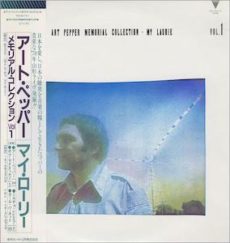
My Laurie ~ Art Pepper | By Eddie Carter
I’ve listened to and enjoyed the music of Art Pepper for many years. Despite his drug addiction and times spent in prison that interrupted his career, he recorded some great live and studio albums. My Laurie (Trio Records PAP-25037) is a 1978 live performance documenting the final part of a twenty-one-day, nineteen concert Japanese tour by the quartet. It was also the alto saxophonist’s first tour with his group, Milcho Leviev on piano, Bob Magnusson, on bass, and Carl Burnett on drums. My copy used in this report is the 1983 Japanese Mono release.
Side One starts with an original tune from Art’s pen, Ophelia. The quartet gets our fingers popping on the collective melody. Art is up first and sparkles brightly on the opening solo, then Milcho takes an infectiously swinging turn next. Bob comes in and has his say on a lively reading. Carl shares a feisty finale with Art ahead of the ending and the trio’s introductions.
Bésame Mucho by Consuelo Velázquez and Sunny Skylar is one of the most popular and recorded songs in jazz. Pepper stretches himself ambitiously on the vivacious introduction preceding the song’s theme. Art then tugs at our emotions with a heartfelt first solo. Leviev begins the second reading with a tender lyricism that soars briskly to a satisfying finish. Magnusson has a short say next leading to the foursome’s gorgeous exit and the crowd expressing their approval.
My Laurie is Art’s loving tribute to his wife occupying the second side. The ensemble makes a regal introduction into a gentle melody by the altoist. He makes a compelling case with two beautifully expressed readings culminating with appreciative applause from the audience at the song’s end. Sandwiched between Art’s solos is a tender interpretation by Milcho.
The concert was produced by Haruo Serikawa, the recording engineer was Morio Shoya, and the remastering for My Laurie is by James Mooney. The sound quality on Side One is excellent with a vibrant soundstage across the highs, midrange, and low end. On Side Two, there’s a slight bit of harshness during Pepper’s second solo on My Laurie. That said, I hope that won’t dissuade you from seeking out this album for a spot in your library. The highlight for me personally is Bésame Mucho, the quartet gives this old favorite new life with an exceptionally fresh and creative approach. There are three other live records in The Art Pepper Memorial Collection, and I’ll be on the lookout for them. If you’re a longtime fan of his or are just discovering his music, I hope you’ll consider My Laurie by Art Pepper on your next vinyl expedition. He’s in great form here and the rhythm section compliments him splendidly!
~ The Summer Knows, Vol. 2 (Trio Records PAP-25038), I’ll Remember April, Vol. 3 (Trio Records PAP-25041), A Night In Tunisia, Vol. 4 (Trio Records PAP-25044) – Source: Discogs.com ~ Bésame Mucho – Source: JazzStandards.com © 2022 by Edward Thomas Carter

More Posts: choice,classic,collectible,collector,history,instrumental,jazz,music,saxophone
Daily Dose Of Jazz…
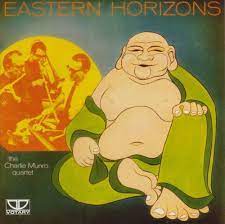
Charles Robert Munro was born on May 22, 1917 in Christchurch, New Zealand. While in his teens he became quite proficient on several saxophones and by 21 had moved to Sydney, Australia where he played in the bands led by Myer Norman and Wally Parks. In addition he worked as a sideman on various nightclub, theater, and ship gigs.
Serving in the military during World War II, Charlie went on to work with Wally Norman at the Roosevelt nightclub in Sydney. In 1950 he played with Bob Gibson, then joined the Australian Broadcasting Commission’s dance band in 1954, continuing to perform with the group through 1976 as a composer and arranger.
He worked extensively with Bryce Rohde in the 1960s, participating in many of Rohde’s Australian jazz experiments. He led his own bands toward the end of his career, and also worked with Georgina de Leon.
Saxophonist and flutist Charlie Munro, who also played the cello and delved into free jazz movement, transitioned on December 9, 1985, in Sydney.
More Posts: arranger,bandleader,cello,composer,flute,history,instrumental,jazz,music,saxophone
Requisites
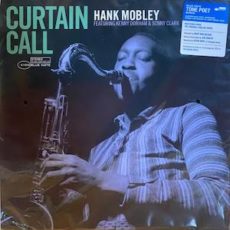
Curtain Call ~ Hank Mobley | By Eddie Carter
Hank Mobley was one of the most productive musicians on Blue Note during the fifties, recording as a leader and with some of the label’s best artists. This morning’s subject is a recent acquisition to the library that was originally recorded in 1957 but remained shelved until a 1984 Japanese release. Curtain Call (Blue Note BST 61006) is an excellent quintet session by the tenor saxophonist featuring Kenny Dorham on trumpet, Sonny Clark on piano, Jimmy Rowser on bass, and Art Taylor on drums. My copy used in this report is the 2022 Blue Note Tone Poet Series Stereo audiophile reissue, the first US vinyl release.
Side One starts with the first of four tunes by Hank Mobley. Don’t Get Too Hip is an easy-flowing midtempo blues that Clark introduces preceding the quintet’s collective theme. Sonny is up first with an easygoing attitude on the first statement. Kenny continues this pleasant exercise with a lengthy solo spot. Hank takes center stage next and sails smoothly through the third reading. Jimmy applies the finishing touch on a short statement ahead of the group’s reprise and ending. Curtain Call is off to the races on the ensemble’s speedy melody. Hank moves with astonishing velocity in the opening statement. Kenny drives the second reading with intense emotion, then Sonny takes an exhilarating turn. Art shares the final solo with the front line briefly before the close.
Deep In a Dream by Eddie DeLange and Jimmy Van Heusen is a gorgeous quartet performance illustrating Hank’s ability to interpret a ballad. Mobley and the trio begin with a delicately tasteful melody. He continues with an exquisitely beautiful opening statement. Clark expresses great warmth to the second solo, then Hank adds the exclamation point with sensitive delicacy into the foursome’s luscious ending. The quintet raises the curtain on Side Two with The Mobe. The ensemble begins the happy theme in unison, then Hank takes off on a terrifically agile first solo. Kenny takes over, feeling right at home on the second reading. Sonny spreads some joyful enthusiasm on the next statement. The front-line reappears to exchange a few final verses leading to the finish.
My Reverie by Claude Debussy and Larry Clinton is one of the delights of the set. Dorham has the spotlight to himself on the melody and first solo, handling both with equal effectiveness. Clark comes on next with an intriguing interpretation, followed by Mobley who delivers the next statement confidently. Dorham returns to take the song out with Mobley shadowing him in the background. On The Bright Side ends the album on a cheerful note beginning with the quintet’s brisk melody. Kenny draws us into the song with a lively opening statement. Sonny gives a sterling account on the second solo. Hank endows the third interpretation with a feisty spirit, and Taylor sparkles in a brief exchange with Dorham and Mobley into the closing theme.
Curtain Call was originally produced by Alfred Lion and Rudy Van Gelder was the man behind the dials. Joe Harley supervised this reissue and Kevin Gray did the mastering. The sound quality is breathtaking with a terrific soundstage that transports the musicians to your listening room as you enjoy the album. The cover’s worthy of hanging on your wall and the gatefold photos are gorgeous. The record is pressed on 180-gram audiophile vinyl and is incredibly quiet until the music starts. If you enjoy Hank Mobley and love good Hard-Bop, I invite you to check out Curtain Call on your next vinyl treasure hunt. In my opinion, it’s one of his best fifties recordings and one listen is sure to hook you, just as one listen sold me!
~ Hank Mobley Quintet Featuring Sonny Clark (Blue Note BNJ 61006) – Source: Discogs.com ~ My Reverie – Source: Wikipedia.org © 2022 by Edward Thomas Carter
More Posts: choice,classic,collectible,collector,history,instrumental,jazz,music,saxophone