

Requisites
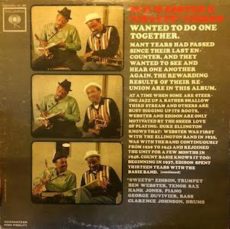
Wanted To Do One Together ~ Ben Webster and Sweets Edison | By Eddie Carter
Benjamin Francis Webster and Harry “Sweets” Edison were two of jazz’s most beloved and respected musicians. Ben was affectionately known as “The Brute” for his sometimes coarse, harsh, or rough sound by his Ellington bandmates. However, he could also express deep feelings on any ballad or standard with a quiet intensity that always amazed fans listening to one of his albums or during his live performances. Webster was also an essential part of Duke Ellington’s orchestra before having a successful solo career. Johnny Hodges was a huge influence on Ben, and he credits the altoist with teaching him how to play the saxophone.
Harry was one of the most sought-after musicians in jazz and became a proficient trumpet accompanist and soloist for nearly twenty-five years. “Sweets” performed with Count Basie, toured with the Jazz at The Philharmonic All-Stars, and led his own orchestra. He also played in bands led by Gil Fuller, Dizzy Gillespie, Quincy Jones, Buddy Rich, and Shorty Rogers. Lester Young gave him the nickname “Sweets”, and his artistic proficiency and willingness to develop as jazz itself progressed made him one of the best trumpet players ever. Edison also possessed a bright, buoyant sound that could also be soft-spoken and serene.
In 1962, the two friends wanted to record an album together. The joyous result of their collaboration is Wanted To Do One Together (Columbia CL 1891/CS 8691), this morning’s choice from the library. The front line is fortified by Hank Jones on piano, George Duvivier on bass, and Clarence Johnson on drums. My copy used in this report is the original Mono album. Ben Webster’s Better Go opens Side One with a bouncy, upbeat melody by both horns. “Sweets” is off and running with an exhilarating muted performance. George delivers an enjoyable statement next, then Ben provides some enchantingly melodic lines on the third reading. Hank injects some vigorous passion into the finale ahead of the reprise and close.
Up next is George and Ira Gershwin’s evergreen from the musical, Funny Face (1928), How Long Has This Been Going On? Ben makes this song his own as if the duo wrote it, especially for him. After a soft duet introduction by the pianist and tenor man, the ensemble states the theme. As the sole horn and featured soloist, Ben tells an intimate story of delicacy and sensitivity in a tender performance. The trio backs him with elegant groundwork into a dainty climax. Harry Edison’s Kitty strolls casually into view on the ensemble’s mischievous theme. “Sweets” switches to a mute for the easy-going opening statement, then Ben displays a cheerfully playful personality next. Hank follows with a leisurely walk on the closing chorus that sends the kitty sauntering out of the room as the first side ends.
My Romance by Richard Rodgers and Lorenz Hart begins Side Two with a lovely introduction by Hank. Ben, George, and Clarence join him for a respectfully polite and nostalgic melody of sensual beauty. The saxophonist continues with a pretty performance that’s so deeply moving, even if you’re intimately acquainted with this song, you’ll feel as if you’re hearing it for the very first time. The beat moves back to mid tempo on the Ben Webster original, Did You Call Her Today? After the rhythm section’s introduction, both horns deliver the melody with a relaxed attitude. “Sweets” opens with a cheerfully pleasant performance. Ben keeps the beat alive with flawless execution in the next reading. Hank swings smoothly on the finale preceding the quintet’s perky ending.
Embraceable You by George and Ira Gershwin is one of their prettiest songs from the Broadway musical, Girl Crazy (1930). “Sweets” is the only horn featured here and his opening chorus with Hank is an oasis of calm and serenity. George and Clarence come in to complete the melody, then “Sweets” beautifully renders the song’s only solo into a tenderhearted ending. The album was produced by Mike Berniker and recorded at Columbia 30th Street Studio. The sound quality is absolutely amazing with a stunning soundstage surrounding your sweet spot. If you’re a fan of Ben Webster or Harry “Sweets” Edison, I offer for your consideration Wanted To Do One Together. It’s an album with tight musicianship and marvelous music that belongs in every jazz library and pays big dividends with every listen!
~ My Romance, Embraceable You – Source: JazzStandards.com ~ How Long Has This Been Going On? – Source: Wikipedia.org © 2022 by Edward Thomas Carter

More Posts: choice,classic,collectible,collector,history,instrumental,jazz,music,saxophone,trumpet
Daily Dose Of Jazz…
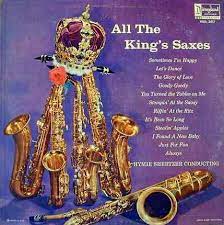
Hymie Schertzer was born Herman Schertzer on April 22, 1909 in New York City, New York and began playing violin when he was nine years old. He picked up the saxophone when he was a teenager and went on to work as a sideman for Gene Kardos at the club Birdland, then joined Benny Goodman’s band, where he was the lead saxophonist until 1938, though he recorded with Goodman intermittently until the mid-1940s.
Between 1938 and 1940 Hymie was in Tommy Dorsey’s band, and recorded in the late 1930s with Bunny Berigan and Lionel Hampton. He worked with Billie Holiday in 1941 and again in 1944, then became a house musician for NBC radio and television.
Working as a session player for studio recordings Schertzer was behind Ella Fitzgerald, Frank Sinatra, Sarah Vaughan, Sy Oliver, Louis Armstrong, and Artie Shaw during the years 1947-1953. He continued working with Goodman live, on television, and on record from 1951 until 1969.
Saxophonist and conductor Hymie Schertzer, who was a member of the Tonight Show Band during its Johnny Carson era, transitioned in New York City, on March 22, 1977 at the age of 67.
More Posts: conductor,history,instrumental,jazz,music,saxophone
The Quarantined Jazz Voyager
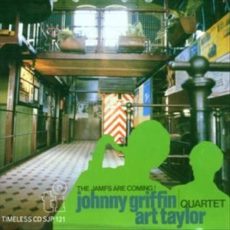
As we begin to explore more outings, the Jazz Voyager is still practicing social distancing and mask wearing at gatherings. That said, this week as we continue to see and gather information as to which venues have survived the pandemic, I am pulling from the library the 1981 recording of The Jamfs Are Coming by tenor saxophonist Johnny Griffin.
Recorded at a pair of sessions at a small nightclub in Wihelmshaven, Germany, The Blue Note in Pumpwerk provided the settings for these live performances. His explosive original blues, The Jamfs Are Coming, JAMF being an acronym for a well-known but unprintable expression, is a powerful opener recorded in October 1977.
Following an unaccompanied coda, Griffin rapidly shifts gears into a brief up-tempo rendition of Wee Dot, which unfortunately was faded out. The one-minute chorus of the December 1975 Wee is a complete performance that evidently closed a 1975 set. The LP wraps with an inspired December 1977 take of All the Things You Are, in which Griffin dodges the head initially then squeezes in a lick or two from Happy Birthday and a series of other humorous quotes throughout this frenzied 20-minute workout.
The artwork was by Don Diesveld, photography by AnkoWieringa and Hanz Harzheim and was produced by Wim Wigt Productions.
Track List | 38:15- The Jamfs Are Coming (Johnny Griffin) ~ 17:15
- Wee (Denzil Best) ~ 1:00
- All The Things You Are (Oscar Hammerstein II, Jerome Kern) ~ 20:00
- Johnny Griffin ~ Tenor Saxophone
- Rein de Graaff ~ Piano
- Koos Serierse, Henk Haverhoek ~ Bass
- Art Taylor ~ Drums

More Posts: adventure,album,club,genius,jazz,museum,music,preserving,restaurant,saxophone,travel

Daily Dose Of Jazz…
Alan Richard James Skidmore was born the son of saxophonist Jimmy Skidmore on April 21, 1942 in London, England. He began his professional career in his teens, and early on toured with comedian Tony Hancock. In the 1960s, he appeared on BBC Radio, then worked with Alexis Korner, John Mayall, and Ronnie Scott.
Starting a band with Harry Miller, Tony Oxley, John Taylor, and Kenny Wheeler, they won awards at the Montreaux Jazz Festival. In the early Seventies, Alan started a saxophone-only band with John Surman and Mike Osborne.
He has worked with Mose Allison, Kate Bush, Elton Dean, Georgie Fame, Mike Gibbs, George Gruntz, Elvin Jones, Van Morrison, Stan Tracey, Charlie Watts, and Mike Westbrook.
Tenor saxophonist Alan Skidmore, who has recorded seventeen albums as a leader, continues to pursue the boundaries of his musc.
More Posts: bandleader,history,instrumental,jazz,music,saxophone
Daily Dose Of Jazz…
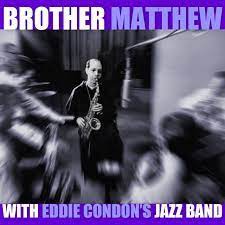
Boyce Brown was born on April 16, 1910 in Chicago, Illinois. He worked with Wingy Manone, Paul Mares, and Danny Alvin. Best known of his recordings is a 1935 session with Paul Mares and his Friars Society Orchestra, that was first issued on LP in 1955 as part of Columbia’s Chicago Style Jazz album and a 1939 session with Jimmy McPartland & his Jazz Band, which was first released as part of Decca’s Chicago Jazz album. Both of these sessions had Brown demonstrating a driving, harmonically advanced style.
In 1953, Boyce entered a monastery of the Roman Catholic Servite Order, however, he returned in 1956 to release his one and only album as Brother Matthew, backed by a band organized by Eddie Condon.
Alto saxophonist Boyce Brown, who played in the dixieland genre, transitioned from a heart attack on January 30, 1959 at the age of 48.
More Posts: bandleader,history,instrumental,jazz,music,saxophone