

Three Wishes
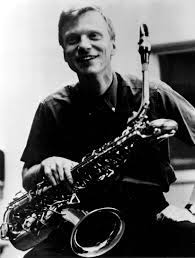
Gerry Mulligan was approached by Pannonica and asked if he could be granted three wishes what his be and his response was:
- “To play high trumpet accurately, drums, sing. And if there was a fourth, money.”
*Excerpt from Three Wishes: An Intimate Look at Jazz Greats ~ Compiled and Photographed by Pannonica de Koenigswarter

More Posts: baroness,clarinet,history,instrumental,jazz,music,pannonica,saxophone,three,wishes
Requisites
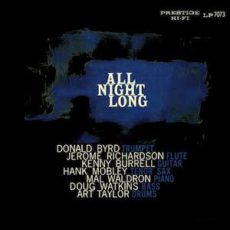
All Night Long ~ The Prestige All-Stars | By Eddie CarterThis morning’s choice from the library is a recent acquisition I’ve been hunting for since it was reissued as part of The Prestige Mono Series. It’s a swinging Fifties jam session that was originally released in 1957 by The Prestige All-Stars. All Night Long (Prestige PRLP 7073/PRST 7289) brings together a first-class ensemble, Donald Byrd on trumpet, Hank Mobley on tenor sax, Jerome Richardson (tracks: A1, B1 to B3) on flute, and (track: A1) on tenor sax, Mal Waldron on piano, Kenny Burrell on guitar, Doug Watkins on bass, and Art Taylor on drums. My copy used in this report is the 2012 Analogue Productions Mono audiophile reissue (APRJ 7073 – PRLP 7073).
Side One opens with Kenny Burrell’s All Night Long occupying the entire side. Art kicks off the song with an infectious beat. Kenny starts the opening solo with exquisite execution. Jerome’s flute flows with a happy feeling on the first of two statements. Hank takes us on a carefree joyride in the next reading, then Donald speaks his peace with a stellar presentation. Jerome resurfaces on tenor for a sparkling performance, and Mal gives a soulful effort on the next interpretation. Art follows with a brief exchange with the principal soloists before the group takes the song out. Side Two starts with the first of two tunes by Hank Mobley, Boo-Lu. Richardson sets the mood of this happy groove on the melody and opening chorus. Burrell, Byrd, Mobley, and Waldron follow with four short solos ahead of the reprise and close.
Flickers by Mal Waldron suggests a homage to the movies. It begins with the ensemble’s collective mid~tempo theme. Jerome is up first and shines with a light-hearted warmth. Donald and Hank follow with one easygoing reading each, then trade a few feisty riffs. Kenny turns in a tasty performance next and Mal applies blues-rooted energy to the finale leading to the closing chorus and Doug’s slow fade into oblivion. Mobley’s Li’l Hankie comes at you at medium speed with the ensemble in unison on the melody. Hank leads off the solos with a marvelous interpretation. Donald delves into the second reading on muted trumpet mining a vein of musical riches. Kenny tells a short story that makes every note count on the third statement. Jerome lights a fuse of creative inspiration on the next performance, followed by a stimulating conversation between the front line, Waldron, and Richardson ahead of the ending theme.
Bob Weinstock supervised the original album and the man behind the dials was Rudy Van Gelder. Kevin Gray did the remastering from the analog tapes. The record has a flat-edge and deep groove on the label like the original release, and the album cover has a high gloss. This reissue was pressed on 200-gram audiophile vinyl by Quality Record Pressings. The soundstage is outstanding, transporting the musicians to your listening room and the record is silent until the music starts. Burrell, Byrd, Watkins, and Taylor also appear on the companion album, All Day Long, recorded just a few days after this date. If you’re a Hard-Bop fan and are looking for an album with superb musicianship, I can’t think of a better choice to introduce you to The Prestige All-Stars than All Night Long! It’s a gorgeous recording that’s highly recommended and well worth adding to your library!
~ All Day Long (Prestige PRLP 7081/PRST 7277) – Source: Discogs.com © 2022 by Edward Thomas Carter

More Posts: bass,choice,classic,collectible,collector,drums,flute,guitar,history,instrumental,jazz,music,piano,saxophone,trumpet

Daily Dose Of Jazz…
Ferdinand Povel was born on February 13, 1947 in Haarlem, Netherlands. Coming from an artistic family, his father was a cineaste (filmmaker) and his mother a pianist. At an early age, he developed a taste for jazz, when first introduced to as a gift on his twelfth birthday, he received a ticket to a late-night concert by the Duke Ellington Orchestra at the Amsterdam Concertgebouw.
In 1961 he began studying clarinet with Theo Loevendie and teaching himself saxophone because jazz was not yet taught formally in the Netherlands. Ferdinand learned by playing with experienced musicians, such as pianists Rob Madna and Frans Elsen, picking up knowledge of harmony and arrangement as a young member of the orchestras of Kurt Edelhagen and Peter Herbolzheimer, and of the Skymasters.
In 1964 at 17, Povel won the Loosdrecht Jazz Concours with the Martin Haak Quartet. This was the start of his career as a professional musician. 1966 saw him playing with The New Sound Incorporated, giving school concerts and radio and TV broadcasts for Tros and Avro broadcasting companies. He went on to be a finalist at the 1966 International Modern Jazz Festival in Vienna, Austria where the judges included Cannonball Adderley and Mel Lewis.
In the same year, the Netherlands Jazz Orchestra invited Povel to join them as a saxophonist and flutist. Three years later he was in Munich, Germany playing with trumpet player Dusko Goykovich in his Summit Quintet, starring drummer Philly Joe Jones and touring Europe several times.
Ferdinand would go on to play with the Kenny Clarke/Francy Boland Big Band, the Kurt Edelhagen Orchestra, tour the United States of America with the Maynard Ferguson Big Band, and the Peter Herbolzheimer’s Rhythm Combination and Brass from 1971 to 1985. He was a member of George Grunz’s band, Jiggs Whigham Sextet, and the bands of Rob Madna, Frans Elsen, and Cees Slinger. He has played in the front line with jazz icons such as Art Farmer, Bennie Bailey, Woody Shaw, and Jimmy Knepper.
Throughout his career he was never far from playing in various occasional orchestras for radio and television. As an educator he taught jazz improvisation at the Rotterdam Conservatory and at conservatoriums in Zwolle, Hilversum and The Hague. Since 1990 he has taught exclusively at the Hilversum Music Academy, now named the Conservatory of Amsterdam, as part of Amsterdam School of the Arts.
Saxophonist Ferdinand Povel has a discography that includes over one hundred record and CD albums to which he has contributed as a soloist. He has received several honors and continues to perform and educate.
More Posts: bandleader,educator,flute,history,instrumental,jazz,music,saxophone
Daily Dose Of Jazz…
Le Roy Watts Harris Jr. was born on February 12, 1916 in St. Louis, Missouri. He played violin while young, then learned saxophone and clarinet. By age 13 he was playing with pianist Chick Finney.
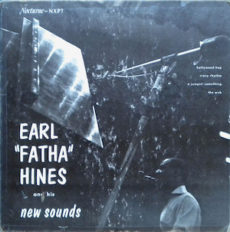
Relocating to Chicago, Illinois around 1930 he played with Ray Nance from 1931 to 1936. Following this stint he worked with Earl Hines from 1937 to 1943. He joined the United States Navy during World War II and played in a band from 1943 to 1944. After his discharge he played with Bill Doggett, Ben Thigpen, Tadd Dameron, Sarah Vaughan, Singleton Palmer, and Wynonie Harris, then returned to play with Hines once more.
In the early 1950s he led his own band at the Kit Kat club in New York. He resettled in St. Louis again in 1957 and played with Eddie Johnson from 1960 to 1971.
Saxophonist and clarinetist Le Roy Harris Jr., whose father and uncle were both jazz musicians, transitioned on February 16, 2005 in his hometown of St. Louis.
More Posts: bandleader,clarinet,history,instrumental,jazz,music,saxophone

The Quarantined Jazz Voyager
The masks the President promised are out however, he has given all the manufacturers an opportunity to participate. You only get two or three N95’s depending on where you get them. So if your Amazon order is slow to come stop by your local pharmacy and pick up yours. Continue social distancing and remain safe.
This week sliding off the shelves in alto saxophonist Jackie McLean and his 1963 album Destination… Out! The album was recorded on September 20, 1963, produced by Alfred Lion and released in November of the following year on the Blue Note label. It is the second McLean album to feature Bobby Hutcherson and Grachan Moncur III.
He’s 31 years of age and primed torecord an album for the ages. Hard bop aside he ventured into free jazz on this one to explore new sounds and improvisation never heard before. Four tunes make up this release, three by Moncur and one by the leader, who recognized the former’s penchant for composition.
Growth mandates that we expand our personal listening repertoire, that we stray from our comfort zone, and explore the options jazz offers. Needless to say McLean has put together a stellar band of musicians who engage us with the conversation they fluidly and freely have along its journey.
Track Listing | 34:57
- Love and Hate (Grachan Moncur III) ~ 8:25
- Esoteric (Moncur) ~ 9:02
- Kahlil the Prophet (Jackie McLean) ~ 10:23
- Riff Raff (Moncur) ~ 7:07
- Jackie McLean ~ alto saxophone
- Grachan Moncur III ~ trombone
- Bobby Hutcherson ~ vibes
- Larry Ridley ~ bass
- Roy Haynes ~ drums

More Posts: adventure,album,club,genius,jazz,museum,music,preserving,restaurant,saxophone,travel