

Daily Dose Of Jazz…
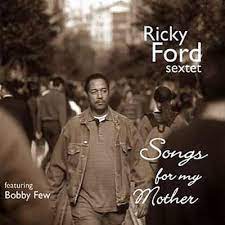
Ricky Ford was born in Boston, Massachusetts on March 4, 1954 and studied at the New England Conservatory. At the age of twenty he recorded with Gunther Schuller and then played in the Duke Ellington Orchestra under Mercer Ellington from 1974 to 1976.
Moving on to play with Charles Mingus from 1976 to 197777, the Dannie Richmond from ‘78 to ‘81, followed by Lionel Hampton for two years beginning in 1980 and ending up in the Mingus Dynasty. By 1983 Ricky was also played with Abdullah Ibrahim, a relationship that lasted for seven years. By the end of the decade he was also playing with Mal Waldron until 1994.
Ford has recorded twenty~two albums as a leader for Muse, Candid, and other labels. As a sideman he has recorded with but not limited to Yusef Lateef, Sonny Stitt, McCoy Tyner, Freddie Hubbard, Amina Claudine Myers, Sathima Bea Benjamin, Ran Blake, Steve Lacy, Jaki Byard, Red Rodney, Jack Walrath and others.
Tenor saxophonist Ricky Ford settled in Paris, France in the 1990s, has taught at Istanbul Bilgi University from 2001 to 2006, and in 2009 he founded the Toucy Jazz Festival in Yonne, France. He continues his pursuit of his music.

More Posts: bandleader,history,instrumental,jazz,music,saxophone
Requisites
The Chase ~ Gene Ammons & Dexter Gordon | By Eddie Carter
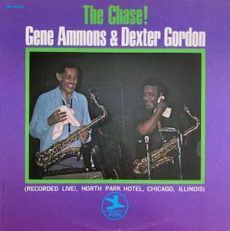
Throughout the chronicles of jazz, there have been many great tenor sax duos who have recorded some legendary battle albums that are among some of the greatest records ever made. Gene Ammons and Sonny Stitt, Arnett Cobb and Buddy Tate, Al Cohn and Zoot Sims, Dexter Gordon and Wardell Gray, Coleman Hawkins and Don Byas, Illinois Jacquet and Lester Young to name a few. This morning’s choice from the library is an exciting live date by Gene Ammons (A1, B1, B2) and Dexter Gordon (A1, A2, B1). The Chase (Prestige PRST 10010) was recorded live at the North Park Hotel before an enthusiastic audience on the afternoon and evening of July 26, 1970, during Gordon’s cross-country tour. The quintet is anchored by Jodie Christian (A1, B1), John Young (A2, B2) on piano, Rufus Reid (A1, B1), Cleveland Eaton (A2, B2) on bass, Wilbur Campbell (A1, B1), Steve McCall (A2, B2) on drums, and Vi Redd (B1) on vocals. My copy used in this report is the original 1971 Stereo album.
Side One opens with the title tune, The Chase is Dexter Gordon’s uptempo tribute to the great tenor duels beginning with a high-spirited, energetic theme. Dexter has the lead solo and produces an exceptionally high level of creativity including his famous big top circus quotes. Gene delivers an aggressive workout on the next reading, then Jodie swings strongly on a brief statement. Wilbur gets the final word in a vigorous conversation with both horns into the lively finale. Polka Dots and Moonbeams by Jimmy Van Heusen and Johnny Burke is a quartet tune with Young, Eaton, McCall, and Dexter as the solitary horn. The quartet starts with a slow-paced, sensuous melody by Gordon, who picks up the pace slightly on the subtly stated first solo. Young follows with a luxuriously, lovely statement, then Dexter delivers a few more rhythmically relaxing verses into the elegant ending and appreciative approval of the audience.
Lonesome Lover Blues is a mid tempo reworking of Blowing The Blues Away by Billy Eckstine and George Valentine. Both Gene and Dexter decided to do a new vocal version utilizing the talents of Vi Redd who was in the audience during their set. Vi gives the crowd and listener an imaginative improvised vocal with Christian, Reid, and Campbell returning to the stage. Gordon and Ammons exchange a few choruses before Dexter takes an extended interpretation. Gene gets busy on the next performance and Jodie lays down a soulful groove preceding both horns returning for the finale. The Happy Blues by Art Farmer debuted on Hi Fidelity Jam Session (1956), and Gene is the lone horn backed by Young, Eaton, and McCall. John opens with a swinging solo segueing into Gene’s invigorating opening chorus and first statement. Cleveland takes a short reading before the quartet’s vivacious finale and the crowd’s ovation.
The Chase was produced by Joe Segal, founder of The Jazz Showcase and one of the best places to hear jazz in Chicago. The man behind the dials is Leon Kelert who has worked on blues and jazz albums for Blackbird, Delmark Records, and G.H.B. Records. The sound quality on the album is quite good with the instruments providing an impressive treble, midrange, and bass soundstage that transports the listener to the audience as each performance is happening. Dexter Gordon is at his peak, and Gene Ammons is in exquisite form throughout. The stellar musicianship of their bandmates makes The Chase a splendid choice to add to your jazz library and well worth the listening time, once you do!
~ Hi Fidelity Jam Session (Prestige PRLP 7039/PRST 7654) – Source: Discogs.com ~ Polka Dots and Moonbeams – Source: JazzStandards.com © 2022 by Edward Thomas Carter
*The remastered cd added two bonus tracks not on the original album ~ Wee Dot & Ballad Medley

More Posts: choice,classic,collectible,collector,history,instrumental,jazz,music,saxophone
Daily Dose Of Jazz…
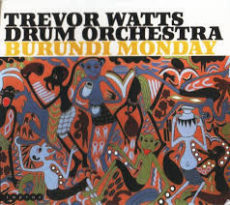
Trevor Charles Watts was born in York, England on February 26, 1939 and is largely self-taught, having taken up the cornet at age 12 then switched to saxophone at 18.
While stationed in Germany with the RAF from 1958 to 1963, he encountered the drummer John Stevens and trombonist Paul Rutherford. After his service he returned to London, England and in 1965, he and Stevens formed the Spontaneous Music Ensemble (SME), which became one of the crucibles of British free improvisation.
Leaving the band to form his own group Amalgam in 1967, Trevor returned to SME for another stretch that lasted until the mid-1970s. Collaborating with bassist Barry Guy and his London Jazz Composers’ Orchestra, they performed until their disbandment in the mid-1990s.
Though he was initially strongly identified with the avant-garde, Watts was versatile, working in everything from straight jazz contexts to rock and blues. His own projects blended jazz and African music, notably the Moiré Music ensemble which he led since 1982. He has collaborated with jazz musicians including Archie Shepp, Steve Lacy, Don Cherry, Jayne Cortez and Stephen Grew.
Free-improvising alto and soprano saxophonist Trevor Watts, who recorded 31 albums as a leader, and two as a sideman, continue to explore the music.

More Posts: bandleader,history,instrumental,jazz,music,saxophone
Daily Dose Of Jazz…
Iain Ballamy was born Guildford, England on February 20, 1964. Taking piano lessons from age of 6 to 14, he received further education at George Abbot School from 1975 to 1980. He went on to study Musical Instrument Technology from 1980 to 1982 at Merton College.
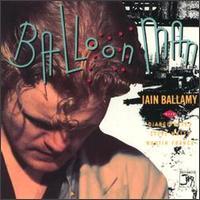
Discovering the saxophone in 1978 with three lessons, his first professional gig was in 1980, playing Ronnie Scotts as the Iain Ballamy Quartet at age 20. He was a founding member of Loose Tubes in 1984. His first recording was with Billy Jenkinsthe following year, and his first solo album, Balloon Man, was released in 1988.
During his career, his performances and recording sessions reads like a who’s who list, including but not limited to Gil Evans, Hermeto Pascoal, Carla Bley, Dewey Redman, George Coleman, London Sinfonietta, Françios Jeanneau, Randy Weston, Clare Martin, Charlie Watts Orchestra, Jeremy Stacey, Jane Chapman, Bryan Ferry, Everything But The Girl, Ian Shaw, Slim Gaillard, Ronnie Scott, Gordon Beck, and one of his closest musical collaborators, Django Bates.
In 1999, Ballamy founded the record label Feral Records, in partnership with graphic artist and filmmaker Dave McKean. He composed the musical score for the movie MirrorMask and the score for the film Luna, both directed by McKean.
Bellamy is currently a visiting professor at the Royal Academy of Music, Birmingham Conservatoire, Trinity College of Music, and the Royal Welsh College of Music & Drama. Modern saxophonist and composer Iain Ballamy continues to explore jazz.
More Posts: bandleader,composer,educator,history,instrumental,jazz,music,saxophone
The Quarantined Jazz Voyager
The virus is still raging across America and now has a new host… the children. I have personally known a half dozen friends who have contracted Covid from children or grandchildren who are back in school and bring it home. Be vigilant my people and stay safe and healthy.
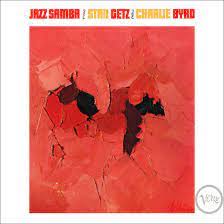
This week I am putting on the turntable the bossa nova/jazz album titled Jazz Samba. It is an album by Stan Getz and Charlie Byrd released by Verve Records in 1962. It was recorded on February 13, 1962 in Pierce Hall, All Souls Unitarian Church, Washington, D.C. and released the following April. It ws produced by Creed Taylor.
The idea for the album came about while the Charlie Byrd Trio was on a State Department goodwill tour in Brazil, drummer Buddy Deppenschmidt spent his free time with local musicians, teaching them American jazz and learning bossa nova from them. It was his idea to record an album combining jazz and bossa nova with Stan Getz.
Jazz Samba signaled the beginning of the bossa nova craze in America. Stan Getz was the featured soloist and the tracks were arranged by Charlie Byrd. It was recorded live in less than three hours and started a bossa nova craze both nationally and internationally.
It is the only jazz album to reach number one on both the jazz and pop Billboard charts and remained high on the charts for 70 weeks. Desafinado, the hit single from the album, was inducted into the Grammy Hall of Fame in 2000 and the album was inducted into the Grammy Hall of Fame in 2010.
Stan Getz won the Grammy Award for Best Jazz Performance of 1963 for Desafinado, and Robert Dimery included Jazz Samba in his book 1001 Albums You Must Hear Before You Die. The painting on the cover is by Olga Albizu.
Tracks | 33:12
Side One
- Desafinado (Antônio Carlos Jobim, Newton Mendonça) ~ 5:51
- Samba Dees Days (Charlie Byrd) ~ 3:34
- O Pato (Jayme Silva, Neuza Teixeira) ~ 2:31
- Samba Triste (Baden Powell, Billy Blanco) ~ 4:47
Side Two
- Samba de Uma Nota Só (Antônio Carlos Jobim, Newton Mendonça) ~ 6:11
- É Luxo Só (Ary Barroso) ~ 3:40
- Bahia (aka ‘Baia’) (Ary Barroso) ~ 6:38
- Stan Getz – tenor saxophone
- Charlie Byrd – guitar
- Gene Byrd – guitar, bass
- Keter Betts – double bass
- Buddy Deppenschmidt – drums, percussion
- Bill Reichenbach Sr. – drums, percussion
More Posts: adventure,album,club,genius,guitar,jazz,museum,music,preserving,restaurant,saxophone,travel